Water spots can mar glossy finishes, glass, and chrome, leaving chalky residues and hazy surfaces. This guide highlights trusted products designed to safely remove hard water stains from automotive finishes, glass, and exterior surfaces, while preserving clear coats and protecting the underlying material. Each option is chosen for effectiveness, safety, and ease of use, whether you’re a weekend detailer or a professional technician.
| Product | Brand | Highlights |
|---|---|---|
| Meguiar’s Water Spot Remover | Meguiar’s | Removes water spots; polish gloss; safe on clear coat |
| PROJE’ | PROJE’ | Quick hard water spot removal; prepares surface for protection |
| Meguiar’s Marine/RV Hard Water Spot Remover | Meguiar’s | Heavy-duty remover; safe on boats/RVs; easy spray-on use |
| Maxshine Water Spot Remover | Maxshine | Eco-friendly; safe for glass, metal, fiberglass; mineral removal |
| 3D Glass Polish | 3D | Cerium oxide glass polish; removes wiper marks and water spots |
The products listed here cover a range of surfaces—from painted automotive bodies to glass and chrome—emphasizing safe removal of mineral deposits and water-based stains without dulling the finish. Consider the surface you’re treating, whether you prefer a gel, spray, or polish, and whether you need a product suitable for professional use or home detailing. The following sections introduce five standout options with practical usage notes and key features.
Meguiar’s Water Spot Remover
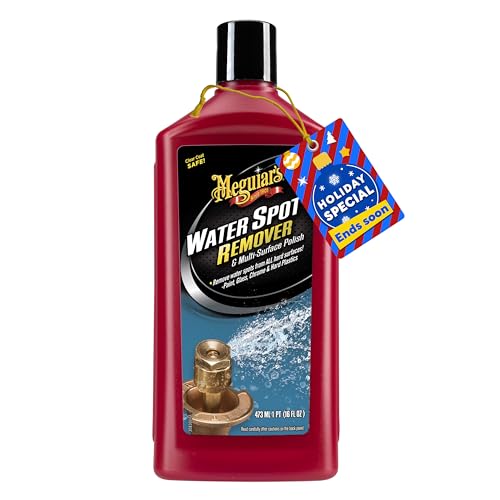
Meguiar’s Water Spot Remover is designed to quickly eliminate stubborn water spots from paint, glass, and hard plastics. It doubles as a mild polish to enhance clarity and gloss on clear coats and single-stage paints, helping restore a showroom shine. The formula is described as clear coat safe, making it suitable for routine maintenance on most factory-applied finishes. Use with light pressure and a clean microfiber to avoid introducing new scratches. This option is appropriate for both professionals and enthusiasts seeking a straightforward, surface-safe solution.
PROJE’ Water Spot Remover

PROJE’ Water Spot Remover targets hard water spots with a specially formulated mild acid. It works to break down and lift mineral deposits on paint, glass, and metal surfaces. The product is designed to prepare surfaces for future protection, helping create a better base for wax or sealant. It’s suitable for external automotive surfaces, including painted finishes and glass, though users should avoid anodized parts. This option suits detailers needing a fast-acting, versatile cleaner for multiple substrates.
Meguiar’s Marine/RV Hard Water Spot Remover M4716

Meguiar’s Marine/RV Hard Water Spot Remover is formulated to quickly remove hard water spots on boats, RVs, and other exterior surfaces, with a spray-on application that minimizes scrubbing. The thick, low-drip formula helps it cling to vertical surfaces, reducing drips while delivering effective mineral removal. This product is practical for larger exterior areas and is designed to protect surfaces after treatment with additional barrier products. It’s advisable to test on a small area first on painted surfaces to confirm compatibility.
Maxshine Water Spot Remover

Maxshine Water Spot Remover features an eco-friendly fluoride-free formula designed for glass, metal, and painted surfaces on cars, boats, and RVs. It quickly dissolves hard water spots and mineral deposits, including calcium buildup, without aggressive solvents. The emphasis on environmental safety makes this option appealing for detailers seeking a greener choice while maintaining effective stain removal. Always follow a patch test on sensitive finishes to confirm surface compatibility.
3D Glass Polish

3D Glass Polish uses a cerium oxide-based formula to address stubborn wiper marks, etched water spots, and fine scratches on automotive glass. The result is improved optical clarity and visibility, which is crucial for safe driving. The polish is designed for relatively easy application and removal, with minimal effort to achieve a streak-free finish. It’s a suitable option for vehicle windows, windshields, and other glass surfaces requiring refinement.
Buying Guide: Key Purchase Considerations
Surface type and finish: Identify whether you’re targeting painted body panels, glass, chrome, or gel-coated surfaces. Some formulas are paint-safe but not recommended for matte or satin finishes, so verify suitability before use.
Formula type and application: Options include sprays, gels, and polishes. Sprays are convenient for quick touch-ups; gels cling to vertical surfaces; cerium oxide polishes address glass with minimal effort. Choose based on your comfort level and the area to treat.
Surface preparation: Most hard water spots respond best to a clean surface free of dirt and oils. A thorough wash or pre-clean may improve results. Some products also prepare surfaces for subsequent waxing or sealing to prevent future spotting.
Safety and compatibility: Look for products labeled safe for clear coats, glass, and plastics. If you are detailing a boat, RV, or chrome accents, ensure the formula is compatible with those materials to avoid dulling or tarnishing.
Surface age and depth of stain: Fresh mineral deposits are typically easier to remove than deeply etched spots. For long-standing stains, consider a dedicated glass polish or a more potent water spot remover, while avoiding aggressive solvents on sensitive finishes.
Environmental and user considerations: Eco-friendly formulas, low-odor options, and user-friendly instructions can influence choice, especially for frequent detailers or professional shops. Patch testing on a small area is advisable when trying a new product on delicate surfaces.
Cost and coverage: Compare the amount of product per bottle and the expected coverage per treatment. For larger vehicles or several surfaces, a higher-volume option may prove more economical in the long run.