Finding an effective concrete floor stain remover can save time and keep garages, driveways, and basements looking clean. The following selections highlight powerful oil and rust stain removers from trusted brands, with options ranging from deep-penetrating formulas to eco-friendly bioremediation blends. Each product is designed to lift stains from concrete, brick, and other porous surfaces without harsh damage to nearby grass, plants, or pets. Use this guide to compare strengths, application methods, and environmental considerations before buying.
Summary of Selected Products
- CHOMP! Concrete Oil Stain Remover: Pull It Out (32 Fl Oz) — Deep penetrating, oil-lift formula for porous surfaces.
- Fusion CreteCare: The Ultimate Concrete Cleaner and Driveway Oil Stain Remover (128 Fl Oz) — Heavy-duty degreaser with low residue.
- Singerman Laboratories Rust Remover for Concrete (22 oz makes one gallon) — Rust removal for vertical and horizontal surfaces.
- CHOMP! Concrete Oil Stain Remover (128 Fl Oz) — Large-volume option with safe, easy-use characteristics.
- Terminator-HSD Concrete Oil Stain Remover (2 LB) — Eco-friendly powder that dissolves oil into safe byproducts.
CHOMP! Pull It Out Oil Stain Remover (32 Fl Oz)

CHOMP!’s Pull It Out is marketed as an oil stain lifting formula designed for porous concrete and brick. Its deep-penetrating action targets common automotive and drivetrain spills, including transmission and brake fluids, and is suitable for driveways, garages, parking lots, and similar surfaces. The product emphasizes safety, avoiding bleach and acids while still delivering effective stain removal. Application involves pouring a small amount onto the stain, allowing it to dry, and brushing away the dried residue to reveal a cleaner surface. This approach minimizes equipment needs and simplifies cleanup.
Features include a focus on oil-based stains and a description of its safe formulation, which does not rely on harsh chemicals. The packaging suggests easy use for homeowners who want a straightforward treatment without professional equipment. The product’s strength is in lifting petroleum-based residues from porous surfaces, and performance should be weighed against the presence of deep-set stains or large contaminated areas.
Fusion CreteCare Concrete Cleaner and Oil Stain Remover (128 Fl Oz)

Fusion CreteCare is described as an ultimate oil and grease remover with a strong emphasis on heavy-duty cleaning. It is designed to lift stubborn stains on concrete surfaces such as garages and driveways and claims to remove dirt, grease, and tire marks effectively. The product highlights low residue and environmental compatibility, making it suitable for lawns and near grass. It is positioned as a comprehensive cleaner that functions as both a degreaser and stain remover, aligning with users who need a robust solution for outdoor concrete surfaces. The technology claims to quickly break down grease and grime on outdoor concrete, improving overall appearance with fewer applications.
Considerations include environmental impact, residue potential, and whether the cleaner can handle deeply embedded stains in high-traffic areas. The product’s breadth suggests it may work across multiple outdoor concrete cleaning tasks, potentially reducing the need for separate degreasing products.
Singerman Rust Remover for Concrete (22 oz makes one gallon)
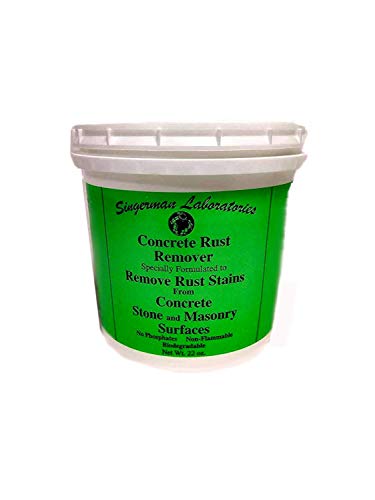
Singerman Laboratories offers a rust remover formulated for concrete, with a gallon-equivalent yield when mixed with water. The product is described as suitable for vertical surfaces and claims to be safe for grass and vegetation. The rust removal approach focuses on converting or lifting iron-based stains from concrete without harming surrounding greenery. The 22-ounce bottle, when mixed, provides coverage over larger areas, presenting a cost-effective solution for homeowners dealing with rust stains from water, irrigation systems, or metal components.
Usage notes emphasize surface compatibility and the balance between effectiveness and environmental safety. For significant rust staining, repeated applications or higher concentrations might be necessary, depending on the substrate and stain depth. This option may appeal to users seeking a rust-specific treatment rather than a broad degreaser.
CHOMP! Pull It Out Concrete Oil Stain Remover (128 Fl Oz)
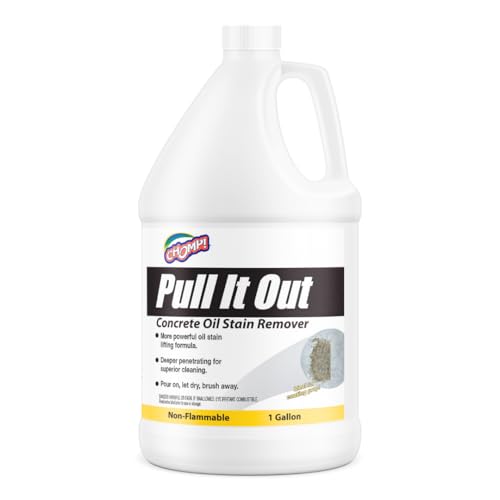
This larger CHOMP! option repeats the deep-penetrating oil stain removal approach, now in a 128-ounce format. It emphasizes the same safety profile—free from bleach and acid—while presenting an extended service window for larger projects or ongoing maintenance programs. The application method mirrors the smaller bottle: pour onto the stain, allow to dry, and brush away the dried residue. The size makes it suitable for contractors or homeowners with extensive staining across driveways, parking areas, and garages. The emphasis remains on oil-based stains and the product’s ability to lift contamination from porous surfaces.
Key considerations include storage, handling of larger quantities, and whether repeated treatment may be required for deeply embedded stains. The larger volume can reduce per-use cost but requires more space for storage and may necessitate careful measurement to avoid waste.
Terminator-HSD Concrete Oil Stain Remover (2 LB)

Terminator-HSD presents an eco-friendly powder that treats oil and grease stains on concrete and asphalt surfaces. The product claims to break down oil into carbon dioxide and water, offering an environmentally considerate option for large stain coverage. It markets its ability to remove substantial stains with minimum product usage, which can be advantageous for sizable outdoor areas like driveways, garages, and parking lots. The powder format may be convenient for dry application on large spills before agitation or rinsing.
Considerations include the practicality of powder application, dust control, and whether the product requires moistening for activation. Its environmental claims may appeal to users seeking greener alternatives, though effectiveness will depend on stain age, surface porosity, and exposure conditions.
Buying Guide: Key Purchase Considerations And Comparisons
When selecting a concrete stain remover, consider stain type, surface conditions, and safety implications. Oil and grease require deep penetrating formulas that can lift stubborn residues, while rust stains demand oxidizing or chelating approaches that target iron-based deposits. Environmentally friendly options may appeal to homeowners with lawn or garden proximity, but ensure compatibility with nearby vegetation and pets.
Application method and dry/active times vary by product. Some cleaners require drying and chalk-like removal, while others are designed for fast acting, with visible results within minutes. Large-volume products may reduce cost per application but necessitate adequate storage and handling. For vertical or hard-to-reach stains, rust removers with gel or liquid formulations can improve contact with the target area.
Surface compatibility is essential. While many products advertise safe use on concrete, brick, and pavers, always test a small area first to confirm colorfastness and finish integrity. Consider environmental impact, including residue and runoff. Some cleaners are designed to be biodegradable or pair with safe rinsing practices.
In terms of performance, compare the following: penetration depth, stain depth, and the product’s suitability for different stain sources (oil, transmission fluid, brake fluid, grease, rust). For ongoing maintenance, a routine cleaning regimen using a high-quality oil stain remover combined with a rust-specific treatment may extend the life of concrete surfaces. Finally, verify that the product’s packaging and labeling comply with local disposal regulations and safety guidelines.