Mold can threaten indoor air quality and surface integrity. This guide highlights top mold-killing sprays and primers designed to kill mold on contact, block future growth, and provide a durable finish. Each product below is selected for effectiveness, user-friendliness, and broad surface compatibility to help you choose confidently for bathrooms, basements, and kitchens.
| Product | Brand | Type | Key Benefit |
|---|---|---|---|
| Zinsser White Mold Killing Primer | Zinsser | Water-based primer | Kills mold and odor-causing bacteria; covers fungal stains |
| Rust-Oleum Mold Blocking Spray Primer | Zinsser | Primer spray (pack) | Blocks mold, mildew and odors; fast curing |
| Concrobium Mold Control | Concrobium | Spray for elimination and prevention | EPA-registered; bleach-free; odorless |
| Moldex 5010 Mold Killer Spray | Moldex | Spray | Kills mold, mildew, fungi and bacteria; non-porous surfaces |
| Rust-Oleum Mold Killing Primer QT (Pkg of 3) | Rust-Oleum | Primer | Kills existing mold on non-porous surfaces; covers large areas |
Below, each product is examined with a concise overview, features, and practical notes to help you decide which solution fits your space, surface type, and maintenance goals.
Zinsser White Mold Killing Primer
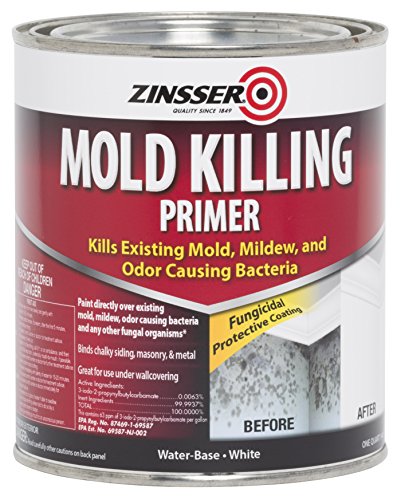
This water-based fungicidal coating is designed to kill existing mold, mildew, and odor-causing bacteria without extensive pre-cleaning. EPA registered (No. 87469-1-69587) and compatible under standard topcoats, it helps cover fungal stains and provides a protective barrier. Ideal for use with Zinsser Perma-White for extended protection on interior surfaces.
Key considerations: suitable for use on non-porous and some porous surfaces; requires proper ventilation during application; suitable for interior use where mold is a recurring concern. Drying times are moderate, enabling quick project progression.
Mold Blocking Spray Primer (Pack of 6)

This pack includes a low-odor, water-based primer that blocks existing mold, mildew, and odor-causing bacteria. It cleans up easily with soap and water and covers 8–10 square feet per can. Dries to the touch in about 5 minutes with recoat possible within 30 minutes, speeding up renovation timelines.
Practical notes: good option for rapid remediation on small to medium areas; ensure the surface is clean and dry for best adhesion; consider pairing with a topcoat for a finished look.
Concrobium Mold Control

Eliminates and helps prevent mold by treating existing growth and establishing an invisible barrier against future outbreaks. EPA-registered for mold control when used as directed. The formula is bleach-free, odorless, and VOC-free, supporting healthier indoor air quality and broad surface compatibility.
Considerations: ideal for ongoing mold prevention in kitchens, bathrooms, basements, and basements walls; works well as a preventative shield after cleaning mold-prone areas.
Moldex 5010 Mold Killer Spray

Effectively kills mold, mildew, fungi, bacteria, and viruses on non-porous surfaces such as bathrooms, walls, floors, outdoor furniture, and more. The spray disinfects and controls odors while helping prevent future growth. The bleach-free formula makes it suitable for households and facilities seeking safer cleaning options.
Usage notes: prioritize good ventilation and PPE during application; suitable for multiple surfaces, but porous materials may require alternative products for deeper absorption or sealing.
Rust-Oleum Mold Killing Primer QT (Pkg of 3)
Specially formulated to paint over and kill existing mold, mildew, moss, fungi, and odor-causing bacteria on non-porous interior and exterior surfaces. Low-odor, water-based coating cleans up easily with soap and water. Covers up to 160 square feet; dries to the touch in 30 minutes and re-coats within one hour for quick project completion.
Best-use: ideal for rapid remediation on larger non-porous areas and as a primer under topcoats to ensure mold resistance in high-moisture spaces such as basements, garages, and bathrooms.
Buying Guide: Key Purchase Considerations
- Surface type: Non-porous surfaces (tiles, metal, sealed concrete) often respond best to mold-killing primers, while porous materials may need a cleaner-first approach or a specialty product.
- EPA registration and safety: Choose EPA-registered products for mold control, and follow usage directions and safety guidelines, including ventilation and PPE when required.
- Coverage and drying times: Primer products vary in coverage (roughly 8–160 square feet per can) and cure times; plan projects to minimize reworks and downtime.
- Bleach-free and odor considerations: For indoor spaces, bleach-free and low-odor formulas help protect indoor air quality and reduce fumes during application.
- Preventive effectiveness: Some products offer ongoing prevention by creating barriers against mold regrowth, while others primarily remove existing stains or odor.
- Pairing strategy: In many cases, a mold-killing primer is followed by a topcoat; for best results, select compatible products from the same brand line when possible.
- Environment and humidity: In high-humidity areas, consider using a dedicated mold control product designed for damp conditions and ensure surfaces are dry before application.
- Safety and PPE: Some products advise or require ventilation, PPE, or professional assistance for mold removal; assess your space’s risk level and choose accordingly.
Multiple perspectives exist when addressing mold remediation: surface type, moisture control, and long-term maintenance all influence product choice. For quick spot treatment, a mold-killing primer or spray provides immediate antimicrobial action. For ongoing prevention, an EPA-registered product that creates a protective barrier offers longer-term confidence. When in doubt, consult surfaces’ material compatibility and consider a combined approach—clean thoroughly, treat with a mold-control product, then seal with a compatible topcoat.