If you’re dealing with intermittent charging, slow charging, or muffled audio from debris, a charge port cleaning tool can help restore reliable connections. This guide highlights top kits that target charging ports, USB-C and Lightning cables, and earbuds. It’s especially useful for buyers who want a portable, all-in-one solution for everyday device maintenance. The highlighted products are suited for: frequent travelers needing compact kits; everyday iPhone or AirPod users facing port cleanliness issues; and tech enthusiasts seeking a multi-tool option for multiple devices. A quick summary table follows for fast comparison.
| Product | Best For | Key Benefit |
|---|---|---|
| Ordilend Cleaning Kit | iPhone, AirPods, iPad users | Comprehensive port cleaning and repair tools in a compact setup |
| PurePort USB-C Multi-Tool | USB-C devices and tablets | Focused USB-C port cleaning to extend life |
| Tassmpitor Port Cleaning Kit | Multiple devices, earbuds | Broad compatibility and metal tool set |
| Epivol 10 Pack Cleaning Kit | Multiple ports and speakers | Multi-pack with mini brushes for cluttered areas |
| STIKKI Cleaning Putty Kit | Hard-to-reach areas | Putty plus precision tools for deep-clean tasks |
Ordilend Cleaning Kit for iPhone

Best for: iPhone users who want a full cleaning and port-repair set in one compact kit. This Ordilend kit includes port hooks, U-shaped brushes, and port brushes designed to remove lint, hair, dust, and other contaminants from iPhone, iPad, and Lightning ports. It also claims to help recover intermittently charging and damaged connectors when used with the included detergent. The kit is not intended for USB-C cables, which is a notable limitation for users with newer devices. Use for routine maintenance or to revive charging performance in portable scenarios.
Selfdefine 5-Piece Cleaning Kit

Best for: users who want a budget-friendly, compact kit for phone ports and speakers. This 5-piece set includes dual-side nylon brushes and a hook cleaner to remove dirt from charging ports and speaker grilles. The nylon bristles are designed to be flexible and durable to avoid scratching surfaces while dislodging debris. A potential limitation is the kit’s focus on basic cleaning, which may not address deeper port oxidation or more severe damage without additional tools.
PurePort USB-C Multi-Tool Cleaning Kit

Best for: users with USB-C devices needing targeted cleaning to restore port health and reliable connections. PurePort emphasizes restoring USB-C ports and cables to prevent unreliable charging. Tools are designed to remove lint, hair, dust, and oils to extend device life. It advises avoiding methods that could damage ports, such as sharps or pins. Choose this when USB-C port cleaning is the primary goal and you want a focused solution.
Tassmpitor Port Cleaning Kit

Best for: users needing broad device compatibility and multiple cleaning tools in one kit. Tassmpitor features port hooks, steel U-brush, and port wipe intended for iPhone, Samsung, AirPods, and tablets. It targets oxidation, dust, and contaminants to prolong connector life and improve charging reliability. A noted caution is that it does not clean USB-C cables, which should be considered if your devices rely on Type-C connections.
STIKKI Cleaning Putty Kit

Best for: tech users who want a versatile all-in-one cleaning solution for hard-to-reach areas. STIKKI combines cleaning putty with precision tools to address charging ports, speakers, earbuds, laptops, and keyboards. The putty safely lifts debris from crevices without scratching surfaces. The kit is strong for maintenance but may require pairing with brushes for vigorous cleaning tasks, depending on dirt level.
Edglete iPhone Cleaning Kit
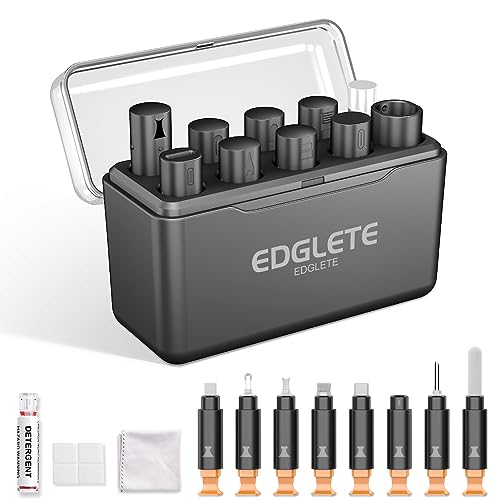
Best for: buyers seeking a portable, multipurpose cleaning tool for iPhones and accessories. Edglete’s kit includes port hooks, steel U-brush, and port wipes intended to clean lightning and USB-C ports, speakers, and switches. It claims to help extend device life by removing contaminants that cause unreliable connections. Note that compatibility claims focus on various devices, and some cables may require separate cleaning tools depending on the connector type.
Buying Guide
What should you look for when choosing a charge port cleaning tool?
- Device compatibility: Confirm whether the kit cleans Lightning, USB-C, and earbud ports to match your devices.
- Tool variety: Look for a mix of hooks, brushes, wipes, and possibly putty to handle different port shapes and debris types.
- Port safety: Prefer tools designed not to leave residues or scratch surfaces; avoid overly sharp objects that could damage connectors.
- Port repair capability: Some kits include detergents or steps to help restore intermittent charging; verify these claims.
- Port scope: If you own multiple devices (phone, tablet, earbuds), a multi-tool approach can reduce clutter.
- Porting limits: Some kits do not clean USB-C cables; ensure your needs align with the kit’s stated capabilities.
FAQ
- Do these cleaning kits fix charging problems? Answer: They can remove debris and oxidation, potentially improving connections, but not all charging issues are solvable by cleaning alone.
- Can I use a cleaning tool on USB-C cables? Answer: Some kits explicitly do not clean USB-C cables; check the product description for compatibility.
- Are cleaning tools safe for iPhone ports? Answer: Yes, when used as directed, they are designed to avoid getting stuck and to safely remove dust and lint.
- Should I clean earbuds and headphones as well? Answer: Many kits include brushes and wipes intended for earbud housings and speaker grilles to improve hygiene and sound clarity.
- Is a putty-based cleaner better than brushes? Answer: Putty helps reach crevices; brushes are better for sweeping debris from larger ports and grills. A combination often yields the best results.
- How often should I clean charging ports? Answer: Regular maintenance based on usage and environment helps prevent buildup; avoid excessive cleaning that could wear connectors.