When choosing a toothbrush for a small mouth, look for compact heads, ultra-soft bristles, and ergonomic grips that comfortably reach tight spaces. The top picks below are ideal for adults and kids with sensitive gums, braces, or limited mouth openings. Each product section explains who it’s best for, why it was selected, and any practical caveats. The following table highlights key suitability at a glance.
| Product | Best For | Why Pick |
|---|---|---|
| Oral-B Gum Care Extra Soft Toothbrush | Sensitive gums, general cleaning | Compact head, ultra-soft bristles |
| GuruNanda Butter on Gums | Gum sensitivity, adults and kids | 8000+ ultra-soft Softex bristles |
| Dimeho Tuft Toothbrush | Precise cleaning in small spaces | Small-headed, angled design |
| Nimbus Extra Soft Toothbrushes | Ultra-sensitive gums | Two-level tapered bristles for safe cleaning |
| TePe Angle Soft-Bristle | Orthodontic braces care | Small-head, angled design |
Oral-B Gum Care Extra Soft Toothbrush

Best for: Individuals with very sensitive gums or prone to irritation. This toothbrush features ultra-soft bristles and a compact head that cleans gently along the gumline. It is a practical choice for daily maintenance without aggressive brushing. The design aims to reduce gum sensitivity while effectively addressing plaque near the gumline.
Why selected: Oral-B is the #1 dentist-recommended toothbrush brand worldwide. The pack of three ensures a consistent soft-cleaning option for multiple users or for travel use.
Caution: Even with ultra-soft bristles, avoid applying excessive pressure; brushing too hard can still irritate delicate gums.
GuruNanda Butter on Gums Toothbrush
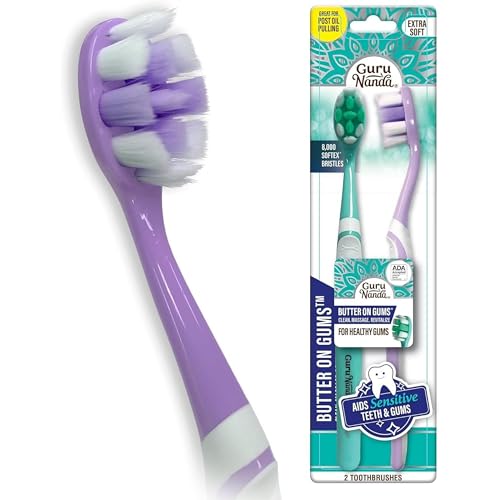
Best for: People with gum sensitivity and those recovering from dental procedures. The brush touts 8000+ Softex ultra-soft bristles to reduce irritation while cleaning effectively. Its ergonomic rubberized handle enhances control for precise brushing in small spaces.
Why selected: ADA Accepted for sensitive gums, this option emphasizes comfort and thorough cleaning. The multi-directional bristles support comprehensive cleaning without harsh scrubbing.
Limitation: The large bristle count may feel unusual to first-time users; adjust your brushing technique to benefit from the soft bristles without overdoing it.
Dimeho Tuft Toothbrush Tiny Small Head

Best for: Braces wearers, implants, and hard-to-reach areas. The tufted, small-headed design allows precise cleaning in interdental spaces and around dental hardware. Its gentle bristles protect sensitive teeth while reaching back molars and crowns.
Why selected: The small head and tapered tuft design enable targeted cleaning where conventional brushes struggle, reducing residual food particles in tight gaps.
Limitation: Some users may need time to adapt to the tufted structure, especially if they are accustomed to larger-headed brushes.
Nimbus Extra Soft Toothbrushes (5 Pack)

Best for: Individuals with ultra-sensitive gums seeking a durable option. The Nimbus design uses two-level bristles for gentle cleaning and deep plaque removal where accessible. The case-for-each-brush approach supports hygiene and storage.
Why selected: Periodontist-inspired design emphasizes safety and efficacy for sensitive mouths, with bristles engineered to minimize irritation while maintaining cleaning effectiveness.
Caution: Bristle density may feel soft to some users right away; consistent, light pressure yields best results without discomfort.
GuruNanda Butter On Gums Toothbrush (6 Count)

Best for: Families or users who want a consistent supply of ultra-soft toothbrushes. With 8000+ Softex bristles per brush, it supports gentle cleaning for sensitive gums and post-dental care routines.
Why selected: ADA Accepted and designed for gum sensitivity, this option promotes thorough cleaning without aggressive brushing. The assortment of assorted colors helps with quick identification in households.
Limitation: The six-pack may be more than needed for an individual; consider sharing with family members to maximize value and reduce waste.
Buying Guide
What to look for in a small-mouth toothbrush: a compact head, ultra-soft or Softex bristles, and an ergonomic handle. A small head helps navigate tight spaces, while gentle bristles minimize gum irritation. Bristle density and brushing technique influence effectiveness, so start with light pressure and focus on consistency over force.
When to choose a compact head vs. standard head
Choose a compact head if you have a small mouth, braces, implants, or gum recession. For general sensitivity, ultra-soft bristles may be more important than head size, but a compact head enhances precision in difficult areas.
How to assess bristle softness and cleaning reach
Look for two-dimensional bristle design or multi-directional bristles that can adapt to curves along the gumline. Softer bristles reduce irritation, while designed patterns improve coverage around back teeth and between interdental spaces.
Ergonomics and user considerations
Consider a textured handle or rubberized grip for better control, especially for users with limited dexterity or those who brush with a light touch. A comfortable grip encourages proper brushing technique and daily use.
Orthodontic and dental work considerations
For braces, retainers, or implants, opt for a small head with tapered or tufted bristles that access narrow gaps without applying extra pressure. Interdental brushes and special orthodontic brushes can complement daily brushing.
Choosing a multi-pack vs. single brush
Multi-packs reduce replacement frequency and ensure a consistent experience across family members. For individuals, a single brush with a replacement schedule may fit better with habits and budget.
Maintenance tips
Rinse brushes thoroughly after brushing, air-dry upright, and store away from the toilet to minimize contamination. Replace brushes every 3 months or sooner if bristles become frayed or bent.
FAQ
- What makes a toothbrush good for a small mouth? A compact head, extra-soft bristles, and a comfortable grip that reach tight spaces without excessive pressure.
- Are ADA-accepted brushes better for sensitive gums? ADA acceptance indicates adherence to safety and quality standards, which is often beneficial for sensitive gums.
- Should I use a manual or electric toothbrush for small mouths? For small mouths, a manual brush with a compact head can offer precise control; electric brushes with small heads may provide consistent brushing motions but check compatibility with your mouth size.
- How often should I replace a toothbrush? Replace every 3 months or sooner if bristles fray or splay, especially in sensitive mouths.
- Can these brushes help with orthodontic appliances? Yes, small-head and specialized orthodontic brushes can improve cleaning around braces and brackets.
- Do soft bristles damage enamel? Soft bristles, when used with light pressure, minimize enamel wear and protect gums while cleaning effectively.