Answer: A HEPA-filter dust extractor is ideal for DIYers and professionals who need strong suction and reliable filtration to manage dust from power tools. The top picks below emphasize HEPA filtration, auto-clean features, and compatibility with common tool deployments. Best for: carpenters and workshop users seeking automatic filter cleaning; budget-conscious buyers who still want HEPA filtration; contractors needing portable yet capable dust control.
The following table compares five highly relevant models to help you decide quickly. All selections emphasize HEPA filtration, tool-activated operation, and practical suction power for woodworking and workshop dust.
- Product: DEWALT DWV010 HEPA Dust Extractor with Automatic Filter Cleaning — Best overall balance of auto-clean, airflow, and tool activation.
- Product: Festool 578441 CT 15 Dust Extractor — Best for premium build and high filtration capacity.
- Product: Bosch VAC090AH Vacuum — Best for OSHA-style dust control and portable reliability.
- Product: Makita VC4210L — Best for high CFM and automatic filter cleaning in a compact size.
- Product: Dapper Supply Wet/Dry Dust Extractor — Best for value with auto HEPA and strong suction.
DEWALT DWV010 HEPA Dust Extractor With Auto Filter Clean
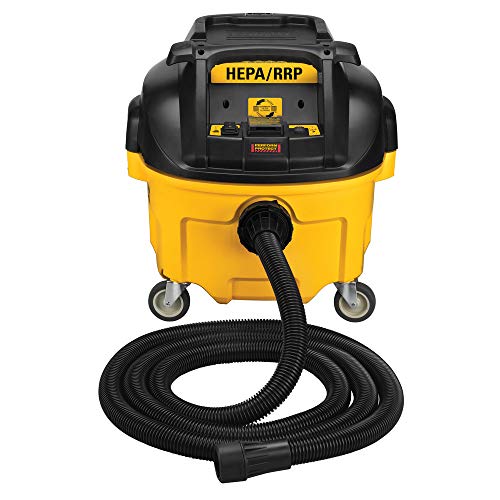
The DEWALT DWV010 provides automatic filter cleaning that pulses every 30 seconds for continuous operation. It delivers about 150 CFM and features Power Tool Actuation to start the vacuum with a connected tool. Best for: carpenters and builders who need hands-free maintenance during sanding and cutting. Caution: filter maintenance reminders depend on usage; verify automatic pulses if running extended sessions.
Festool CT 15 Dust Extractor

Festool CT 15 offers HEPA filtration with an adjustable turbine and a 3.96 gallon container for long-lasting use. It includes cleaning tools stored within the unit and a compact, stable design with steel axles. Best for: professionals who need quiet operation, reliable filtration, and a robust warranty. Caution: higher upfront cost compared to entry-level models.
Bosch VAC090AH Portable Dust Extractor

Bosch VAC090AH delivers up to 150 CFM with a maximum 97 inches of water lift and supports tool activation, enabling a tool-driven start for controlled dust capture. Best for: users who require OSHA-compatible dust control and a portable option for job sites. Caution: ensure compatible accessories for maximum performance in tight spaces.
Makita VC4210L Wet/Dry HEPA Dust Extractor

Makita VC4210L offers 148 CFM suction with 92″ water lift and an automatic filter cleaning system. It uses a HEPA filter capturing 99.97% of particulates at 0.3 microns and larger. Best for: those needing strong suction alongside reliable filtration for fine dust. Caution: larger models may be heavier to transport around a jobsite.
Dapper Supply Auto HEPA Wet/Dry Dust Extractor

Dapper Supply combines an 8-gallon tank with an auto HEPA filter and a 140 CFM airflow. It features automatic filter cleaning every 25 seconds, aiding continuous operation. Best for: drywalling and general cleanup where consistent filtration and auto cleaning reduce downtime. Caution: as a value option, it may lack some premium features found in higher-priced models.
Buying Guide
What should you prioritize when selecting a HEPA dust extractor?
- Filtration quality: Look for HEPA-grade filtration (99.97% at 0.3 microns) to capture fine woodworking dust and silica particles.
- Auto-clean or PTA features: Auto-clean helps maintain suction without manual filter changes; PTA (Power Tool Activation) starts the vacuum with your tool for seamless operation.
- Airflow and lift: Higher CFM and static lift improve performance with larger tool loads and dense dust.
- Tank size and portability: 8–10 gallon tanks balance emptying frequency with mobility; consider wheel configuration for jobsite movement.
- Tool compatibility: Ensure the unit supports common power tools via standard hoses and fittings; check included accessories.
How to compare models quickly
When comparing, focus on three numbers: CFM (airflow), static lift (inches of water), and filtration type. A model with 150 CFM and at least 92″ lift and true HEPA filtration generally performs well for woodworking tasks. Consider whether you need wet/dry capabilities and a compact footprint for space-limited shops.
Usage considerations
For continuous sanding or cutting sequences, an auto-clean feature minimizes downtime. If you frequently connect to power tools, PTA-enabled models reduce manual startup steps. For fine finishing work, prioritize a unit with reliable HEPA filtration to reduce airborne dust exposure.
Maintenance tips
Regularly check and replace or clean the HEPA filter as per the manufacturer’s guidelines. Empty the tank before it gets too full to maintain suction. Inspect hoses for wear and ensure the power cord and tool-activated connections remain secure.
Frequently Asked Questions
- What is HEPA filtration? HEPA filtration captures 99.97% of particles at 0.3 microns, reducing fine dust in the air.
- Why use auto-clean dust extractors? Auto-clean prevents filter clogging during long jobs, maintaining suction without manual cleaning pauses.
- Can I connect these to multiple tools? Yes, most models support standard tool activation and common shop vac fittings, but verify compatibility for your tools.
- Is a higher CFM always better? Higher CFM helps with larger jobs and multiple tools but may trade off portability or noise. Choose based on your typical workload.
- Do I need wet/dry capability? If your workspace handles water spills or wet dust, a wet/dry model is advantageous; otherwise, a dry-only HEPA unit can be lighter and cheaper.
- How often should I replace the filter? Replace according to usage and manufacturer guidance; frequent heavy use may require more frequent changes.