Answering the need for durable, reliable cleanup tools, this guide highlights top commercial wet/dry vacuums suited for contractors, janitorial crews, and facilities teams. The selections emphasize strong suction, large capacities, and practical features like front squeegees and easy drainage. Best for large spills, heavy dust, and continuous use, these models balance power and maneuverability. For quick comparisons, see the summary table below with the five most relevant options sourced from reputable brands.
| Product | Brand | Capacity | Power | Special Feature |
|---|---|---|---|---|
| Industrial Wet/Dry Vacuum Cleaner JM773 | Farag Janitorial | 21 Gallon | 2000 W | 2 motors, high airflow |
| Farag Janitorial Industrial Vacuum Cleaner Wet/Dry | Farag Janitorial | 24 Gallon | 2000 W | Front squeegee |
| ProTeam ProGuard 20 | ProTeam | 20 Gallon | High power (motor) | Front mount squeegee, easy drain |
| Vacmaster Beast Series VFB511H | Vacmaster | 5 Gallon | 320 Air Watts | High-efficiency cartridge filter |
| Vacmaster VJH1211PF | Vacmaster | 12 Gallon | 5.5 Peak HP | Rugged tank, ample accessories |
Industrial Wet/Dry Vacuum Cleaner JM773 — Farag Janitorial

The JM773 model features a powerful 2000-watt motor and delivers up to 225 CFM. Best for large commercial spaces and heavy liquid pickups, it suits teams that require robust suction and substantial capacity. Choose this if you need maximum air volume for fast cleanup in workshops or warehouses. A potential limitation is heavier weight, which may affect maneuverability on stairs or tight spaces.
Farag Janitorial Industrial Wet/Dry Vacuum — 24 Gallon
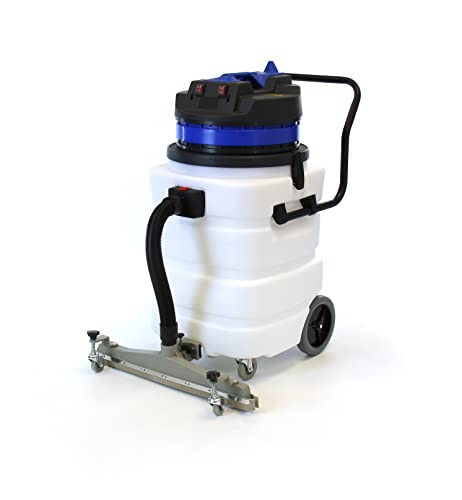
This Farag model provides a 24-gallon tank with a 2000-watt motor and a front squeegee, making it well-suited for water removal and floor stripping in large rooms or garages. It’s a strong pick for facilities teams needing efficient floor cleanup in open areas. Better for sites where frequent squeegee-assisted water pickup is common; note that larger tanks can take more space and may require longer setup times.
ProTeam ProGuard 20 — 20-Gallon, Front Squeegee

The ProTeam ProGuard 20 emphasizes easy maintenance and mobility, with a front mount squeegee and a drain port for quick water removal. It’s best for commercial crews that need efficient cleaning workflows and quick debris disposal. A potential limitation is the absence of some heavy-duty features found in larger industrial models, so assess if you need maximum tank size for long shifts without interruption.
Vacmaster Beast Series VFB511H 5-Gallon

The VFB511H Beast Series offers a compact 5-gallon tank with a high-performance motor and 320 air watts of power. It is ideal for contractors or technicians who need a portable solution with strong suction for vehicle detailing, small shops, or tight work areas. Best for smaller cleanup jobs where mobility outweighs tank size; consider capacity limits for large cleanups.
Vacmaster 12-Gallon Wet/Dry Vacuum — VJH1211PF

The VJH1211PF combines a rugged 12-gallon polypropylene tank with a 5.5 peak horsepower motor and a broad accessory set. It’s well-suited for mid-sized cleanup tasks in construction, manufacturing, or facility maintenance. Choose this if you require a balance between capacity and maneuverability, but be mindful of its bulk in extremely confined spaces.
Vacmaster Beast Series 14-Gallon Vacuum — VJE1412SW

The 14-gallon stainless steel Vacmaster VJE1412SW offers a larger capacity and a 6.5 peak HP motor set. It includes on-board storage for hoses and tools, and a filter system designed to capture fine dust. Best for shop floors and job sites requiring robust pickup with organized tool access. A potential drawback is the heavier weight of an all-steel tank when lifting or transporting between rooms.
Buying Guide
- Capacity vs. footprint: Larger tanks reduce refilling frequency but increase weight and space needs. Match capacity to typical job sizes.
- Power and suction: More watts or horsepower generally means stronger suction, but higher power can increase energy use and noise. Balance with environment and noise tolerance.
- Filtration needs: For fine dust, choose units with high-efficiency filters or cartridge systems. Consider HEPA-rated options for cleanup with fine particles.
- Squeegee and drainage: Front-mounted squeegees help with water pickup on flat floors. Quick-drain ports speed up liquid disposal on dry runs.
- Maneuverability: Wheel arrangement, caster quality, and weight impact site movement. Look for models with smooth casters and easy-to-roll designs.
- Accessory ecosystem: Multiple nozzles, hoses, and brushes extend versatility for cars, garages, and workshops. Ensure compatibility with common tool kits.
- Durability: Steel or heavy-duty plastic tanks withstand jobsite abuse. Stainless options resist corrosion in damp environments.
- Maintenance: Tool-free filter changes and clear DRainage options speed up routine upkeep and reduce downtime.
Frequently Asked Questions
- What size vacuum is best for a large workshop? A model with 20–24 gallons offers a balance of capacity and mobility for continuous use in big spaces.
- Do I need a HEPA filter for wet/dry vacuums? HEPA filters are beneficial when cleaning fine dust or biohazardous debris; verify compatibility with your model.
- Can these vacuums double as blowers? Several models include a blower function or accessory that enables air blowing for debris removal and drying.
- Is stainless steel worth the extra cost? Stainless steel tanks resist rust and improve longevity in damp environments, but add weight and price.
- How important is a front squeegee? Front squeegees are very useful for water removal on smooth floors and can speed up wet cleanup tasks.
- What maintenance practice extends vacuum life? Regularly clean filters, replace worn hoses, and store attachments properly to avoid clogs and leaks.