Finding the strongest adhesive for plastic-to-metal repairs requires balancing speed, durability, and ease of use. This guide analyzes five standout options that claim exceptional strength, focusing on metal-to-plastic bonding performance, curing times, and practical limitations. Best for DIYers, automotive repair enthusiasts, and workshop pros seeking reliable one-part or two-part solutions.
Quick product snapshot:
- Super Glue XXL Value Size – Strong all-purpose, fast-drying bonding for multiple substrates.
- WoldoClean Metal Super Glue 25g – Heavy-duty, heat resistant for metal joints.
- J-B Weld Plastic Bonder – Two-part system designed for thermoset and thermoplastics with a strong bond.
- Meuvcol Metal Glue 100g – Industrial-strength, fast-bonding, odorless formula.
- Cerca de Metal Glue – Versatile epoxy adhesive for metal and many substrates with added metal powder.
Super Glue XXL Value Size: All Purpose, Fast Dry

Best for: quick fixes on light-to-moderate plastic-to-metal repairs where a clear, fast-drying bond is valued. This product is notably large, making it suitable for high-use settings or frequent small projects. It also notes bonding capability across wood, rubber, ceramic, leather, and metal, offering versatility beyond metal repairs.
Why selected: It emphasizes a high bonding power with a rapid-dry formula and a clear finish, helping discreet repairs on intricate parts. The generous 50 g size is advantageous for ongoing projects and reduces replacement frequency.
Limitations: As a general-purpose adhesive, it may not provide the same long-term metal-fusion durability as dedicated two-part epoxy on heavy-load metal joints or high-stress automotive components.
WoldoClean Metal Super Glue 25g

Best for: quick, high-strength repairs on metal-to-metal joints where heat resistance and moisture exposure are concerns. This glue is described as heat resistant and suited for automotive repairs and outdoor use, with a precision tip for controlled application.
Why selected: The product is a dedicated metal super glue, with a claimed heat resistance range and water/chemical resistance—important for exterior or engine-side metal fixes. It dries clear, which helps maintain a neat appearance on visible repairs.
Limitations: Being a cyanoacrylate glue, performance can dip on highly flexible joints or where gap filling is required for larger mismatches. A clean, dry surface is essential for best results.
J-B Weld Plastic Bonder
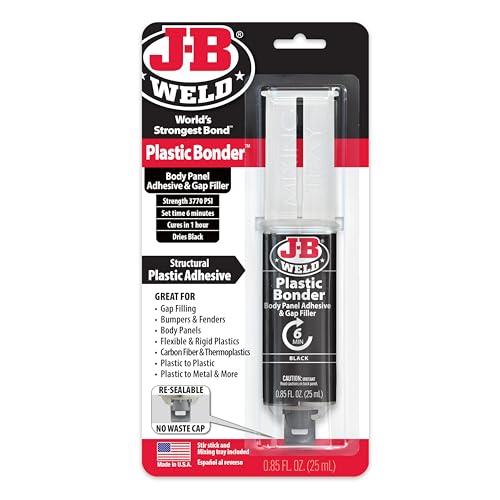
Best for: thermoplastic or coated metal components in need of a strong, durable bond with a defined mix ratio. The 1:1 mixing, 15-minute set, and 3770 psi tensile strength make this a solid choice for automotive panels, plastic parts bonded to metal, and other durable assemblies.
Why selected: J-B Weld Plastic Bonder offers a two-part system engineered for plastic-to-metal compatibility with a strong, lasting bond and practical working time. It can be sanded after curing for a neater finish.
Limitations: Requires mixing, a curing window for positioning, and a longer cure-to-full-strength period compared with instant adhesives.
Vicpricme Heavy-Duty Metal Glue

Best for: metal-to-metal repairs in workshops or garages requiring a strong, water-resistant epoxy weld substitute. It supports aluminum, steel, stainless, cast iron, and related metals, with a 30-minute working window for controlled repairs.
Why selected: Its 30-minute working time and 1:1 mix provide predictable alignment and build thickness during repairs. This epoxy-style formulation finishes hard, is drillable, sandable, and paintable after full cure.
Limitations: Like many epoxies, longer cure times may be needed for full strength in some environments; surface prep quality influences ultimate bonding performance.
Meuvcol Metal Glue 100g

Best for: metal repairs that require fast bonding and a clear dry finish, especially where metal-to-metal joints are involved in crafts, automotive parts, or tools.
Why selected: It emphasizes industrial-strength bonding with rapid set times and a safe, odorless formulation, making it suitable for indoor use and sensitive environments. Clear-drying helps preserve appearance on visible joints.
Limitations: As with many fast-setting glues, gap filling is limited; larger gaps may require a filler or a different adhesive with better gap-bridging capability.
Cerca de Metal Glue

Best for: heavy-duty metal-to-metal repairs where a stronger, structural bond is needed and where compatibility with plastics and ceramics is beneficial.
Why selected: This epoxy adhesive product claims a powerful bond with added metal powder, plus resistance to temperature, water, and oil—useful for harsh environments. It can be sanded, painted, and drilled after curing.
Limitations: It may require more careful surface preparation and mixing if used in non-standard conditions, typical of epoxy-based metal glues.
Buying Guide: How To Choose The Right Plastic-To-Metal Adhesive
- Bond strength vs. curing time: For high-load joints, two-part epoxies or urethane formulations offer superior tensile strength, while instant glues work well for quick, low-load fixes.
- Material compatibility: Ensure the adhesive explicitly supports plastics and metals in your project. Some products are optimized for brass, stainless steel, or aluminum with plastic surfaces.
- Surface preparation: Clean, dry, and abraded surfaces maximize bond strength. Oils, dust, and oxidation can dramatically reduce performance.
- Environmental exposure: Consider heat, moisture, and chemical resistance. Outdoor or automotive applications demand materials rated for weather and temperature fluctuations.
- Application method: Precision tips help with gap-filling on vertical surfaces. Mixing requirements add time but can yield stronger, longer-lasting bonds.
- Repair duration: If you need quick fixes, choose fast-drying formulas with clear finishes. For critical assemblies, prioritize prolonged working time and higher final strength.
Frequently Asked Questions
- What is the strongest adhesive for metal-to-plastic bonds?
– Epoxy-based or urethane formulations generally offer higher strength for metal-to-plastic joints, especially when load or environmental exposure is a concern. - Can cyanoacrylate (super glue) work on metal and plastic?
– Yes, for small, rigid joints with minimal gap. It dries quickly but may be less durable under shear or vibration than two-part epoxies. - Do I need to roughen plastic surfaces before bonding?
– Lightly abrade and clean surfaces to improve mechanical grip and remove oils that can weaken adhesion. - How long does curing take for metal-to-metal bonds?
– It varies by product; some set in minutes, but full strength may require hours to days depending on formulation and temperature. - Is it safe to use these adhesives indoors?
– Most products are formulated for indoor use, but follow the manufacturer’s safety guidelines and ensure good ventilation. - Should I clamp or hold parts during curing?
– Clamping helps ensure proper alignment and reduces movement that could weaken the bond during cure.