Answering the common question “what is the best super glue for all plastics?” this guide highlights top picks that bond diverse plastics like PVC, ABS, acrylic, PLA, and more. The listed products emphasize control, fast drying, and reliability for everyday repairs and hobby projects. Ideal buyers include hobbyists seeking precise application, professionals needing bulk supply, and crafters dealing with vertical surfaces. Below is a concise table of the five selected products to help you compare at a glance.
| Product | Best For | Key Benefit |
|---|---|---|
| Loctite Super Glue Ultra Gel Control | Vertical surfaces, delicate assemblies | No-drip formula with maximum control |
| GH1200 2-in-1 Super Glue | Versatile use, multiple plastics | Brush applicator + nozzle for precision |
| Y’allCanDiy Plastic Glue | Modeling, miniatures, LEGO projects | High bonding strength for plastics |
| Gorilla Super Glue Gel XL | Precision repairs, vertical edges | Non-run gel formula for controlled application |
| Gorilla Super Glue | General repairs, small parts | Impact Tough and anti-clog cap |
Loctite Super Glue Ultra Gel Control, Clear
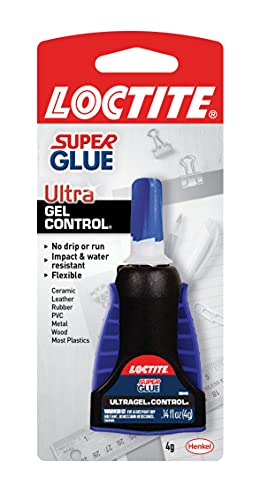
Loctite’s Ultra Gel Control is designed for precision bonding on plastics and other materials. The rubber-toughened formula resists water, impact, and vibration, making it suitable for everyday items that endure occasional stress. The no-drip gel helps keep the adhesive exactly where you apply it, reducing mess on vertical surfaces. The patented side-squeeze bottle offers precise control for pinpoint bonding, which is beneficial when working with small parts like model components or toy repairs. Best for projects that require clean, controlled application and where moisture exposure could be a concern. A potential limitation is that it’s optimized for small to medium fixes; very large parts may require more product or multiple applications.
GH1200 (2-in-1) Super Glue with Brush

The GH1200 set features a brush applicator plus a nozzle for versatile bonding on plastic, rubber, and other materials. The formula is designed to prevent drying out, addressing common frustration with stiff tubes and caps. The brush offers controlled coverage for larger areas or detailed edges, while the nozzle can handle precise drops for tiny joints. Choose this if you value both hands-on control and extended usability—particularly helpful for projects with varied surface areas. A note: the product description emphasizes control and mess reduction, but actual cure time may vary with material and surface porosity.
Y’allCanDiy Plastic Glue for Models and More

This model-focused plastic glue is marketed for a wide range of plastics including PVC, ABS, acrylic, and more. It emphasizes high bonding strength and quick set times for projects like model aircraft or plastic toys. The faster dry time helps maintain project momentum, especially for hobbyists who work in layers. It’s best for people prioritizing rapid fixes and durable bonds in modeling or repair tasks. A limitation to consider is that strong bonds can make future disassembly difficult if a joint needs adjustments later.
Gorilla Super Glue

Gorilla’s classic super glue is a compact option with a focus on speed and reliability. The bottle uses an anti-clog cap with a metal pin to help keep the tube usable over multiple small repairs. It offers an impact-tough formula designed to bond quickly on a variety of plastics and other substrates. Best for fast, everyday fixes where precise, small-area bonding is needed. A caution: small tubes can run through quickly on frequent use; consider the Gel XL variant for vertical work or larger surfaces.
Buying Guide
What plastic types are you bonding?
Different super glues perform differently on plastics like PVC, ABS, acrylic, PLA, and PETG. For all-plastic repairs, look for cyanoacrylate formulas labeled as versatile or “plastic glue.” If you work with flexible or slightly porous plastics, a rubber-toughened or gel formula can provide better gap-filling and resistance to moisture.
Do you need precision or rapid fill?
Precision is aided by brush applicators, nozzles, and side-squeeze bottles. Gel or brush-on variants reduce dripping and improve control on vertical surfaces. For tiny joints, a standard liquid with a fine nozzle may suffice, but a gel can prevent run-off on delicate parts.
How important is cure time and clogs?
Fast-setting formulations speed up projects but may limit repositioning time. Anti-clog caps and dual-action tips help maintain usability across multiple sessions. If you expect long-term storage between uses, an adhesive with a proven anti-clog design is beneficial.
What about bond strength and impact resistance?
Look for “Impact Tough” or similar claims if the bonded item will endure bumps or vibrations. For base materials like modeling parts or toy components, a higher shear strength and quick handling time reduce the risk of re-bonding.
What is your project scale?
Smaller repairs can be handled with compact tubes or gels, while larger projects may benefit from larger 20–50 g bottles that deliver more material per purchase. If you frequently repair multiple items, a bulk-size option can reduce repeated purchases.
FAQ
- Is gel better than liquid for plastics? Gel formulations reduce run-off on vertical surfaces and allow precise placement, making them suitable for overhead or layered repairs.
- Can I bond PVC and ABS with the same glue? Many all-plastic glues are designed for multiple plastics, but verify that the product is labeled for PVC, ABS, acrylic, and similar plastics to ensure compatibility.
- Will these glues work on small hobby parts? Yes. Small-tube or brush-applicator options provide precision for hobby models, miniatures, and tiny joints.
- Do I need to clamp after applying? Most quick-setting cyanoacrylates bond rapidly and do not require clamps, though clamping can help with alignment for larger joints or gaps.
- What should I avoid when using CA glues on plastics? Avoid overheating parts during curing, and keep solvents away from certain plastics that can craze or warp when exposed to strong adhesives.
- Which product is best for vertical surfaces? Gel-based or side-squeeze bottle designs excel in vertical applications due to reduced dripping and better control.