If you’re looking for a reliable fish tank cleaner siphon, these tools simplify gravel and water changes for freshwater setups. They’re best for hobbyists who want simple, hands-on control without heavy equipment. For smaller tanks, lightweight siphons work well; for larger tanks, look for longer hoses and sturdy construction. Below, five top options are evaluated, highlighting who benefits most from each design and why they were selected. A quick summary table follows to compare key points at a glance.
| Product | Best For | Key Benefit |
|---|---|---|
| Laifoo 5ft-S Aquarium Siphon Vacuum Cleaner | Small to medium tanks; beginners | Durable hose, gentle on fish, detachable filter screen |
| Tetra Water Cleaner Gravel Siphon | Easy, quick maintenance for up to 55 gal tanks | Simple monthly water changes |
| enomol Gravel Vacuum | Medium to large tanks; hands-off drainage | Quick water changes with semi-automatic flow |
| QZQ Aquarium Gravel Cleaner | All-in-one kit; versatile cleaning | Manual press, filter net, multi-head design |
| AQUANEAT Aquarium Vacuum Siphon | Easy setup; small tanks or quick cleanings | Bulb pump for simple start of flow |
Laifoo 5ft-S Aquarium Siphon Vacuum Cleaner

The Laifoo 5ft-S siphon is designed for controlled removal of fish waste and turbidity from small to medium tanks. Its 5-foot hose is clear and elastic, offering durability and anti-kinking properties. A detachable filter screen inside the gravel tube helps prevent disturbing fish or decor while cleaning. This model is best for hobbyists who want a straightforward, low-maintenance option that preserves aquarium aesthetics while performing routine siphoning tasks.
Best for: Beginners or hobbyists with tanks up to a few dozens of gallons who value simple operation and sensitive filtration. Caution: Ensure the filter screen is properly seated to avoid debris bypass during heavy cleaning.
Tetra Water Cleaner Gravel Siphon
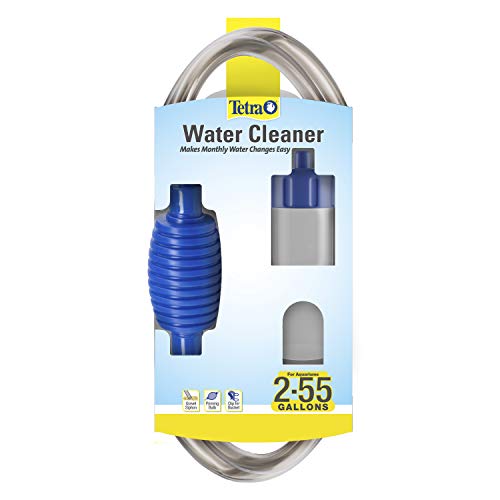
The Tetra Water Cleaner Gravel Siphon is tailored for freshwater aquariums and supports tanks up to 55 gallons. Its design focuses on simplifying monthly water changes, reducing the time needed to remove and replace a portion of tank water. This option is well-suited for hobbyists who prefer a predictable, routine maintenance workflow and compatible performance with mid-sized setups.
Best for: Aquarium owners who perform regular partial water changes and want a dependable, easy-to-use siphon for mid-sized tanks. Caution: May require careful guidance during initial setup to ensure even flow and avoid disturbing substrate.
enomol Gravel Vacuum for Aquarium Water Change

The enomol Gravel Vacuum offers a semi-automatic water-changing experience with a long 30-foot hose variant. It’s designed to drain water efficiently using tap-water pressure, making it suitable for medium to large setups. The included cleaning tube has a built-in filter to reduce gravel blockage and minimize disturbance to fish. Best for: Aquarists seeking a larger, pipe-style system that minimizes manual pumping while delivering quick water changes. Caution: Longer hoses can be more cumbersome to manage in tight spaces.
QZQ Aquarium Gravel Cleaner [2026 Edition]
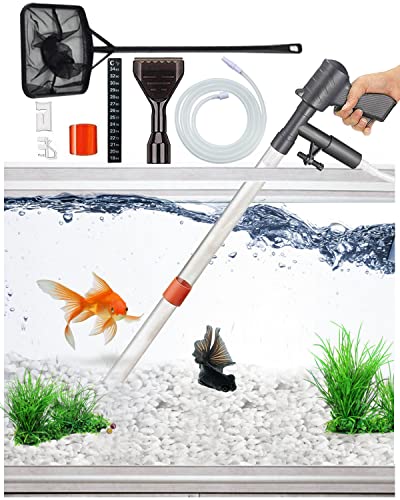
The QZQ kit is a multi-functional cleaning solution with a manual press design, eliminating electricity needs and noise. It includes a high-quality airbag and a protective filter basket to prevent gravel and fish from clogging the system. Its three independent cleaning heads enable targeted tasks such as gravel cleaning, algae scraping, fish waste removal, and water changes. Best for: Dedicated hobbyists who want an all-in-one kit with adjustable cleaning options. Caution: Manual operation requires some practice to maximize flow and avoid over-suction.
AQUANEAT Aquarium Vacuum Siphon

The AQUANEAT siphon uses a bulb pump to start the flow, simplifying setup. It’s described as suitable for basic draining and filling tasks, with a filter screen to protect small fish during suction. This option is better for first-time users or cleaners for smaller tanks who desire quick starts without extra equipment. Best for: Small tanks or occasional quick changes. Caution: May require frequent pumping for larger volumes or heavily soiled substrates.
Buying Guide
What should you consider when selecting a fish tank cleaner siphon?
- Tank size and length of hose: Choose a model with a hose long enough to reach across your tank and stand comfortably away from water hazards.
- Flow control and ease of pumping: Look for adjustable flow, a stable pump, or a gravity-assisted design depending on your preference for manual effort.
- Filtration and protection: A built-in filter or screen helps prevent fish and substrate from being sucked into the siphon; this is crucial for delicate species.
- Multi-function features: Some kits include algae scrapers, sand washing heads, or multiple cleaning heads for versatility. Consider whether you want an all-in-one solution.
- Noise and electricity: Manual siphons are silent and simple, while some semi-automatic tools reduce effort but may rely on taps or airflow.
FAQ
- What is a siphon fish tank cleaner best used for? – It is ideal for removing waste, performing partial water changes, and cleaning gravel without transferring large volumes of water manually.
- Can these siphons handle large gravel or sand substrates? – Some models include filters and wider intake options; check the product’s gravel compatibility before use.
- Do siphons require electricity? – Most traditional siphons are manual or gravity-driven and do not require electricity; some kits may use a pump mechanism that could involve electricity indirectly.
- Is it safe for fish during cleaning? – Use models with protective screens or filters to prevent fish from being sucked into the device.
- How long should a 20–30% water change take? – It depends on tank size and flow rate; many basic siphons complete this in about 5–15 minutes for small to medium tanks.
- Are all siphons compatible with freshwater tanks? – Yes, but verify the device’s materials and design, especially for sensitive species or habitats.