Answering your clog-removal needs with practical, widely available tools. This guide highlights plunger and clog-removing options suited to different buyers: homeowners seeking quick, manual unclogging; renters needing compact storage; and DIY enthusiasts wanting high-pressure, electric solutions. Below, five top picks are analyzed for fit, ease of use, and potential limitations. A quick comparison table summarizes the best use cases to help you pick fast.
Quick Buying Table
| Product | Best For | Key Benefit | Limitations |
|---|---|---|---|
| Korky BeehiveMAX | Traditional clog emergencies | Beehive shape for all bowl styles; adjustable handle | Manual effort required |
| POPULO Electric Plunger | Stubborn clogs fast | Built-in air pump, 5 Bar pressure | Battery/charging considerations |
| AMPFORCE Electric Plunger | Heavy-duty, frequent use | 1–8 Bar adjustable, anti-splash head | Higher price point |
| Green Gobbler Liquid Plunger | Liquid-clear clogs | Fast-acting formula, safe for septic | Chemical-based, needs time to work |
| MR.SIGA Plunger with Holder | Storage-friendly sets | Ergonomic handle, space-saving holder | Manual plunger, standard design |
Korky BeehiveMAX Heavy Duty Toilet Plunger
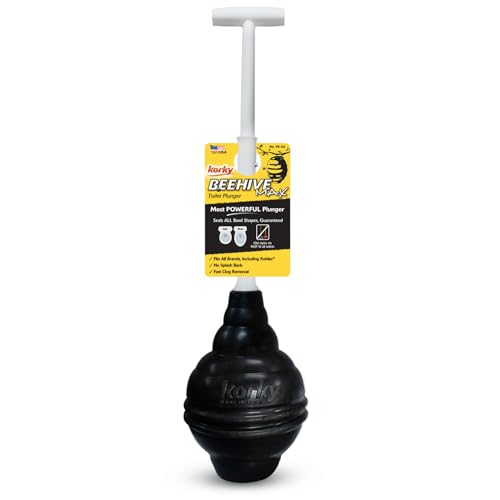
The Korky BeehiveMAX is designed to fit a wide range of toilet bowls, including old and new high-efficiency models. Its beehive-shaped cup concentrates pressure where clogs form, delivering a strong plunge with minimal effort. The T-handle provides a secure grip, and the adjustable telescoping handle makes storage under sinks or vanities simple. This product is best for homeowners who want a reliable, reusable manual plunger that works across different bowl shapes. Caution: effectiveness depends on user technique and the clog type; some deep blockages may require additional methods.
POPULO Electric Toilet Plunger

POPULO’s Electric Plunger relies on an integrated air pump to reach up to 5 Bar in 20–30 seconds, reducing manual pumping effort. It is best for quick, powerful unclogging in households with frequent minor to mid-level clogs. The device is also marketed as usable on sinks, showers, and kitchen drains, expanding its utility beyond toilets. Limitation: reliance on battery power means performance may vary with charge and repeated use. Some users may prefer a purely manual backup for reliability.
AMPFORCE Electric Toilet Plunger

AMPFORCE offers a high-pressure electric air plunger with 1–8 BAR adjustable settings and a 120-degree angled head to form a vacuum-tight seal, reducing splash and enabling deeper unclogging. It is best for households facing frequent or stubborn blockages and for users who want minimal manual effort. The design emphasizes easy cleaning and compact storage with a pouch. Limitation: higher upfront cost and a need for occasional charging or battery care; not ideal for permanent, all-in-one manual use in a single drawer.
MR.SIGA Toilet Plunger With Holder
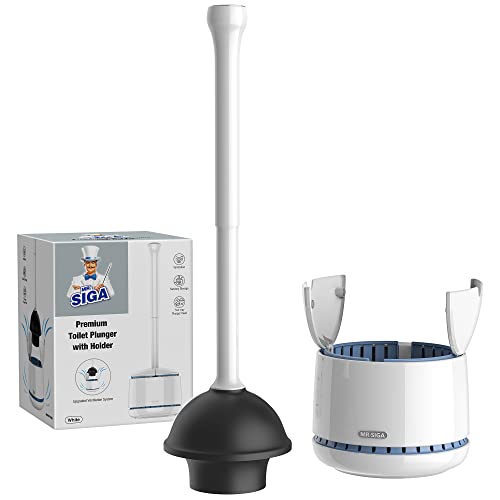
MR.SIGA delivers a traditional heavy-duty plunger with an integrated holder for neat bathroom storage. The ergonomic handle and robust suction cup offer reliable plunging power suitable for routine clogs and residential use. This option is well-suited for those who want a straightforward, space-efficient setup with a clean presentation. Limitation: lacks the advanced features of electric models; performance hinges on user technique and clog severity.
Buying Guide
What kind of clog are you dealing with?
Light to medium toilet clogs respond well to traditional plungers like Korky BeehiveMAX or MR.SIGA. For stubborn clogs, electric air plungers from POPULO or AMPFORCE deliver faster, higher-pressure results with less manual effort. If you’re dealing with multiple drains, consider models that claim versatility beyond toilets, such as POPULO and AMPFORCE.
Manual vs. electric needs
Manual plungers are reliable, affordable, and always ready. Electric models reduce effort and can handle tougher blockages but depend on battery charge and can require more storage space. Choose based on how often you expect to unclog toilets and whether you want a multi-function tool.
Storage, size, and space considerations
Compact and telescoping handles help hide the tool under a sink, while models with integrated holders promote bathroom tidiness. If space is at a premium, MR.SIGA’s holder design and Korky’s stowable handle are notable benefits.
Safety and compatibility considerations
Bead or beehive cups are designed to seal different bowl shapes; ensure the model supports your toilet type. Electric plunger designs with anti-splash features reduce mess, but require careful handling and maintenance.
Maintenance and longevity
Foam or rubber seals require cleaning after use to prevent odors or residue buildup. Electric models benefit from simple rinsing of the head and a dry storage habit. Look for products with easy-clean surfaces to extend their service life.
Frequently Asked Questions
- Which toilet plunger is best for all toilet shapes? The Korky BeehiveMAX is designed to fit a wide range of bowl shapes, including older and newer models.
- Do electric plungers work faster than manual ones? Yes, electric models can generate higher pressure quickly, which helps tackle stubborn blockages with less manual effort.
- Can I use a liquid drain cleaner instead of a plunger? Liquid clogs removers work in some cases but are not a replacement for mechanical plunging on severe clogs; they are best used as a supplementary solution or for initial treatment.
- Is a plunger safe for septic systems? Most plunger designs are safe for septic systems when used as directed; avoid chemical additives that may disrupt septic processes.
- What should I look for in a space-saving plunger? A compact head, a collapsible or telescoping handle, and an integrated holder or discreet caddy help keep storage tidy.
- When should I replace a toilet plunger? Replace if the rubber seal shows cracks, tears, or loss of suction, or if the head becomes deformed and cannot form a proper seal.