When making soap, maintaining the correct pH is essential for skin-friendliness and product stability. This guide highlights top pH test strips that are practical for soap makers, hobbyists, and small-scale formulators. Each option below is chosen for clarity, speed, and broad pH range, helping you monitor acidity or alkalinity with confidence. The buyer’s notes explain who benefits most from each product, plus any practical limitations to consider.
| Product | Best For | Key Benefit |
|---|---|---|
| HomEnjoy 2 Pack pH Test Strips (160 strips) | Soap makers needing full-range fast reads | Accurate, quick 5-second readout from 1–14 |
| LabRat Supplies Plastic pH Test Strips (100 strips) | General testing across liquids | Lab-grade accuracy with immediate color comparison |
| BACNUNN pH Test Strips (200 strips) | Precision-focused testing | Referenced as highly accurate across 0–14 |
| HomEnjoy 4 Pack pH Test Strips (320 strips) | Bulk soap batches | Wide range, multiple packs, quick results |
| GPJYYDS 6 Pack pH Test Strips (480 strips) | Frequent testers and classrooms | High-volume pack with full-range capability |
Note: Each product is listed with its official features to help you compare usability, range, and storage. The selections emphasize strips that give clear color matches and fast results, making them suitable for regular soap making sessions and small labs.
HomEnjoy 2 Pack pH Test Strips

Best for quick, reliable readings in a compact kit. These strips cover pH 1–14 and come in a sealed 2-pack for convenient storage. The product is particularly suitable for soap makers who want a fast confirmation of alkaline or acidic conditions in small batches. The 5-second readout helps maintain workflow efficiency. Caution: Store in a cool, dry place to preserve accuracy.
LabRat Supplies Plastic pH Test Strips
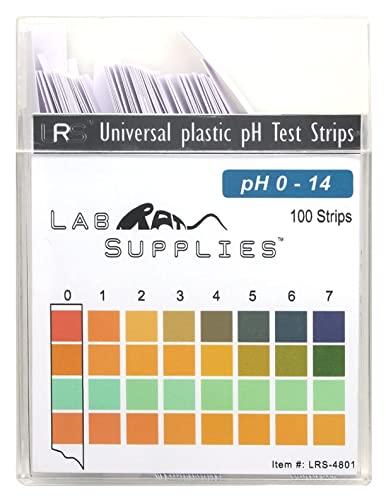
Designed for broad application, these strips are ideal for testing water, urine, saliva, soil, and soap. They deliver near-instant color changes and match against a color chart on the case, making them user-friendly for routine soap-making checks. Best for: laboratories, hobbyists, and field testing. Limitation: Storage recommendations should be followed to avoid drift in readings.
BACNUNN pH Test Strips 0-14

Noted for high accuracy and a full 0–14 range, BACNUNN strips are suited for precise measurements in water testing, soap making, and fermentations. They include practice-oriented color charts that support quick visual matching. Best for: users who require dependable data for critical formulations. Caution: Read the manual to understand color interpretation nuances across different lighting conditions.
HomEnjoy 4 Pack pH Test Strips

This bulk option suits soap makers doing larger batches, offering 320 strips across a full pH 1–14 range. It emphasizes fast responses and versatile use for chemical testing, water quality, and soil testing. Best for: high-output small businesses or serious hobbyists. Caution: Ensure proper storage to maintain accuracy over time.
GPJYYDS 6 Pack pH Test Strips

Ideal for frequent testing, this 6-pack provides 480 strips with rapid readouts. The full 1–14 range supports broad soap-making needs and other liquid testing tasks. Best for: classrooms, labs, or professional hobbyists who run multiple experiments. Caution: Verify cap or container closure to prevent moisture exposure that can affect results.
HOVIRAN Universal pH Test Strips 0-14

HOVIRAN strips emphasize reliability and speed, offering readings from 0 to 14. They are suitable for testing water, kombucha, wine, and soap-making liquids. Best for: users seeking a simple dip-and-read approach with a clear color chart. Limitation: Some users may prefer a larger color-contrast range for very similar pH values.
A QUILA pH Test Strips 150 Count

This kit offers 150 strips in a compact container, suitable for regular soap-making explorations and mixed liquid testing. It covers the full pH range 0–14 and includes a broad set of applications from skincare to fermentation. Best for: casual to intermediate soap-makers who need a dependable, affordable option. Caution: Package contents should be stored away from direct sunlight to preserve color accuracy.
GPJYYDS 1600 Strips Bundle

Best for ongoing, large-scale soap operations, this 1600-strip bundle provides robust coverage for all pH levels (1–14). It includes 20 packs and 6 droppers for flexible testing workflows. Best for: busy labs or large hobby clubs that test many samples daily. Limitation: Handling and storage should be organized to prevent mix-ups between strips from different packs.
Buying Guide: Key Considerations For Soap Makers
- Range You Need: Most soap batches rely on pH 8–10 during cure. If you need precise endpoints, choose strips with 0–14 or 1–14 ranges.
- Readability: Look for strips with a clear color chart and quick-dip readability to minimize measurement time.
- Storage And Longevity: Ensure packaging is sealed and stored in a cool, dry place to maintain accuracy.
- Quantity vs. Budget: Bulk packs save money per strip but require storage space and organization.
- Application Fit: For soap making, consider strips that tolerate soap residues and have minimal interference from oils.
- Accuracy And Calibration: Some brands emphasize ISO or lab-grade accuracy—useful where precise pH matters for formulation safety.
Frequently Asked Questions
- What pH should soap be at for skin safety? A typical finished soap has a pH around 9–11, depending on formulation and additives.
- Can I use any pH strip for soap making? Most strips work, but accuracy and range matter. Choose 0–14 or 1–14 strips with clear color charts.
- How should I store pH strips? Keep in a cool, dry place away from moisture and sunlight to prevent color drift.
- Do pH strips require calibration? Unlike meters, strips don’t require calibration, but follow the manufacturer’s color chart precisely for best results.
- Which pack is best for beginners? A smaller, easy-to-read kit with a simple chart is ideal for beginners; you can scale up as needed.
- Are there safety considerations when testing soap? Use clean, dry containers and avoid contaminating strips with oily residues that could skew results.