Answering the essential question, these are the best glues for PVC fabric and vinyl projects. This guide highlights five proven options, each suited to different scenarios like outdoor tarps, pool liners, inflatables, and repairs where a flexible, waterproof bond matters. Choose based on environmental exposure, safety preferences (toluene-free options), and whether you need underwater bonding or fast cures. The buyers below cover professional-grade cement and consumer fabrics glue alike, helping you avoid brittle seams and leaks over time.
| Product | Brand | Best For |
|---|---|---|
| HH-66 Vinyl Cement 4 oz | RH Adhesives | Heavy-duty PVC/vinyl repairs; tarps and pool liners |
| HH-66 Toluene Free Vinyl Cement 1 oz | RH Adhesives | Safer alternative for sensitive environments |
| Vinyl Cement with Brush | Bondtech | On-the-go repairs; easy brush application |
| JAOJAO PVC Cement | JAOJAO | Quick, pressure-resistant PVC pipe and fabric bonds |
| Hzutloer Multi-Purpose Super Glue | Hzutloer | Multi-material quick fixes including PVC fabrics |
HH-66 Vinyl Cement 4 oz – RH Adhesives

Best for: Professional-grade repairs on PVC and vinyl fabrics used in tarps, pool liners, inflatables, and marine covers. This adhesive penetrates vinyl surfaces for a durable, flexible bond that stays serviceable across -34 °C to 66 °C and can be applied underwater. It’s ideal for demanding environments where cracking or seam failure is unacceptable.
Why selected: It’s the original, industrial-strength vinyl adhesive with a proven track record for tough conditions and long-term flexibility. Best for projects requiring a robust, water-resistant seal.
Caution: Must cure in expected temperature ranges; avoid prolonged submersion during initial set time for delicate substrates.
HH-66 Toluene Free Vinyl Cement 1 oz
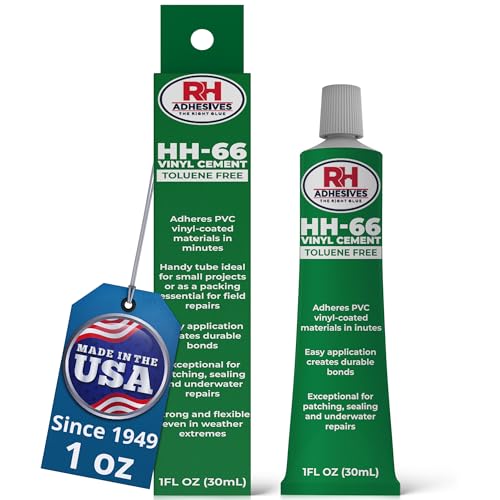
Best for: Safer-for-environment projects needing a strong vinyl bond without toluene. Suitable for tarps, pool liners, and inflatable fabrics where contact with solvents should be minimized.
Why selected: A toluene-free option that retains underwater bonding capabilities and wide material compatibility, making it a good choice for indoor or sensitive settings.
Caution: As with most cement-type adhesives, ensure good ventilation during use and follow cure times for durable results.
Vinyl Cement With Brush
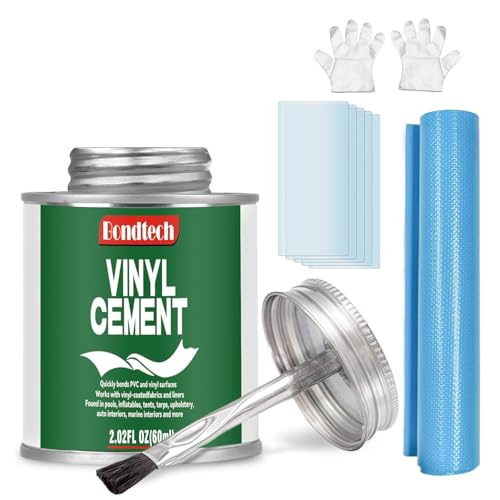
Best for: Quick, on-site PVC and vinyl repairs with an integrated brush for spread control. Excellent for inflatable fabrics, pool accessories, and tarps where application speed matters.
Why selected: Built-in brush simplifies application and helps cover larger areas evenly, reducing operation time on big projects.
Caution: Brush-on tools need cleaning after use to prevent clogging and ensure reliability for future projects.
JAOJAO PVC Cement
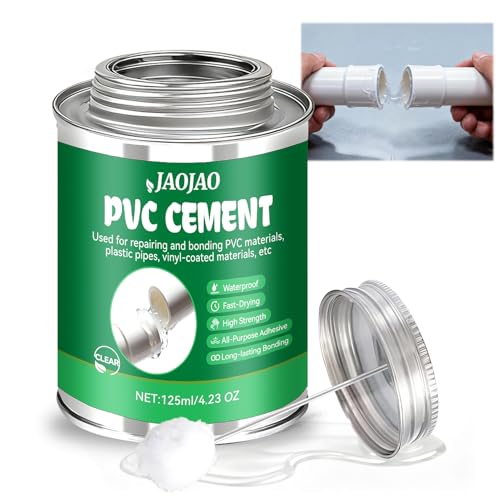
Best for: PVC pipe and fabric joints requiring a fast, leak-proof seal with high resistance to pressure. Works well for quick repairs in water-prone environments.
Why selected: Designed specifically for PVC systems, offering strong initial adhesion and a seal capable of withstanding internal piping pressures.
Caution: Suitable for PVC surfaces; always test on samples to confirm compatibility with non-PVC fabrics in mixed-material projects.
Hzutloer Multi-Purpose Super Glue
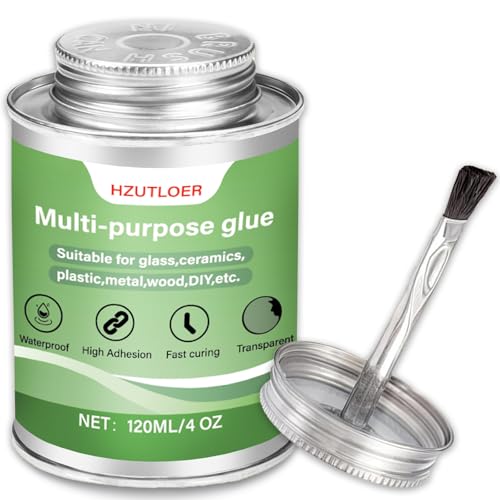
Best for: Quick, multi-material bonding including PVC, rubber, fabric, and plastic. Ideal for smaller fixes, repairs to clothing, and craft projects involving PVC fabrics.
Why selected: A versatile option when a fast, strong bond across several substrates is needed, with a brush-integrated delivery for precise application.
Caution: Not always a perfect long-term seal for high-stress seams; consider dedicated PVC cement for structural repairs.
Buying Guide: PVC Fabric Glue Essentials
What to consider when choosing a PVC fabric adhesive:
- Environment and exposure: Underwater or outdoor use favors water-resistant, flexible vinyl cements (like HH-66 variants).
- Safety needs: If avoiding solvents is important, opt for toluene-free or lower-VOC formulas.
- Material compatibility: Ensure the adhesive bonds PVC, vinyl-coated fabrics, and any secondary materials in your project.
- Bond type and cure time: Quick-curing bonds help with time-sensitive repairs, but require clean surfaces and uniform application.
- Application method: Brushes, built-in spreaders, or dual-material repair kits affect ease of use and finish quality.
Comparative Quick Tips
- Best for heavy-duty, outdoor PVC fabric repairs: HH-66 (or HH-66 TF for safer use).
- Best for quick, small-on-the-spot fixes: Hzutloer or Bondtech vinyl cement with brush.
- Best for water-prone environments where appearance matters: Bondtech vinyl cement with repair sheets for aesthetics.
FAQ
- What is the difference between water-resistant and waterproof PVC cement? Answer: Water-resistant bonds resist moisture but may not withstand full submersion; waterproof adhesives stay flexible and sealed even underwater.
- Can I use PVC cement on any fabric? Answer: Most PVC plastics and vinyl fabrics accept vinyl cements, but test on a small area of non-PVC fabrics before full use.
- Is a toluene-free option safer for indoor use? Answer: Yes, toluene-free formulations reduce solvent exposure and odor, suitable for enclosed spaces.
- How long does curing take? Answer: Cure times vary by product; follow manufacturer instructions for best seams and flexibility.
- Can I use fabric glue for large PVC repairs? Answer: For large, structural PVC repairs, high-strength vinyl cements like HH-66 are typically more durable than standard fabric glues.
- Are repair sheets necessary with vinyl cement? Answer: Some kits include repair sheets to improve aesthetics and strength, particularly on pool liners and tarps.