Answering the need for safe, age-appropriate cutting tools, these toddler-safe scissors are designed to reduce risk while supporting early art and craft skills. Best for parents, teachers, and caregivers seeking blunt-tipped, easy-to-grip options that foster hand-eye coordination and fine motor development. The top five selections below are chosen for safety features, design suitability for small hands, and varied cutting styles to match different projects and skill levels.
| Product | Brand | Best For |
|---|---|---|
| Crayola Toddler Safety Scissors (3pk) | Crayola | Preschool arts & crafts; right & left-handed users |
| Safety Scissors For Toddler, Kids (3 Pack) | PECULA | Beginner cutting practice; durable plastic blades |
| Channie’s Safety Scissors For Small Hands (2 pack) | Channie’s | 3–5-year-olds building hand-eye coordination |
| Fiskars Training Scissors For Preschoolers | Fiskars | Guided cutting with training lever; classroom use |
| LovesTown Toddler Scissors (4-pack) | LovesTown | Group activities; color-differentiated, safe play |
Crayola Toddler Safety Scissors (3pk)

The Crayola set includes three blunt-tip scissors designed for “ouch-free” paper cutting, making them suitable for toddlers and early learners. Blades are plastic with rounded tips to minimize finger injuries, and the trio offers straight, wavy, and zigzag cutting styles for diverse art projects. Best for parents or teachers introducing basic cutting skills in preschool environments. A limitation: beginners may outgrow the simple blade shapes as fine motor control improves.
Safety Scissors For Toddler, Kids (3 Pack)

PECULA’s trio uses an all-plastic design with safety-oriented features. They are described as easy to use with small and large finger holes and a spring lever that helps children automatically open after each cut, promoting independent practice. Best for beginners who benefit from an assisted opening mechanism. Caution: some users may prefer metal blades for more traditional cutting tasks, which these do not provide.
Channie’s Safety Scissors For Small Hands (2 pack)
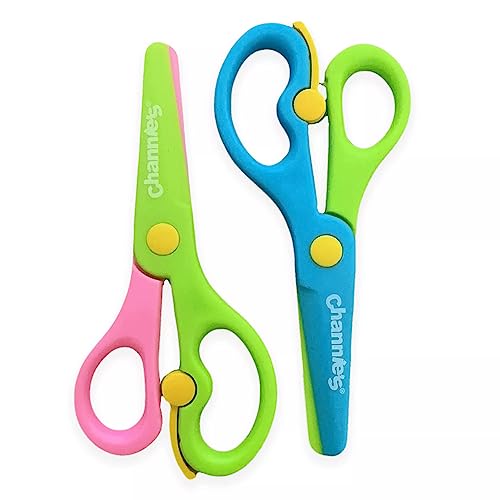
Designed for ages 3–5, Channie’s emphasizes kid-friendly blunt tips and compact handles that fit small hands well. These plastic safety scissors support hand-eye coordination development through practice with paper-cutting tasks. Best for classrooms or home use where gradual skill progression is expected. Limitation: fewer blade style options may limit cutting variety for advanced projects.
3-Pack Toddler Safety Scissors Kit (amassan)
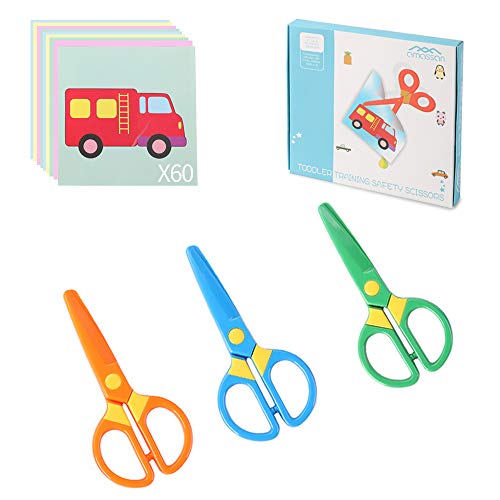
This 3-pack from amassan includes blunt-tip blades with ergonomic, colorful handles and a safer blade angle tailored for early learners. They support both left- and right-handed use and come with 60 sheets of craft paper, making it a practical starter set for school projects. Best for group activities and home learning stations. Consider that plastic construction may wear with heavy use, requiring occasional replacement.
Buying Guide: Key Considerations for Choosing Toddler Scissors
What safety features matter most?
Look for blunt tips, rounded edges, and plastic blades to minimize cuts. A safety lock or spring-assisted opening can aid independent use, especially for the youngest learners.
What size and grip suit my child?
Small finger holes with comfortable, non-slip grips help children learn proper cutting technique. Etched or color-coded handles can also aid in recognizing handedness and fostering independence.
How many scissors do I need?
For classrooms or shared spaces, a 3–4 pack supports multiple students without constant sharing. For home use, a trio or a single durable pair suffices for most projects.
Which cutting styles are beneficial?
Having different blade patterns (straight, zigzag, wavy) broadens project options and introduces kids to varied cutting motions, which supports motor skill development.
Are these suitable for left-handed kids?
Many picks advertise ambidextrous or dual-handled design. If possible, verify that the product explicitly accommodates left-handed use to ensure comfortable cutting.
Maintenance and replacement considerations
Plastic safety scissors require less maintenance than metal blade scissors but may wear faster with heavy use. Consider backup sets if you expect frequent use in classrooms or busy homes.
Buying Guide: Practical Tips For Buyers
- Start with one or two starter options that emphasize blunt tips and rounded edges for ultimate safety.
- Choose a set that provides at least one pair with a left-handed design if your child prefers that grip.
- Prefer light-weight, plastic blades for easy cutting and reduced resistance for little hands.
- Consider a multi-pack if you’re equipping a classroom or play area with multiple kids.
- Pair scissors with child-friendly paper and materials to practice safe cutting techniques and build confidence.
Frequently Asked Questions
- What age are toddler safety scissors appropriate for? – They are generally suitable for ages 3 and up, depending on the child’s motor skills and supervision level.
- Do these scissors cut only paper? – Most toddler scissors are designed to cut paper and lightweight materials; always follow product specifics.
- Can left-handed kids use standard right-handed safety scissors? – Some models are ambidextrous; check for explicit left-handed design or dual-handled grips.
- How should I maintain toddler scissors? – Wipe clean after use and store in a designated area to prevent misplacement and ensure safety.
- Are there eco-friendly options? – Several products use non-toxic, BPA-free plastics and age-appropriate recycled materials where available.
- Which option is best for a classroom? – A 4-pack with varied blade styles provides flexibility for multiple projects and different skill levels.