Find the right foam-friendly glue for your project with clear, fast-drying options that protect foam materials. This guide highlights products best suited for foam and porous substrates, including detailed notes on bond strength, drying time, and application control. Ideal buyers include hobbyists, model makers, and professionals tackling lightweight foam projects or crafts requiring clean, precise adhesion.
The following table provides a quick comparison of the featured products, helping you choose based on bond strength, ease of use, and suitability for foam materials.
| Product | Best For | Key Benefit |
|---|---|---|
| Mshunya 4 oz Foam Glue | Foam and porous materials | Strong adhesion with easy, residue-free application |
| OverZyn Foam Glue | DIY crafts and models | Specialized for foam; quick-drying and transparent |
| Bob Smith Industries Plastic-Cure Brush-On | Foam-safe and plastics | Brush-on convenience; odorless formula |
| Gorilla Original Glue | All-purpose, including foam | Water-activated polyurethane expansion; waterproof |
| KRAFTPROTZ Super Glue Gel XXL | Vertical surfaces and overhead repairs | Non-drip gel; large 50g size |
Mshunya Foam Glue 4 oz
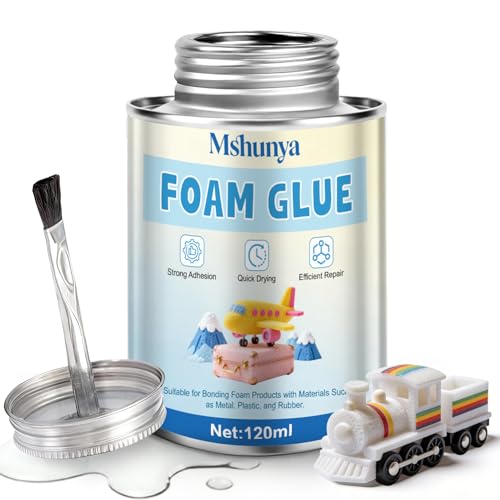
Brand: Mshunya
Features: Super Strong Adhesion; advanced formulation penetrates surface texture for holding power; designed for foam materials to prevent degradation; easy to use with residue-free application. Cure time noted as approximately 10 minutes to set, with full strength over time.
Best for: Foam projects and crafts needing strong, precise bonds without damaging foam. This glue is selected for its foam-specific formulation and straightforward application, making it suitable for hobbyists and DIY professionals. Caution: Allow full curing time for maximum adhesion on larger foam pieces.
OverZyn Foam Glue

Brand: OverZyn
Features: Foam-specific adhesive designed to avoid dissolving foam plastics; easy application with even spread; quick-drying and waterproof after curing. Provides ideal strength after roughly 24 hours for some foam types.
Best for: DIY crafts, model making, and packaging projects where foam integrity matters. Choose this if you need a foam-focused formula that resists common solvent-induced damage. Limitation: Drying time for full cure may extend beyond initial set for larger assemblies.
Bob Smith Industries Plastic-Cure Brush-On

Brand: Bob Smith Industries
Features: Odorless, foam-safe formula; built-in brush-cap enables precise coverage; strong bonds on plastics and foam, plus good performance on wood and ceramics. Designed to minimize fumes and maximize control for delicate applications.
Best for: Projects requiring a controlled, brush-on application on foam and plastics. Choose this if you want a convenient brush-on method with low odor. Caution: Brush-on bottles require cap management to prevent clogging over time.
Gorilla Original Glue

Brand: GORILLA
Features: Water-activated polyurethane formula that expands into materials; waterproof once cured; bonds wood, stone, metal, ceramic, foam, glass, and more. All-purpose and highly versatile for varied substrates.
Best for: Projects where a robust, all-purpose adhesive is needed, including foam but also multiple materials. Caution: The expansion can push parts apart if clamped improperly; apply with care on tight fits.
KRAFTPROTZ Super Glue Gel XXL

Brand: KRAFTPROTZ
Features: Non-drip gel formula; large 50g tube provides more content for heavy use; works well on vertical surfaces due to gel consistency; clear finish with precise application.
Best for: Overhead or vertical repairs where dripping would be problematic, and for high-volume users who want more material per purchase. Limitation: Gel may take slightly longer to cure on porous surfaces depending on conditions.
Buying Guide
What kind of bond do you need? For foam-only projects, look for foam-specific formulas or foam-safe ingredients that prevent damage or dissolution. Consider drying and curing times: faster sets are convenient for small parts, while longer cure times can yield stronger final bonds on larger assemblies.
How important is application control? Brush-on and gel formulations reduce mess and improve precision, especially on vertical surfaces or intricate details. For tight corners or small parts, a product with a fine applicator or nozzle helps.
What environments matter? If the project will be exposed to moisture or outdoor elements, choose a waterproof or water-resistant formulation. For indoor crafts, odor and clogs may be more tolerable, but odorless options can improve comfort.
Safety and cleanup: Foam-safe and odorless options minimize irritation and damage to foam materials. Always use on a clean, dry surface and allow adequate cure time before stress or handling.
Usage notes: For heavy-duty or high-load applications, consider using a larger volume or a formulation designed for industrial use. For intricate crafts, test a small area first to confirm foam compatibility and finish appearance.
FAQ
- Q: Are there glues specifically formulated for foam? A: Yes. Several products in this guide are foam-specific or foam-safe, designed to prevent chemical damage to foam substrates.
- Q: Can these glues bond other materials besides foam? A: Many can bond wood, plastic, metal, ceramic, and fabric, but check each product’s listed compatibility for best results.
- Q: Is a non-drip gel better for vertical projects? A: Yes. Gel formulations minimize dripping on vertical surfaces and at overhead positions.
- Q: How long should I wait before handling a foam bond? A: Initial set often occurs within minutes, but full cure may take several hours to a day depending on the product and environment.
- Q: Are these glues harmful to foam? A: Foam-safe and foam-friendly options are designed to minimize damage; always follow the product instructions for safe use.
- Q: Do these adhesives require clamping? A: Some require clamping for best results, especially on larger assemblies or porous surfaces. Check the product guidelines for guidance.