Answering the question buyers have when repairing plastic: which bonding agent for plastic delivers reliable, lasting results across common plastics? This guide highlights five top options, detailing who each product is best for, and why. Suitable buyers include DIY enthusiasts tackling bumper repairs, hobbyists bonding acrylic or plexiglass, model makers needing clear cures, and professionals seeking fast, strong adhesion. The table below summarizes the featured products to help you compare at a glance.
| Product | Brand | Best For |
|---|---|---|
| J-B Weld 50139 Plastic Bonder Body Panel Adhesive | J-B Weld | Rigid plastics, panels, gaps |
| Acrylic Bonding Cement with Applicator Bottle | Berkland | Acrylic sheets, plexiglass, clear joints |
| J-B Weld 50133 Plastic Bonder Structural Adhesive | J-B Weld | General plastic repairs, dents, bumper work |
| J-B Plasticweld Epoxy Putty Stick | J-B Weld | Builds and rebuilds on plastic surfaces |
| Super Glue for Plastic 35g | GleamGlee | Everyday plastic repairs, high-use parts |
J-B Weld Plastic Bonder Body Panel Adhesive
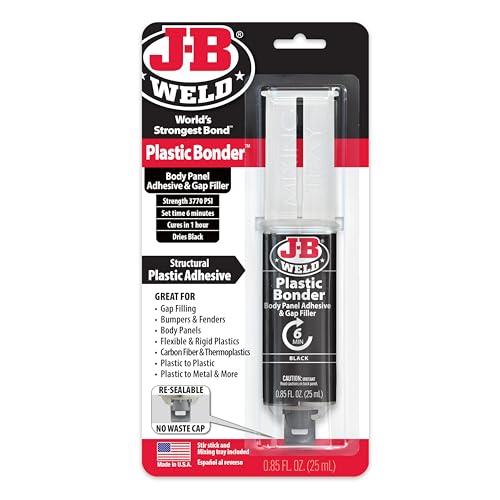
This quick-set, two-part urethane adhesive is designed for a strong, lasting bond on a variety of plastics and composites. It sets in 15 minutes and cures to a hard, permanent bond with a tensile strength around 3770 psi. The 1:1 mixing ratio and easy-to-sand finish make it suitable for both body panel repairs and general plastic bonding. Best for DIYers tackling automotive panels, carbon fiber-ready projects, and other demanding plastic repairs.
Best for: DIY auto repairs, hobbyists, and professionals who need a strong, sandable bond fast. Limitation: Not ideal for non-plastic substrates without surface prep; ensure the surface is clean and compatible with urethane adhesives.
Acrylic Bonding Cement With Applicator Bottle

Clear, precision bonding cement formulated for acrylic and plastic sheets. The water-thin formula flows into tight joints, enabling clean, strong bonds with a crystal-clear finish. Sets in minutes, making it ideal for quick repairs, fabrication, and production work. Best for: Plexiglass, acrylic sheets, and situations requiring nearly invisible seams. Caution: Bonds may appear visibly clear but check compatibility with thicker or textured plastics before long-term use.
J-B Weld PlasticBonder Structural Adhesive Syringe
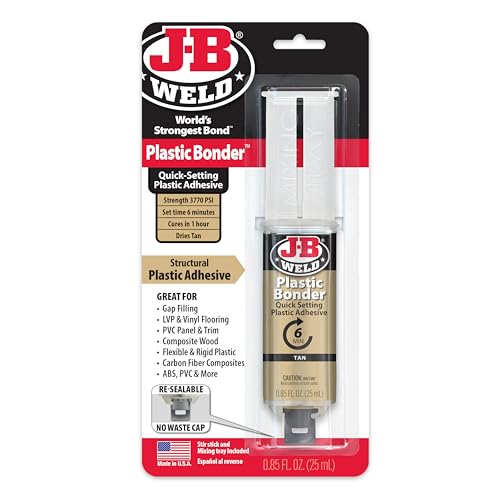
This tan two-part urethane adhesive comes in a convenient syringe with a resealable cap, enabling a precise 1:1 mix. It sets in about 15 minutes and cures for full strength in approximately 30 hours, delivering a durable bond for plastics such as ABS, PVC, and related composites. Best for: Repairs where controlled application is key, including bumper and dent fixes. Caution: The tan color may show on lighter surfaces; consider fit and finish before final paint or sealant.
J-B Plasticweld Epoxy Putty Stick

A hand-mixable two-part epoxy putty that repairs and rebuilds various plastic surfaces, including ABS and PVC pipes, auto bumpers, and more. It cures in about 3 hours, with a 25-minute initial set. Best for: DIY plastic repairs requiring moldable filler that can be shaped, drilled, and sanded. Limitation: Not as quick-setting as some liquid adhesives; best for larger fill-and-form tasks rather than instant bonds.
Super Glue For Plastic 35g

Heavy-duty cyanoacrylate glue designed for bonding PVC, ABS, acrylic, and other plastics. Provides a fast, strong bond suitable for high-use components and models. Best for: Quick fixes on small parts, toys, models, and daily plastic repairs. Caution: Not ideal for flexible plastics or applications requiring impact resistance over time; surface prep improves longevity.
Buying Guide: How To Choose The Right Plastic Bonding Agent
- Material compatibility: Identify the plastic type (ABS, PVC, acrylic, polycarbonate, etc.). Some adhesives are formulated for specific plastics and perform poorly on others. If possible, verify compatibility on similar parts before applying to a critical repair.
- Bond type: Decide between structural (urethane/epoxy) versus fast-setting glues (cyanoacrylate). Structural bonds resist stress and impact but may require longer cure times; fast-setting options save time for quick fixes.
- Appearance needs: For transparent or color-sensitive surfaces like plexiglass or clear plastics, choose a crystal-clear or color-matched adhesive to minimize visibility of seams.
- Working time and cure: Consider your project’s timeline. Quick-set options enable rapid progress but may require careful handling; longer cures can allow adjustability and alignment.
- Application method: Syringe or paste forms provide precise dosing for small joints; putty or gel forms help with gaps, irregular surfaces, or vertical applications.
- Durability in conditions: If exposure to water, heat, or chemicals is likely, select adhesives rated for resistance to those conditions to prevent failure over time.
- Safety and cleanup: Review curing odors, required ventilation, and cleanup methods. Some formulations are easier to sand or trim for finished surfaces.
Frequently Asked Questions
What is the best plastic adhesive for automotive panels?
Urethane-based adhesives like Plastic Bonder offer strong, permanent bonds suitable for automotive panels, with good gap-filling and sanding capabilities.
Can acrylic sheets be bonded with glue or cement?
Yes. Acrylic-specific bonding cements provide clean, clear seams and are formulated to minimize crazing and fogging on acrylic sheets.
Is a putty stick better than liquid glue for plastic repairs?
Putty sticks are ideal for filling and rebuilding damaged shapes, especially where a moldable, sandable surface is needed. Liquid glues are better for precise, fast bonds on tight joints.
Are there any downsides to cyanoacrylate for plastics?
Cyanoacrylate works well on many plastics but can become brittle under flex and some surface finishes; it may also craze certain plastics if not used carefully.
How should I prepare plastic surfaces before bonding?
Clean the surface to remove oils, dust, and contaminants. Lightly roughen smooth plastics with fine sandpaper, wipe with isopropyl alcohol, then apply the adhesive as directed by the product instructions.
Do these products require ventilation?
Yes.Adhesives, especially solvent-based and urethane formulations, can emit fumes; use in a well-ventilated area and follow safety guidelines.