Answering the common search query for reliable compostable bags, this guide highlights top bags that fit small kitchen bins, are certified for compostability, and are easy to use for daily food scraps. These picks are best for busy households, apartment kitchens, and users who want simple, tidy waste streams. Each option is evaluated by bin size, durability, and certification to help you choose confidently.
| Product | Bin Size | Quantity | Thickness | Certifications | Best For |
|---|---|---|---|---|---|
| UNNI 2.6 Gallon Compostable Bags | 2.6 gal (9.84 L) | 100 bags | 0.71 mil | BPI, CMA, OK compost HOME | Small countertop bins |
| SUPERBIO 1.6 Gallon Compostable Bags | 1.6 gal (6 L) | 50 bags | 0.63 mil | BPI, OK compost HOME, TÜV SEEDLING | Everyday kitchen scraps |
| GreFusion 1.2 Gallon Compostable Bags | 1.2 gal (4.5 L) | 125 bags | Not specified in data | BPI, OK Compost HOME | Small countertop bins |
| ANECO 2.6 Gallon Compostable Bags | 2.6 gal (9.84 L) | 110 bags | Extra thick | Home compostable certified | Home composting, larger countertop bins |
| HYTREND Kitchen Food Waste Bags | Fits standard small bins | 35 bags | Not specified | BPI, CMA-W | Compact bins, leak-resistant liner |
Note: All products listed are designed for kitchen waste and composting workflows. Certifications indicate compliance with widely recognized composting standards, helping ensure bags break down as intended in appropriate facilities or home composters.
UNNI 2.6 Gallon Compostable Bags

Best for: small kitchen bins used daily. The 2.6 gallon size (9.84 liters) with 0.71 mil thickness provides sturdy liners for typical fruit, veggie scraps, and peels. The bags are certified by BPI, CMA, and OK compost HOME, confirming compostability in both industrial and home settings. This makes them a reliable all-around choice for households with compact bins. Caution: use within the stated bin size to avoid overflow or tearing when handling very wet waste.
SUPERBIO 1.6 Gallon Compostable Bags

Best for: households needing slightly larger-than-baby-bin liners with robust performance. The 1.6 gallon size (6 L) uses a 0.63 mil film and includes a handle tie for easy closure. Certifications include BPI and OK compost HOME, with TÜV SEEDLING listed as well. Use this option if your bin sits in a busy area and you want a reliable seal to reduce odors. Limitation: storage guidance suggests keeping bags cool and dry to maintain performance and shelf life.
GreFusion Compostable Bags 1.2 Gallon

Best for: very small bins or bathroom/kitchen nooks where space is limited. The 1.2 gallon capacity fits compact receptacles and the 0.75–1.8 gallon range is noted as compatible. Certified by BPI and OK Compost HOME makes it suitable for home composting. A key advantage is fit in many small cans, but the exact thickness isn’t specified, which may affect durability on very wet waste. Choose this if you need a true mini-bin liner that still meets compostability standards.
(Include 10 Bonus Bags) ANECO 100% Compostable Waste Bags
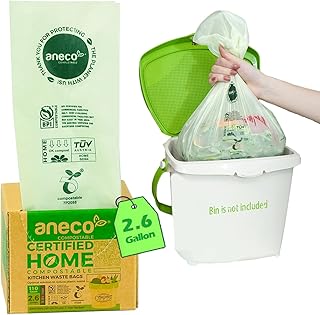
Best for: users who want added value and generous supply. The package includes 110 bags (100 + 10 extra) in a 2.6 gallon size, targeting daily kitchen scraps. Made from plant-based materials and designed to decompose in home composting environments over 6–12 months. A notable limitation is the lack of specific thickness details in the listing, which can influence bag strength for very wet waste. This option suits families seeking long-term supplies and straightforward composting at home.
HYTREND Kitchen Waste Bags

Best for: users who want a foldable top for easy opening and closing and a leak-resistant liner. The design supports secure sealing and fits standard small trash bins without additional adaptations. These bags emphasize renewable resources as the material basis. A potential drawback is limited thickness information, which may affect performance with juicy or oily scraps. Use this when you value a simple, foldable seal and compatibility with common small bins.
Buying Guide: Key Purchase Considerations
What bin size do you use? Matching bag capacity to your countertop bin prevents overflow and makes waste disposal easier. For small counter setups, 1.2–2.6 gallon bags cover most household needs without excessive material.
Are the bags certified for composting? Look for certifications such as BPI, OK compost HOME, and TÜV-derived marks. Certification signals that the bag can break down under composting conditions, not just in landfills.
What thickness is best for your waste type? Thicker bags (around 0.63–0.71 mil or more) perform better with wet scraps and peels but may be slightly pricier. If your scraps are mainly dry, thinner bags can suffice while reducing waste footprint.
Fit and seal features. A bag that adheres well to the bin rim and seals securely minimizes odors and leaks. Some bags offer handle ties or foldable tops for convenient closure, which is especially helpful in fast-paced kitchens.
Storage and shelf life. Store bags in a cool, dry place away from heat to preserve strength and prevent premature tearing. If bags have a limited shelf life, plan purchases to avoid waste.
Home vs. industrial composting suitability. If you intend to compost at home, ensure the bag is approved for home composting (OK compost HOME), not just industrial facilities. For a mixed waste stream, consider bags certified for both home and industrial composting when available.
FAQ
-
What size bag is best for a standard 2.6-gallon kitchen bin?
Most users prefer 2.5–2.6 gallon bags for a snug fit that minimizes gaps and makes waste handling easy.
-
Are compostable bags truly compostable at home?
Many are certified for home composting (OK compost HOME). Check the certification on the packaging to confirm suitability for your setup.
-
Do thicker bags always perform better?
Thicker bags resist tearing with moist scraps, but weight, fit, and cost also matter. Choose thickness based on typical waste moisture and bag fit.
-
Can I use these bags for non-food waste?
Biodegradable and compostable bags are designed for organics. For non-food waste, standard trash bags may be more appropriate unless the product explicitly supports mixed waste streams.
-
What should I store compostable bags in to maintain quality?
Keep bags in a cool, dry place away from heat or direct sunlight to prevent weakening before use.