Answering the common buyer question, these blind cleaner vacuum attachments are designed to remove dust from blinds, shutters, vents, and hard-to-reach spaces with minimal effort. This guide highlights five dependable options, each suited to different cleaning needs—from large window blinds to compact or high-placed fixtures. Use this overview to compare compatibility, durability, and usability before purchasing.
| Product | Brand | Best For |
|---|---|---|
| Blind Cleaner Duster Tool, 4Pcs Washable 7-Finger Venetian Window Duster | EVEPRUS | Large blinds with broad dust areas; adjustable for corners |
| Hiware Window Blind Cleaner Duster Brush with 5 Microfiber Sleeves | HIWARE | General blinds and air conditioners; best with cleaning sprays |
| SetSail Blind Duster, Window Cleaner Duster Brush with 5 Microfiber Sleeves | SetSail | Easy handling in tight spaces; reusable sleeves |
| Blind Cleaner Brush, 7-Slat Duster for Awnings, Siding, Car | ReNext | Universal quick-dusting in multiple surfaces |
| Vacuum Dust Removal Brush Tool for Shark and Similar Models | Sionlan | Direct vacuum-assisted dusting; broad compatibility |
Best All-Around 7-Finger Venetian Duster

The Blind Cleaner Duster Tool from EVEPRUS uses 7-finger microfiber slats to cover large blind surfaces quickly. With a double-headed design, it cleans both top and bottom slats and reaches corners with a rotating roller and brush between slats. The duster is machine washable and replaceable surfaces keep dust from clinging to fabric. Best for buyers who need fast, broad coverage on substantial blinds or multiple window panels.
Who it’s best for: households with large blinds and frequent dust buildup; users who want washable, reusable components. Caution: microfiber wear requires occasional washing to maintain performance; test on delicate finishes first to avoid abrasion.
Hiware Duster Brush With Microfiber Sleeves
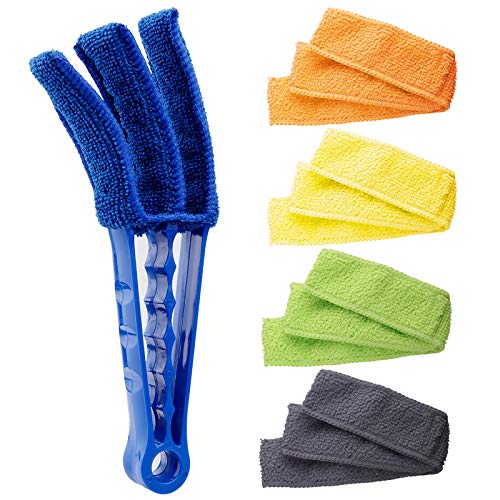
Hiware’s window blind cleaner uses sturdy, durable polyethylene and five microfiber sleeves to clean both the tops and bottoms of two blinds at a time. It’s designed for moderate-to-heavy dust and benefits from using with compatible cleaning sprays for tougher grime. Best for buyers who want a compact, multi-blade approach and a strong grip for easier maneuvering.
Who it’s best for: users cleaning multiple blinds in tight spaces; those who want a robust tool that can handle heavier dust with added spray assistance. Caution: not ideal for large, straight blinds or very large panels.
SetSail Duster With Five Sleeves

SetSail’s duster features three arms for easier grip and movement, plus five microfiber sleeves that can be replaced when worn. It emphasizes easy disassembly and recycling of sleeves, making it a budget-friendly and practical option for routine blind cleaning. Best for: households with regular cleaning schedules and a preference for reusable components. Caution: sleeves can occasionally detach during use; ensure secure reattachment before operation.
ReNext Mini Duster for Windows and Awnings

ReNext’s compact brush focuses on small-to-medium blinds, shutters, and other windows. It’s designed as a versatile, washable option with a 7-slats structure for efficient cleaning and a flexible approach to reaching corners. Best for: smaller window configurations, compact spaces, and quick refreshes. Caution: may be less effective on high-traffic, built-up grime without supplementary sprays.
Sionlan Vacuum Dust Brush Attachment

This vacuum attachment is designed for direct use with Shark Rocket and similar vacuums. Made of durable ABS plastic, it rotates 360 degrees for versatile cleaning angles and easy reach into vents and blinds. Best for: users who want a simple, plug-and-go option that integrates with existing vacuum systems. Caution: requires a compatible vacuum interface and may not fit all models without a direct connection.
Buying Guide: Key Considerations and Comparisons
- Compatibility: Check whether the attachment connects directly to your vacuum or requires adapters. Vacuum-specific tools like the Sionlan attachment often work best with compatible models.
- Material and Durability: Microfiber sleeves and high-quality plastics extend tool life. Removable and washable components reduce ongoing costs.
- Coverage: Consider whether you need a wide, multi-finger brush for large blinds or a compact head for tight corners and small spaces.
- Ease of Use: Look for lightweight designs, three-arm or six-blade configurations, and quick disassembly for sleeve replacement.
- Maintenance: Tools that reveal fresh cleaning surfaces after wear save time and maintain effectiveness. Washability is a plus in dusty environments.
- Best-Case Scenarios: For large homes with many blinds, multi-sleeve or double-headed designs offer faster coverage. For high ceilings and vents, extensions or long wands help reach difficult areas.
FAQ
- What’s the main benefit of a blind cleaner attachment?
Answer: It concentrates dusting power specifically on blinds and narrow gaps, reducing cleaning time compared with general-purpose dusters. - Can I use these with any vacuum?
Answer: Many are designed for common vacuum interfaces, but always verify compatibility with your model before purchase. - Are microfiber sleeves reusable?
Answer: Yes, most sleeves are washable or replaceable, helping lower long-term costs. - Which option is best for tall or hard-to-reach blinds?
Answer: Extensions, long wands, or a vacuum-attachable head that rotates 360 degrees are ideal for high ceilings and cobwebs. - Should I use cleaners or sprays with these tools?
Answer: For heavy grime, lightly applying a cleaning spray can improve dust removal, especially on stubborn buildup. - Are some products better for compact spaces?
Answer: Yes, compact heads and lighter weights are easier to maneuver in tight corners and small rooms.