Answer: If you need long, thick rubber gloves for chemical handling, gardening, or heavy cleaning, these top picks maximize protection, flexibility, and durability. They’re ideal for professionals and serious DIYers who work with chemicals, paint, or wet environments. The following five products offer extended cuffs, strong materials, and reliable resistance, helping keep hands and forearms shielded during demanding tasks.
Summary of selected products
| Product | Length | Material | Best For |
|---|---|---|---|
| 25.2 inches | PVC Rubber | Long-duration chemical work, pond maintenance, aquarium tasks | |
| 18 inches | Natural latex with PVC coating | Chemical resistance with forearm protection for heavy dishwashing | |
| 22 inches | Natural latex | Industrial cleaning and gardening with strong chemical resistance | |
| 26 inches | PVC | Pond work, aquarium maintenance, prolonged exposure tasks | |
| 12.6 inches | Latex | General chemical protection with enhanced grip |
Haiou PVC Chemical Resistant Long Gloves

Features: Premium PVC material provides waterproof durability. The gloves are reusable and thick, designed for long-term use. They extend to about 25.2 inches with an elastic cuff to prevent slipping. Suitable for washing, machine maintenance, aquarium and pond tasks, gardening, and dyeing industries.
Best for: Professionals or hobbyists performing extended chemical handling or pond work who need forearm protection and a snug fit. Caution: Some users may notice a rubber odor when new; airing out helps reduce odor.
Nobgum 18″ Latex Chemical Resistant Gloves

Features: 18-inch length with 1.1mm thickness offers extended forearm protection. Made from natural latex with a PVC coating, designed for durability and tear resistance. Resistant to acids, alkalis, oils, and liquids, making them suitable for heavy dishwashing and chemical handling.
Best for: Users needing substantial forearm protection in routine chemical or heavy-duty cleaning tasks. Caution: One size may not fit all hand types; check sizing before purchasing.
ThxToms Heavy Duty Latex Gloves 22″

Features: High-grade natural latex offers strong chemical and tear resistance. Thickness provides reliable protection while preserving tactile sensitivity. Available in extra-large size with a smooth finish to improve grip for heavy-duty rubber glove tasks.
Best for: Industrial cleaning or gardening where both chemical protection and tactile control matter. Caution: Latex allergy sensitivity is a consideration for some users.
Eiito Extra-Long 26″ Rubber Pond Gloves

Features: Thick PVC for chemical and mechanical resistance, anti-aging design, and long-lasting durability. The extended 25.2-inch length with an elastic cuff minimizes slipping and provides extended forearm protection. Widely used for washing, machine maintenance, aquarium, pond work, and gardening.
Best for: Users needing maximum forearm coverage for prolonged exposure to liquids. Caution: PVC gloves may feel stiffer than latex for some users.
ROYAKI Chemical Resistant Latex Gloves
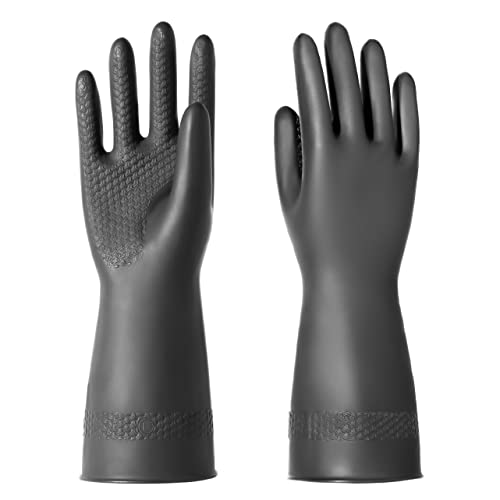
Features: Latex gloves with elasticity and wear resistance, reinforced grip via a diamond pattern. Provides protection against alkalis, alcohols, and acetone, with a focus on flexible handling of small items and a secure grip.
Best for: Tasks requiring reliable grip and chemical resistance in smaller glove form factors. Caution: Shorter length means less forearm coverage than longer styles.
Buying Guide
What matters most when choosing long thick rubber gloves:
- Length and forearm protection: Choose gloves long enough to shield forearms for your work, from 18 inches to 26 inches or more.
- Material and chemical resistance: PVC, latex, and combinations offer different chemical resistances. Consider acids, alkalis, oils, and solvents you encounter.
- Durability and tear resistance: Thick barriers improve longevity in harsh tasks but may affect dexterity. Balance protection with tactile sensitivity for your use case.
- Fit and comfort: Extended cuffs should seal well around the arm. Check available sizes and consider potential latex allergies.
- Grip and texture: Non-slip patterns or embossed palms aid handling wet or soiled items, reducing slips and drops.
- Care and reuse: Reusable gloves require proper drying and storage to extend life and prevent skin irritation.
Frequently Asked Questions
- What length should I choose for chemical work?
For full forearm protection, consider gloves in the 20–26 inch range, depending on your arm length and task requirements.
- Are latex gloves okay for chemical exposure?
Latex provides good flexibility but can be sensitive to certain chemicals. For strong alkalis or solvents, consider PVC-coated latex or pure PVC gloves.
- Can I reuse these gloves after exposure to chemicals?
Yes, many are designed for reuse, but inspect for tears or degradation and follow manufacturer guidance before reuse.
- Which glove material minimizes allergic reactions?
PVC or nitrile can be alternatives for users with latex sensitivity. Always verify material composition on the product page.
- Do longer gloves reduce dexterity?
Longer gloves may reduce some tactile precision. If high dexterity is needed, select a glove with appropriate thickness and a smooth inner surface.