Answering the needs of builders, hobbyists, and crafters, this guide highlights top adhesives that bond polystyrene foam (EPS and similar foams) without dissolving or warping it. Each product is chosen for foam-friendly formulas, ease of application, and reliable bond performance. Best for DIY crafters, model makers, and light construction projects, these options cover spray, liquid, and instant-grab types. The table below summarizes the five selected products and their ideal uses to help you pick quickly.
| Product | Best For |
|---|---|
| 3M 78 Polystyrene Foam Insulation Spray Adhesive | Industrial bonding of EPS insulation with even coverage |
| DAP Foamboard Construction Adhesive | Foamboard panels, drywall, and light construction |
| OverZyn Foam Glue | DIY crafts, model making, foam projects requiring quick-dry |
| kuailaya Foam Glue | Foam-specific bond with strong, durable finish |
| Liquid Nails Latex Projects | Foamboard and common building materials with foam compatibility |
3M 78 Polystyrene Foam Insulation Spray Adhesive

Best for industrial EPS bonding with uniform coverage. This adhesive is designed specifically for expanding polystyrene foams, delivering bonds stronger than the foam itself when used as directed. Its spray pattern is optimized for even coverage, making large foam assemblies easier to assemble without excessive squeeze-out. Use this where precision and strong adhesion are required, such as insulated panels or large foam installations. Caution: Intended for industrial use; handle with proper ventilation and PPE as recommended by the manufacturer.
DAP Foamboard Construction Adhesive

Best for foamboard panels, drywall, and construction projects needing an instant grab. This synthetic latex adhesive creates a strong, permanent bond between foamboard panels and other construction materials. It offers an instant grab and a 20-minute working time, reducing the need for clamps and fasteners. It’s well-suited for foamboard installations in indoor settings. Limitation: White color may show on lighter substrates before fully cured; plan for touch-ups if aesthetics are critical.
OverZyn Foam Glue

Best for DIY crafts and model making where a foam-specific, quick-drying bond is important. This foam glue uses a gentle formula designed to avoid dissolving porous materials, while offering easy application—apply, wait about 10 minutes, then press. Full strength develops after about 24 hours. It is waterproof once cured, making it suitable for packaging, decorations, and certain model applications. Caution: Some users may notice odor during application; ensure good ventilation during use.
kuailaya 4OZ Foam Glue

Best for foam-safe bonding with rapid grip. This adhesive is formulated to avoid damaging foam during bonding and provides a strong, durable finish after curing. It enables precise positioning before set and typically reaches ideal strength after 24 hours. Note: It may have a noticeable odor; use in a well-ventilated area and consider masking off the work area.
Liquid Nails Latex Projects
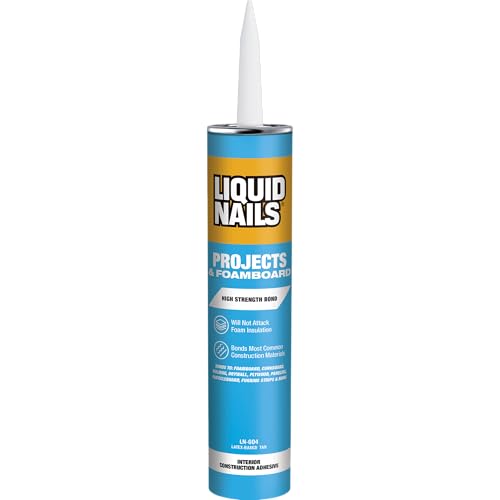
Best for compatibility with foam insulation and common construction materials. This latex-based adhesive bonds most building substrates and does not attack foam insulation, offering a low-odor formula for indoor projects. It is suitable for lightweight bonding tasks and can help reduce the need for mechanical fasteners in foam installations. Caution: May require longer curing time on porous substrates; avoid heavy loads during early curing.
Buying Guide: Key Considerations For Polystyrene Foam Adhesives
- Foam compatibility: Look for adhesives explicitly labeled as safe for polystyrene to avoid dissolution or warping.
- Bond type: Choose from spray, liquid, or instant-grab formulas based on project size, work time needs, and required bond strength.
- Working time and cure: Consider whether you need quick tack (instant grab) or longer working time for precise positioning.
- Indoor vs. outdoor use: Some formulas include UV blockers or water resistance; select accordingly for exposure conditions.
- Application surface: Verify that the substrate is compatible (foam to foam, foam to wood, drywall, metal, etc.).
- Ventilation and safety: Many foam adhesives release fumes; ensure proper ventilation and PPE as recommended.
Frequently Asked Questions
- What makes an adhesive foam-safe for polystyrene?
Look for explicit statements that the product is designed not to dissolve or attack polystyrene foam materials. - Is spray adhesive better than liquid for foam projects?
Sprays can offer uniform coverage for larger areas, while liquids provide targeted bonds and less overspray. - Can I glue foam to cardboard or wood?
Yes, many foam adhesives are formulated to bond foam to common construction materials, but verify compatibility on each substrate. - How long does it take for foam adhesives to cure fully?
Cure times vary by product; many foam glues reach full strength after 24 hours, with some offering instant grab. - Are there risks using foam adhesives indoors?
Some products have fumes or odors; ensure ventilation and follow safety guidelines on the label. - What’s a quick test to ensure compatibility on a new foam sample?
Apply a small amount to a scrap piece and observe for solvent effects or deformation after a short cure period.