When managing yard waste, food scraps, and bulk recyclables, 32–33 gallon compostable bags offer a convenient, eco-friendly solution. This guide highlights top 32 gallon options that are certified compostable and built for heavy use, helping you choose bags that fit common yard and kitchen tasks. The selections below emphasize thickness, certification, and compatibility with standard 32–33 gallon cans.
| Product | Size / Capacity | Count | ||
|---|---|---|---|---|
| UNNI Compostable Lawn & Leaf Bags | 33 gallon / 124 L | 40 | BPI, CMA, OK compost HOME | 1.1 mil reinforced |
| Simply Bio 30-33 Gallon Bags | 33 x 40 inches | 30 | BPI, OK compost HOME | Plant-based PLA & PBAT |
| SHERBECK 30-33 Gallon Bags | 33 x 40 inches | 30 | BPI, OK Compost Home, ASTM D6400 | 1.57 mil heavy duty |
| UNNI 30-33 Gallon (20 Count) | 33 gallon / 124 L | 20 | BPI, CMA, OK compost HOME | 1.1 mil reinforced |
| ECOLipak 33 Gallon (50 Count) | 33 gallon / 124.9 L | 50 | BPI, OK Compost Home | 1 mil |
Note: All products listed are designed for heavy-duty yard and kitchen use, meeting recognized compostability standards to support eco-friendly waste management habits.
UNNI Compostable Lawn & Leaf Bags (40 Count)

These 33 gallon bags measure 32.5 inches by 40 inches and are 1.1 mil thick, featuring reinforced handles for heavy yard debris and daily kitchen scraps. The bulk value pack contains two rolls with a total of 40 bags, designed to fit standard 30–33 gallon cans. They are independently certified by BPI, CMA, and OK compost HOME, aligning with ASTM D6400 requirements for compostability.
Simply Bio 30-33 Gallon Compostable Bags

These flat-top, heavy-duty bags measure 33 inches by 40 inches, providing a 30–33 gallon capacity. Pack includes 30 bags. They are made from plant-based PLA and PBAT, balancing strength with sustainability. They are certified for compostability, offering a practical option for homes and businesses focused on reducing plastic waste while diverting organics back to soil.
SHERBECK 30-33 Gallon Compost Bags

This 33 x 40 inch bag is 1.57 mil thick, designed to handle damp yard waste and clippings. Each roll contains 30 flat-top bags, compatible with standard 30–33 gallon bins. It carries certifications including ASTM D6400, BPI, and OK Compost Home, confirming its compostability and suitability for both home and facility use.
UNNI 33 Gallon (20 Count) Compost Bags
Designed for lawn and leaf bins, these 33 gallon bags measure 32.5 by 40 inches and are 1.1 mil thick. Each roll yields 20 bags, ideal for managing leaves, grass clippings, and food scraps. Certified by BPI, CMA, and OK compost HOME, they meet ASTM D6400 standards for compostability.
ECOLipak 33 Gallon Bags (50 Count)

Each bag measures 33.08 by 38.98 inches with a 1 mil thickness. The 50-count pack is suitable for outdoor bins and yard waste, certified by BPI and OK Compost Home. They tear easily, feature a bottom seal, and are designed for both home and industrial composting facilities.
ECOLipak 33 Gallon 50 Count (Alternative)
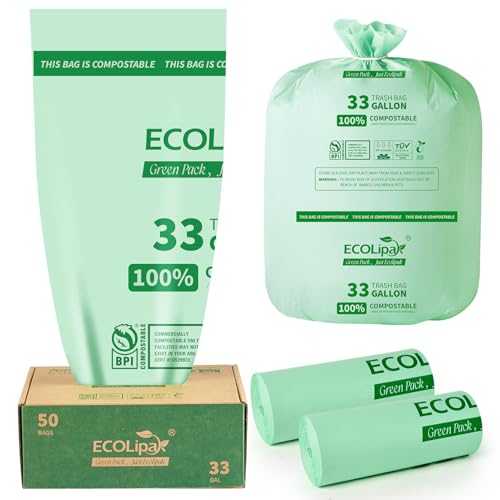
Another option from ECOLipak in the same 33-gallon size range, featuring BPI and OK Compost Home certifications. Packs can suit households with higher bag turnover, ensuring a steady supply of compostable liners for routine yard work and organics collection.
Buying Guide
- Certification matters: Look for BPI, OK Compost HOME, and ASTM D6400 compatibility to ensure the bags will fully compost in appropriate facilities or home setups.
- Thickness and strength: For damp yard waste, 1.1–1.57 mil bags provide better puncture resistance and tear durability, reducing leaks and mess.
- Bag dimensions: Most 32–33 gallon bags measure about 32.5–33 inches by 40 inches. Ensure your bin dimensions align with these measurements for a snug fit.
- Material composition: Plant-based PLA/PBAT blends offer compostability; consider the trade-offs between compostability speed and bag strength depending on waste type.
- Roll count and packaging: Larger packs reduce refill frequency but may require more storage space. Plan based on household size and collection frequency.
- Storage and shelf life: Keep bags in a cool, dry place to maintain integrity and prevent premature degradation.
- Usage scenarios: Yard waste, leaves, grass clippings, and food scraps all benefit from sturdy bags; if your waste includes wet organic material, prioritize thicker options to minimize leaks.
- Bin compatibility: Confirm your bins are designed for 30–33 gallon bags to avoid overflows or bag slippage during collection.
- Home vs. industrial composting: Some certifications indicate suitability for home composting, while others target industrial facilities. Choose based on your local composting capabilities.
- Environmental impact: Opt for bags advertised as compostable rather than simply biodegradable to support end-of-life processes aligned with compost facilities.