Choosing reliable 4 gallon biodegradable trash bags helps reduce environmental impact while keeping small bins clean across kitchens, bathrooms, and offices. This guide highlights top options, comparing material, strength, and compostability. Each product is assessed for fit, odors, leak resistance, and handling ease to support informed buy decisions for American households and small workplaces.
Summary Table
| Product | Brand | Key Strengths | Certifications / Notes |
|---|---|---|---|
| Small Trash Bags 4-6 Gallon, Inwaysin 200 Count | Inwaysin | 0.87 mil thick, leak-proof, expanded size, perforated for easy tearing | Corn starch based; unscented; 20% thicker than typical bags |
| UNNI Compostable Trash Bags, 4 Gallon / 15 Liter, 100 Count | UNNI | Certified compostable; fits small bins; everyday strength | BPI, CMA & OK compost HOME; ASTM D6400 |
| Ryobyo Biodegradable Small Trash Bags, 4 Gallon | Ryobyo | Good perforation; tear-resistant; unscented | Cornstarch-based; suitable for most small bins |
| AYOTEE 4-6 Gallon Compostable Bags | AYOTEE | Industrially compostable materials; larger than typical 4 gal bags | PSM-based; OK compost HOME; ASTM D6866 |
| Chenyucheng 4 Gallon With Handles | Chenyucheng | With handles; sturdy; leak resistant; clean carry | Compostable options; 23.6″ x 17.7″ |
Inwaysin 4 Gallon Biodegradable Trash Bags (200 Count)
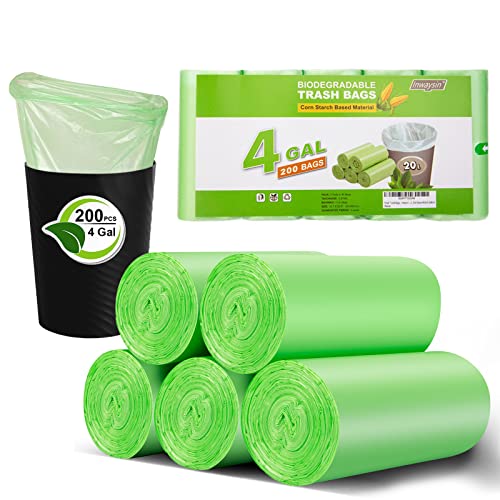
These 4 gallon bags are corn starch-based and unscented, designed to reduce odor while providing strong performance. The 0.87 mil thickness is stated to be 20% thicker than many competing brands, supporting leak resistance and durability for typical 8 kg loads. Upgraded perforation and star-sealed bottom contribute to tear-free dispensing and reliable containment in small trash cans (15–20 L). The expanded size helps keep hands clean during bag changes, especially in bathrooms and kitchens.
UNNI Compostable Trash Bags, 4 Gallon

UNNI offers 4 gallon compostable liners certified by BPI, CMA, and OK compost HOME. Sized for compact kitchen bins at 15 liters, these 0.75 mil liners balance everyday strength with compostability. They are designed for clean everyday use, helping keep small bins tidy while meeting composting standards in appropriate facilities. They are a practical choice for households seeking certified compostable options without sacrificing performance.
Ryobyo Biodegradable Small Trash Bags, 4 Gallon
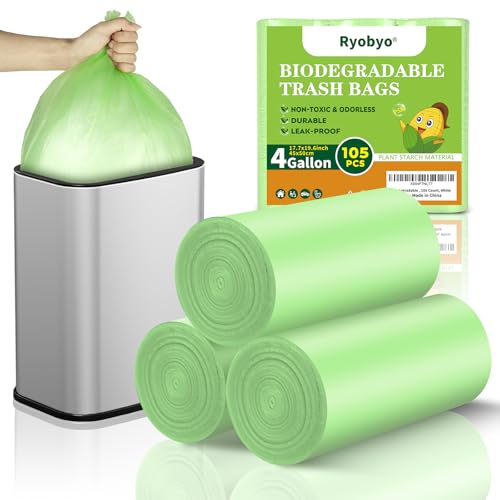
Ryobyo’s 4 gallon bags measure approximately 19.7″ x 23.6, fitting common bathroom and office bins. They are cornstarch-based and unscented to minimize odors, with an upgraded perforation for smoother tearing and a stronger bottom to help resist tearing under typical loads. The bags are positioned as versatile for home and small office use, including options for storing extra items like blankets or clothes if needed.
AYOTEE 4-6 Gallon Compostable Bags
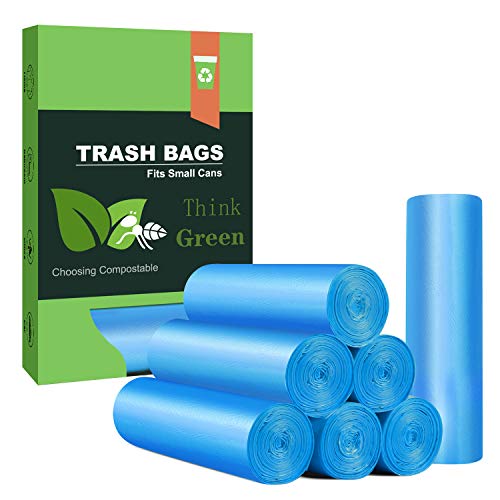
AYOTEE’s 4 gallon bags are 21.6″ x 18.5″ with a bottom octagonal design, enabling more capacity in small cans. Made from plastarch material (PSM) aligned with U.S. standards, they are degraded under industrial conditions but not suitable for backyard composting. Their box dispenser design facilitates easy one-at-a-time access, and the bags are blue, emitting a clean appearance in office spaces, kitchens, and bathrooms.
Chenyucheng 4 Gallon With Handles

Chenyucheng offers 4 gallon bags with integrated handles, measuring about 23.6 inches in total length and 17.7 inches wide. The inclusion of handles facilitates carrying and disposal, while the thickened material provides tear resistance and leak protection. Designed for bathroom, kitchen, or car use, these bags balance eco-friendliness with practical everyday utility.
Buying Guide: Key Considerations For 4 Gallon Biodegradable Trash Bags
- Material and compostability: Look for certifications such as BPI, OK compost HOME, or ASTM D6400 to ensure the bags meet recognized composting standards. Distinguish between industrial compostable and home compostable options to match your facility capabilities.
- Strength and thickness: Thicker bags (e.g., around 0.75–0.87 mil) typically offer better tear resistance and leak protection for everyday wet waste, but may be less flexible in very small bins. Consider the typical waste load and bin type when choosing thickness.
- Fit for small bins: Check the bag dimensions in relation to your bin’s diameter and height. A bag that sits securely over the rim without excessive slumping reduces spill risk and makes changing bags cleaner.
- Perforation and ease of use: Upgraded perforation helps with tearing bags from rolls without rips. This feature improves daily usability, especially in busy kitchens or bathrooms.
- Odor control: Unscented options minimize potential masking of odors, particularly in enclosed small spaces. For sensitive households, unscented biodegradable bags are often preferred.
- Convenience features: Handles, box-dispenser designs, and bottom seals can influence handling comfort and leak resistance, especially when disposing of wet waste.
- Certifications and environmental impact: Compare certifications and the underlying materials (cornstarch, plastarch, or biobased resins) to understand end-of-life scenarios and the impact on waste streams.
- Cost and quantity: Large-count rolls can offer better value per bag but ensure the bags’ dimensions and performance align with your bin and waste profile.
- Intended use context: Home kitchens, bathrooms, and small offices each have different waste profiles. Choose bags that balance strength, odor management, and convenience for your typical loads.