Stubborn water spots and mineral deposits can dull a vehicle’s finish and mar clear glass. This article reviews top acid-based water spot removers designed to dissolve mineral buildup on paint, chrome, glass, and metal surfaces. Each option is evaluated for effectiveness, ease of use, and surface safety, helping you pick a product that matches your detailing needs.
Summary of Selected Products
| Product | Brand | Main Use | ||
|---|---|---|---|---|
| Adam’s Polishes Water Spot Remover | Adam’s Polishes | Hard water stains on paint, glass, windows | Paint, metal, glass | Liquid |
| Nanoskin SPOT FREE Water Spot Remover | Nanoskin | Water spots and acid rain on chrome and painted surfaces | Safe for chrome and painted surfaces | Gel (concentrate) |
| McKee’s 37 Xtreme Water Spot Remover Gel | McKee’s 37 | Heavy-duty water spots on cars, RVs, boats | Paint, glass, metal | Gel |
| GlasWeld ProClean Heavy Duty | GlasWeld | Stubborn water spots on glass and metal | Glass, metal, painted surfaces | Liquid with pad |
| Meguiar’s Water Spot Remover | Meguiar’s | Water spots on paint and clear coats | Clear coat safe | Liquid |
Adam’s Polishes Water Spot Remover

Adam’s Polishes presents a thickened, acid-based solution designed to quickly neutralize and dissolve hard water minerals left behind on paint, glass, trim, and metal. The product advertises targeted application, aiding precise treatment on smaller areas as well as broader panels. Its formula aims to prep surfaces for subsequent protection, such as wax or ceramic coatings, by removing mineral residues that block bonding. This makes it a practical choice for detailers seeking a professional-grade, surface-ready finish without extensive scrubbing.
Nanoskin SPOT FREE Water Spot Remover

This acid-based solution is concentrated for rapid results on chrome and painted surfaces, cleaning away stubborn water spots and mineral buildup. Its gel-like consistency helps prevent runoff on vertical surfaces, making it ideal for windows and glass panels as well as flat surfaces. The product is formulated to be body shop safe and VOC compliant, offering a balance between aggressive cleaning and compliance with shop or home-use standards. It targets mineral residues while preparing surfaces for waxing or sealing steps.
McKee’s 37 Xtreme Water Spot Remover Gel

McKee’s 37 offers a fast-acting gel formula designed for heavy-duty water spots on cars, RVs, boats, and trucks. The product includes an application towel or pad for a convenient, no-muss method: apply the gel, let it dwell, then wipe off with water or a detailing spray. The gel formulation helps keep product in place on vertical surfaces, reducing drips and mess while targeting mineral deposits that etch into surfaces if left untreated.
GlasWeld ProClean Heavy Duty Hard Water Stain Remover

GlasWeld’s ProClean targets stubborn water spots on glass, metal, tile, and painted surfaces. It comes with an applicator pad for easy, circular application and buffing. This solution emphasizes mineral deposit removal to prevent future etching, offering a straightforward path to clearer glass and brighter metals. The kit-like offering makes it convenient for DIY enthusiasts who want a complete application and finishing workflow in one package.
Meguiar’s Water Spot Remover
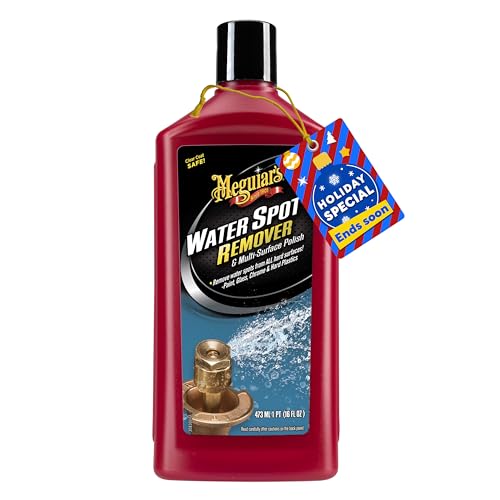
Meguiar’s Water Spot Remover is designed to address water spots on paint and clear coat while functioning as a gentle polish that can enhance gloss. It is described as safe for clear coats and painted surfaces, making it a versatile option for enthusiasts who want a single product that cleans, polishes, and prepares the surface for protection. The treatment can help restore clarity after weather exposure or improper washes, supporting subsequent wax or sealant layers.
Buying Guide: Key Considerations For Choosing An Acid Water Spot Remover
- Surface compatibility: Confirm whether the formula targets paint, glass, metal, or trim, and ensure it’s safe for your vehicle’s clear coat and coatings.
- Concentration and dwell time: Higher concentration formulas may deliver faster results but require careful application to avoid damage. Check recommended dwell times.
- Gel vs. liquid: Gel formulas tend to minimize drips on vertical surfaces, while liquids can be faster for broad areas. Choose based on surface geometry and user preference.
- Safety and ventilation: Acid-based products can release fumes. Use in a well-ventilated area and wear protective gloves and eye protection as needed.
- Application tools: Some products include applicator pads or towels—these can simplify the process and reduce crowding on small panels.
- Post-treatment readiness: Look for formulas that prep surfaces for protection (wax, sealant, or ceramic coating) to maximize longevity of results.
- VOC compliance and professional use: If you’re working in a shop or with limited ventilation, VOC-compliance can be an important consideration.
- Versatility: If you own multiple surfaces (paint, glass, metal), a multi-surface formula may reduce the number of products in your kit.
- Environmental and safety notes: Some products may require rinsing and proper disposal. Follow label directions to minimize environmental impact.
In summary, the best choice depends on your surface types, staining severity, and whether you prefer a gel or liquid format. For rapid results on stubborn spots, gel-based options on paint and glass are commonly favored, while heavy-duty liquids can address persistent mineral buildup across multiple surfaces. Always test a small, inconspicuous area first.