When repairing hard plastic, choose adhesives designed for polymers, with good gap filling, quick set times, and durable bonds. This guide highlights five highly compatible options and explains who each is best for, plus practical cautions. Ideal buyers include DIY hobbyists, automotive and bumper repair enthusiasts, model builders, and general handypersons tackling rigid plastics.
Summary Of Chosen Products
| Product | Best For | Why It Stands Out |
|---|---|---|
| J-B Weld 50139 Plastic Bonder Body Panel Adhesive | Rigid thermoplastics and automotive panels | Fast set, strong 3770 psi bond, easy 1:1 mix |
| J-B Weld 50133 Plastic Bonder Structural Adhesive Syringe | Precise application on plastics | Re-sealable syringe for repeated uses, 1:1 mix, solid strength |
| Gorilla Super Glue Gel XL | Vertical surfaces and precise repairs | No-run gel, anti-clog bottle, fast set |
| Loctite Super Glue Ultra Gel Control | Everyday plastic and multi-surface fixes | No-drip formula, easy squeeze bottle, durable bond |
| GH1200 (2-in-1) Super Glue For Plastic | Controlled application with brush | Built-in brush and nozzle, precise application, strong bond |
J-B Weld 50139 Plastic Bonder Body Panel Adhesive – Black
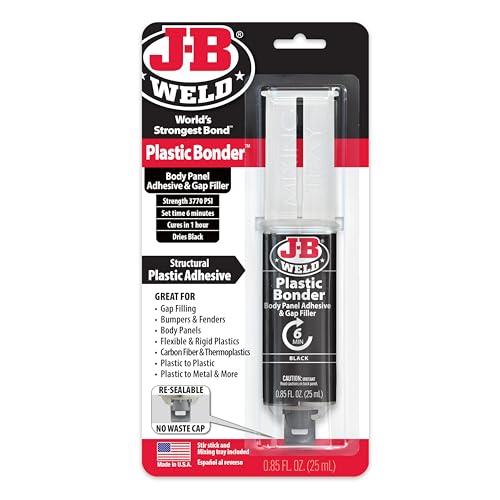
Best for: DIY repairs on thermosets, carbon fiber composites, thermoplastics, and coated metals. This 2-part urethane adhesive sets in about 15 minutes with a 3770 psi tensile strength, producing a hard, permanent bond. The 1:1 mixing ratio makes it straightforward for home projects.
Why selected: It delivers a robust, durable bond suitable for hard plastics, with a strong track record in automotive and repair work. Limitations: Requires mixing and proper surface prep for optimal bonding, and full cure takes longer than initial set.
J-B Weld 50133 Plastic Bonder Structural Adhesive Syringe – Tan
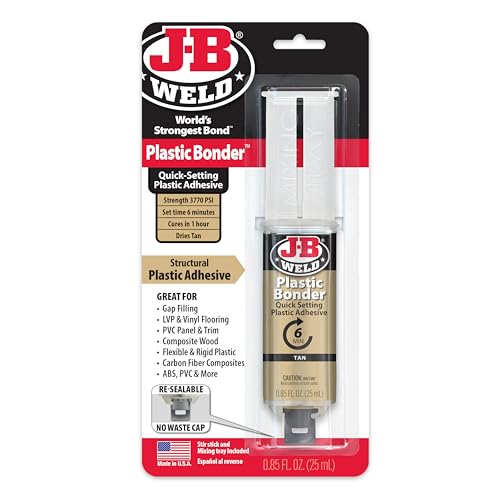
Best for: Precise plastic repairs, dents in bumper areas, and projects needing consistent 1:1 mixing. The tan PlasticBonder comes in a syringe that simplifies application and minimizes waste. It cures to a strong bond with a 3770 psi tensile strength.
Why selected: The resealable syringe reduces drying and leakage, enabling multi-use convenience. Caution: Keep the syringe cap tightly closed between uses to maintain workability.
Gorilla Super Glue Gel XL – Clear 25g

Best for: Precise, vertical, or porous plastic repairs where a controlled application is essential. The gel formula dries in 10 to 45 seconds with a full cure in 24 hours, and the anti-clog cap helps maintain bottle performance.
Why selected: Gel is less messy than liquid glue and handles vertical surfaces well. Limitation: Not ideal for heavy-load or flexible plastic joints; choose a stronger bond option for high-stress areas.
Loctite Super Glue Ultra Gel Control – Clear
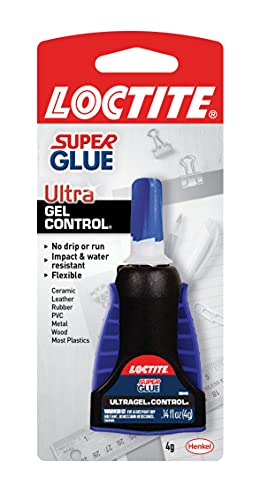
Best for: General-purpose plastic repairs with a durable, water-resistant bond. The rubber-toughened formula resists impact and moisture, and the easy side-squeeze bottle provides precise application for small repairs.
Why selected: It offers reliable performance across multiple plastic types with minimal clamping. Caution: For large surfaces, multiple small applications may be needed for full strength.
GH1200 (2-in-1) Super Glue For Plastic

Best for: Models and small plastic assemblies requiring dual options. The built-in brush applicator and nozzle support controlled dispensing for precise bonds. It claims strong, long-lasting fixes and waterproof characteristics.
Why selected: The dual application options help users switch between broad coverage and fine detailing. Caution: Brush fibers can fray with repeated use; avoid heavy loads on repaired joints without testing first.
Buying Guide: How To Choose The Right Plastic Adhesive
What type of plastic are you repairing?
Thermoplastics, thermosets, and coated plastics respond differently to adhesives. For hard plastics, two-part epoxies and polyurethane-based plastics bonders often deliver stronger, long-lasting bonds than simple cyanoacrylates. If you need a gap-filling option for uneven surfaces, a syringe-based or gel formula can help.
Do you need a precise application?
For small or delicate parts, syringes or brush applicators provide better control. Gel formulations prevent runny applications on vertical surfaces, while built-in brushes aid uniform coverage on flat areas.
How quickly do you need it to set?
Set times vary from minutes to hours. Quick-set formulas are useful for assembly work or parts that cannot remain clamped for long, but allow time to reposition during initial bonding.
Is moisture or heat a concern?
Some bonds are water-resistant or waterproof and can perform under wet or hot conditions. If the repaired item will see weather exposure or outdoor use, select a water- or weather-resistant option.
Is gap filling important?
If there are gaps or uneven surfaces, choose products described as gap fillers or those with good fill capability. This helps prevent weak spots and improves bond integrity.
Storage and longevity considerations
Some plastics implement resealable packaging or no-clog bottles, which extend shelf life and product usability. Proper storage and surface cleaning before application improve bonding performance.
Safety and preparation tips
Work in a ventilated area. Clean and roughen bonding surfaces where appropriate, and follow the manufacturer’s mixing and curing instructions for best results.
Frequently Asked Questions
- What is the strongest adhesive for hard plastic? Two-part plastic bonding systems and polyurethane plastic bonder adhesives often offer the strongest bonds for hard plastics, especially on automotive or rigid parts.
- Can cyanoacrylate glue work on hard plastic? Yes, cyanoacrylates work on many hard plastics, but may be brittle on flexible plastics or where impact resistance is required. Gel formulations offer better control for vertical surfaces.
- Do I need to roughen the plastic before applying adhesive? Light surface abrasion improves adhesion by increasing surface area and bonding agents’ grip. Clean surfaces to remove oils or dust.
- How long should I wait before handling a repaired plastic? Set times vary; follow product instructions. Some bonds reach handling strength within minutes, with full cures over hours.
- Are these adhesives waterproof? Some options are water- or weather-resistant, suitable for exterior or bathroom repairs. Check product specs for humidity or water exposure guidance.
- Can I use multiple adhesives on the same project? Yes, but ensure chemical compatibility and that each joint can cure properly without interfering with others.