Answering the common question, these products are designed to kill existing mold on wood and help prevent future growth. They’re best suited for homeowners, renters, and DIY enthusiasts tackling damp, mold-prone areas like bathrooms, basements, and wood furniture. The following selections prioritize bleach-free, odorless formulas that minimize VOC exposure while delivering practical results.
Quick product picks (summary table):
| Product | Best For | Notes |
|---|---|---|
| Concrobium Mold Control (32 oz) | Preventing mold on wood surfaces after cleaning | Bleach-free, odorless, VOC-free, EPA-registered |
| MOLD ARMOR Professional Mold Kill & Control (32 oz) | Fast-acting mold & mildew on non-porous wood surfaces | Visible results in minutes, no scrubbing required |
| MOLD ARMOR Mold Blocker (32 oz) | Long-term mold growth prevention on wood and textiles | Up to 3 months protection |
| RMR Brands DIY Mold & Stain Remover Bundle | Comprehensive kit for stubborn stains and prevention | Includes two formulas for immediate kill and stain removal |
| 30 SECONDS Pro Mold & Mildew Stain Remover (32 oz) | Heavy-duty stain removal on wood surfaces | Scrub-free, fast-acting |
Concrobium Mold Control, 32 oz Spray

Concrobium Mold Control is best for wood surfaces where you want an invisible barrier after cleaning. It eliminates mold at the source and helps prevent future growth, making it well-suited for wood furniture, trim, and cabinetry in damp spaces. The product is EPA-registered for mold control when used as directed, and it’s bleach-free, odorless, and VOC-free to support healthier indoor air quality.
Who it’s best for: homeowners seeking a non-bleach, low-odor solution that both removes mold and provides ongoing protection on wood. Limitations: it requires proper surface prep and repeat applications in persistent moisture areas.
MOLD ARMOR Professional Mold Kill & Control Spray

MOLD ARMOR Professional Mold Kill & Control is a fast-acting option for hard, non-porous wood surfaces. It kills and cleans mold and mildew with visible results in minutes and requires no scrubbing. It’s ideal for bathrooms, kitchens, and garages where quick turnaround is valuable. It also claims to help prevent re-growth on treated surfaces.
Who it’s best for: users needing quick visual results on sealed wood, laminate, or other non-porous wood surfaces. Limitations: may be less effective on highly porous wood or deeply ingrained mold without follow-up treatments.
MOLD ARMOR Mold Blocker, 32 OZ

MOLD ARMOR Mold Blocker focuses on preventing mold growth by forming an invisible barrier on indoor and outdoor surfaces. Suitable for bathrooms, linens, fabrics, carpets, and upholstery, it can help protect wood furniture and cabinetry from future mold issues when moisture exposure recurs.
Who it’s best for: someone seeking longer-term protection across multiple surfaces, including wood. Limitations: protection duration can vary with humidity and moisture levels; reapplication may be needed in damp conditions.
RMR Brands DIY Mold & Stain Remover Bundle

This bundle combines two fast-acting formulas: RMR-86 for stain removal and RMR-141 for disinfecting and eliminating mold roots. It’s a strong option for tackling stubborn wood stains and preventing regrowth. The two-spray approach adds versatility for different levels of mold challenges in wood areas like basements and bathrooms.
Who it’s best for: users dealing with both visible mold stains and stubborn odor or residue on wood. Limitations: the kit targets mold and stains rather than providing a long-term moisture barrier.
30 SECONDS Pro Mold & Mildew Stain Remover
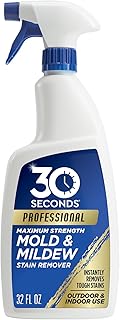
The 30 SECONDS Pro formula is designed for heavy-duty mold and mildew stains with a scrub-free approach. It can brighten and lift stains on wood surfaces, indoors and outdoors, without pressure washing. It’s a strong choice for people who want fast, noticeable results with minimal effort.
Who it’s best for: users needing quick stain removal without scrubbing. Limitations: it focuses on stain removal rather than long-term mold prevention on the same application.
Buying Guide: How to Choose The Right Anti-Mold Spray For Wood
- Shelf life and coverage: Consider how much area you need to treat. Some products offer larger spray bottles and broader coverage, which is useful for wood floors, panels, or furniture.
- Surface compatibility: Wood types vary in porosity. Non-porous or sealed wood often handles harsher cleaners, while porous wood benefits from bleach-free, odorless formulas to prevent surface damage and remaining residues.
- Active ingredients: Bleach-free formulas reduce odor and harshness. EPA-registered products indicate regulated mold control when used as directed. Decide between barrier-based prevention (Mold Blocker), disinfectant kill (RMR-141), or immediate surface cleanup (Mold Kill & Control).
- Long-term protection: If you have recurring moisture, look for products that provide a preventive barrier or longer-lasting protection against future mold growth.
- Ease of use: Scrub-free formulas save time but may offer different results on stubborn stains. Consider whether you prefer fast results or a deeper clean with follow-up treatments.
- Ventilation and safety: Use in well-ventilated areas. Check for any precautions about contact with skin or eyes and ensure proper storage away from children and pets.
FAQ: Quick Answers For Mold And Wood Care
- How often should I reapply mold prevention products on wood? Reapplication frequency depends on moisture exposure. In damp areas, reassess monthly and after periods of high humidity.
- Are these products safe for wood furniture? Many are designed for wood surfaces, especially bleach-free options. Always follow the label directions and test a small inconspicuous area first.
- Can I use these products on painted or sealed wood? Yes, most are suitable for sealed wood, but test first on a hidden spot to ensure no discoloration or finish damage.
- What’s the difference between mold killers and mold blockers? Kill products remove existing mold; blocker products create a protective barrier to slow future growth on treated surfaces.
- Is it necessary to remove mold with a scrubber before applying? For stubborn stains, pre-cleaning with a non-abrasive method can improve results, but scrub-free formulas can also work well on many surfaces.
- What should I do if mold returns after treatment? Reassess moisture sources, improve ventilation, and consider a second treatment or a combination of products to address both existing mold and future growth.