The best auto on switch vacuum for your shop connects tools and dust collection for smoother, safer dust control. This guide highlights five top choices, explaining who each is best for and why. Ideal buyers include woodworkers needing compact setups, DIY enthusiasts seeking easy installs, and professionals managing multiple tools. All options provide automatic start/stop, delay features to prevent overload, and clear mode indicators for quick setup. Below is a quick comparison table of the five products to help you shortlist.
| Product | Best For | |
|---|---|---|
| Automatic Vacuum Switch, Ortis Vacuum Switch for More Power Tools | Woodworking setups with two outlets | Automatic, manual, two tool outlets, 1s start delay, 7s stop delay |
| O’SKOOL Automatic Vacuum Switch | Table Saws, Miter Saws, Routers | Auto start, 10s delay off, run-on sensing |
| SENCTRL Automatic Vacuum Switch for Power Tools | Power tool-heavy workshops needing manual override | Auto/Off/On modes, 30A capable, 1s start delay |
| Automatic Vacuum Switch, Ortis Dust Control Autoswitch | Projects with adjustable actuation thresholds | Two outlets, LED indicators, 30W/60W threshold, 3s/7s/10s delay |
| SENCTRL Automatic Vacuum Switch with Overload Shield | Pro-grade safety and reliability | Overload protection, 1s/7s delays, tool-vac control |
Automatic Vacuum Switch, Ortis Vacuum Switch for More Power Tools

This Ortis model offers two tool outlets and three run modes: Auto, Off, and On. It features an automatic delay of 1 second when starting the vacuum and a 7-second delay before shutdown in Auto mode. Best for workshops with multiple tools where ease of use and cleaner air are priorities. Caution: ensure wiring can accommodate dual outlets safely to avoid overloading circuits.
O’SKOOL Automatic Vacuum Switch

This plug-and-go option is built for real woodworking setups. It starts the vacuum when the tool runs and offers a 10-second delay-off to clear dust from hoses. Best for small to medium workshops with table saws, miters, routers, and sanders. Consideration: performance depends on tool power draw remaining above the trigger threshold to auto-start.
SENCTRL Automatic Vacuum Switch for Power Tools

Focusing on load sensing and safety, SENCTRL combines a manual switch with three run modes and a 30A-capable cord. It delays startup by 1 second to prevent overload and can help keep dust collection synced with heavy-tool use. Best for pro or serious DIY environments; limitation: data notes emphasize electrical design compatibility with your cords and outlets.
Automatic Vacuum Switch, Ortis Dust Control Autoswitch

Ortis adds LED indicators for clear mode visibility. It supports two tool outlets and offers adjustable actuation thresholds (30W/60W) with a selectable shutdown delay of 3s/7s/10s. Best for setups where you want precise control to prevent running the vacuum too long. Limitation: LED indicators require a quick glance to interpret modes during busy sessions.
SENCTRL Automatic Vacuum Switch for Power Tools (Overload Shield)
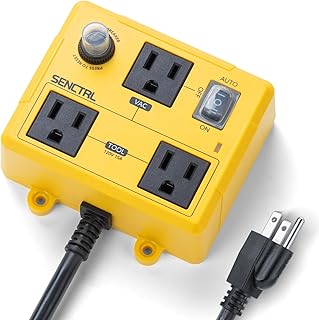
This SENCTRL model highlights overload protection with a 14AWG, UL-certified 30A-rated cord and a flame-retardant PC+ABS housing. It combines three modes, a 1-second start delay, and a 7-second shut-off delay for quiet, thorough cleanup. Best for users prioritizing safety and consistent auto-control; caution: ensure compatibility with your existing dust collection system wiring.
Buying Guide
What to consider when choosing an auto on switch vacuum:
- Number of tool outlets: If you run multiple tools at once, prefer models with two outlets to reduce clutter and avoid extra power strips.
- Run modes: Look for Auto, Off, and On options. Manual override is valuable when you need direct control for certain tasks.
- Delay timing: Start delay helps prevent circuit overload; a longer stop delay can improve dust clearance after tool shutdown.
- Actuation threshold: For load-sensing units, pick a threshold that matches your tools’ typical current draw to avoid nuisance starts or stops.
- Safety features: Overload protection and flame-retardant casings add reliability in busy shop environments.
- Installation: Options for screw mounting or wall-mounting adhesive simplify setup and reduce vibration or movement during use.
- Compatibility: Confirm the device supports the wattage and amperage you commonly use with your shop vac and power tools.
Frequently Asked Questions
- What is an auto vacuum switch used for?
It automatically starts the vacuum when a connected power tool runs and stops it after a delay, improving dust collection and reducing clutter.
- Do these switches work with all shop vacs?
Most are designed for standard shop vacs, but always check wattage and current ratings to ensure compatibility with your model.
- How does the delay off help?
A delay off clears remaining dust in hoses, improving cleaning efficiency and reducing stop-start dust.
- Is two-tool-outlet a must-have?
Not required for all setups, but it helps when you run multiple tools simultaneously and want centralized dust control.
- What safety features matter most?
Overload protection and flame-retardant housings reduce electrical risks in busy workshops.
- Can I install these myself?
Yes, most offer simple mounting options, but follow product instructions and local electrical codes for safe installation.