For shop owners and woodworkers aiming to automate dust collection, the right automatic blast gate can dramatically improve airflow, reduce clogs, and simplify duct routing. The following picks are best suited for shops seeking hands-off operation, easy installation, and robust construction. They range from pneumatics to solenoid-driven designs, and include ready-to-mount polymer options for durability. This guide helps you compare five strong candidates and choose the best fit for your dust collection system.
| Product | Best For | Power Source | Notes |
|---|---|---|---|
| iVAC Pro Blast Gate 4″ (PBG04-A-NA) | Small to mid-size setups; automatic and remote control | Automatic, wired, or wireless | Self-cleaning; easy duct attachment |
| Automatic Blast Gate (Pneumatic) – 6″ Dia. / 110v | Higher airflow lines; robust, industrial use | 110 VAC Solenoid | Includes 90° flared ends; heavy-duty galvanizing |
| Automatic Blast Gate (Pneumatic) – 6″ Dia. / 24v | Low-voltage control options; compact layouts | 24 VDC Solenoid | LED indicator; same great metal construction |
| Dust Right Rockler 4″ Blast Gate | Woodshop walls; simple ready-mount solution | Manual/Automatic via system integration | Built-in bracket; high airflow |
| POWERTEC 70295-P2 4-Inch Blast Gate (2-pack) | Direct replacement for 4″ ducts; clog-resistant | Manual operation (integrates with automation) | Tapered OD; anti-clog; seamless sliding gate |
Top buyers in the market include contractors and hobbyists who value ease of use and minimal maintenance. The table above helps you compare core attributes at a glance, covering power options, installation considerations, and maintenance notes.
iVAC Pro Blast Gate 4″ (PBG04-A-NA)

Best for compact harnessing of multiple machines without sacrificing airflow. Features include automatic operation, a wireless remote option, and a manual wired fallback. The large collars simplify ducting attachment, and the self-cleaning mechanism reduces maintenance. This model is ideal for small to medium shops with a centralized dust collection network and a desire for flexible control methods. Caution: ensure your control interface is compatible with the remote or wired options you plan to use.
Automatic Blast Gate (Pneumatic) — 6″ Dia. / 110v
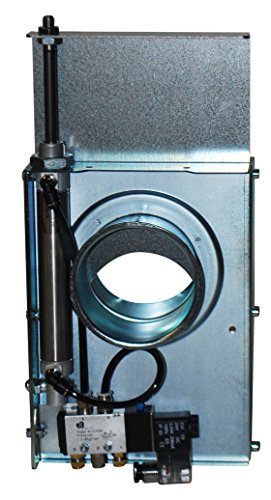
Best for rooms with larger dust lines or machines that require greater airflow. This industrial-grade unit uses a 110 VAC solenoid and heavy-gauge galvanized construction. It includes self-cleaning blades and adapts to spiral or clamp-together ducting, with 90-degree flared ends for quick connections. Choose this if you need robust performance in a high-demand shop. Limitation: higher power draw means it suits setups with reliable power supply and appropriate clearance for the solenoid.
Automatic Blast Gate (Pneumatic) — 6″ Dia. / 24v
Best for tight layouts where 24 VDC control is preferred. The unit mirrors the 110V version with galvanized construction and self-cleaning blades, ensuring durable operation and easy integration into low-voltage control schemes. The LED indicator helps confirm status at a glance. Best for shops with centralized 24V controls. Caution: ensure your control system can supply stable 24V to avoid misfires in automation.
Dust Right Rockler 4″ Blast Gate

Best for wall-mounted dust collection setups in woodshops seeking a ready-mount, durable option. It features an efficient debris-clearing action with every close, and a sturdy reinforced polymer body designed for repeated use. The built-in bracket simplifies installation and reduces stance shifts that might impact airflow. Choose this when you want a simple, reliable, fixed-location gate with solid airflow maintenance. Limitation: intended for ready-mount installation; integration with remote automated controls may require additional hardware.
POWERTEC 70295-P2 4-Inch Blast Gate

Best for modular 4-inch dust lines requiring a clog-resistant design. The 4-inch tapered OD (3-7/8″ to 4-1/8″) and seamless sliding gate provide a secure stop while minimizing air loss. It is compatible with 4″ ID hoses or ports and is ideal for fine-tuned zoning in mid-sized shops. Caution: not a direct fit for all 4″ OD ports; verify measured dimensions against your ducting before purchase.
POWERTEC 70326 Blast Gate 4 Inch

Best for quiet integration in a compact dust system with an anti-clog design. The 4″ aluminum blast gate uses a tapered OD and a horizontally sliding gate with closed edges to prevent air leaks. It’s a reliable option for shops needing precise control with minimal maintenance. Limitation: requires proper hose clamps when used with flexible duct hoses to ensure a tight seal.
POWERTEC 6 inch Aluminum Blast Gate

Best for larger dedicated dust lines that require robust sealing and anti-clog performance. The 6″ aluminum gate features a tapered OD and a locking stop to keep the gate aligned. It’s suited for professional shops with multiple large machines and heavy airflow demands. Limitation: heavier than 4″ models; ensure mounting support and space for operation.
Buying Guide
What should you consider when selecting automatic dust collection blast gates?
- Size and compatibility: Measure your duct diameter and confirm the gate OD and ID compatibility. A misfit can cause air leaks or poor sealing.
- Power and control: Decide between pneumatic, 24V, or 110V solenoid configurations. Consider existing controls and whether you need remote or manual fallback.
- Material and durability: Galvanized steel, aluminum, or reinforced polymers offer different durability and weight. Heavy-duty options suit busy shops; polymers can reduce weight and cost.
- Seal and clog prevention: Anti-clog and air-leak-seal features help maintain suction and reduce maintenance intervals.
- Installation and mounting: Some gates include built-in brackets or ready-mount designs. Ensure mounting surface support and easy access for maintenance.
- Maintenance: Self-cleaning gates reduce upkeep, but verify the availability of replacement parts and gate alignment mechanisms.
Common configurations and tips
- For small shops with multiple machines, start with 4″ gates linked to a central controller or remote system.
- In larger shops, combine 6″ gates at main lines with 4″ gates on branch lines to balance airflow.
- When integrating 24V or 110V solenoids, ensure your power supply and wiring meet safety requirements and control compatibility.
- Always verify hose and duct connections with clamps or adapters to maintain a tight seal and prevent leaks.
FAQ
- What is an automatic blast gate? An automatic blast gate uses a motor or solenoid to open and close air ducts, regulating airflow without manual intervention.
- Which gate size should I pick? Match the gate diameter to the duct size in your dust collection system; common options are 4″ and 6″.
- Are pneumatic gates better than electric? Pneumatic gates are often simpler on lower voltage systems, while electric (solenoid) gates offer precise control and easier integration with automation systems.
- Can I install these gates myself? Many come with mounting brackets or easy-fit designs, but ensure proper power supply, wiring, and duct fittings for a secure installation.
- Do these gates reduce maintenance? Self-cleaning features and clog-resistant designs reduce maintenance, but regular inspection and seal checks remain important.
- Can I mix 24V and 110V gates in one system? Yes, but plan your control wiring and power distribution to prevent conflicts and ensure reliable operation.