Biodegradable plastic bags are designed to reduce environmental impact while maintaining everyday convenience. This guide highlights five top options for shoppers seeking compostable or oxo-biodegradable bags suitable for grocery, retail, takeout, and light trash use. Each choice targets different buyers—from small businesses to households—based on size, durability, and handling features.
Buyer quick reference: the top five picks below are chosen for accessible packaging, practical strength, and clear eco-credentials. If you run a cafe or grocery store, look for bags with sturdy handles and ample gusseting. For households, consider bags that fit standard trash cans or grocery tote workflows.
| Product | Brand | Size / Capacity | Approx. Thickness | Count |
|---|---|---|---|---|
| [100 per box] Biodegradable T‑Shirt Bags | UMT Plastar | 11.5″ x 6.25″ x 21″ (large) | 16 Mic (0.63 Mil) | 100 |
| 500 Biodegradable Compostable T‑Shirt Bags | HOUZZKINGZ USA | 12″ x 6.5″ x 22″ | 12.5 Microns | 500 |
| KitchenDine Eco Green Bags | KitchenDine | 22″ x 12″ (Carry Out) | 0.5 Mil | 100 |
| Stock Your Home Grocery Bags | Stock Your Home | About standard grocery size | Not specified | 100 |
| SUPERBIO 2.6 Gallon Compostable Bags | SUPERBIO | 16.3″ x 22.0″ x 0.67 mil | 0.67 Mil | 100 |
[100 Per Box] Eco Biodegradable T-Shirt Bags

Best for small shops, casual restaurants, and markets needing affordable, easy-to-carry bags for takeout or groceries.
- 100% biodegradable with oxo-biodegradable technology tested by EPI Environmental Technologies Inc., offering faster environmental breakdown than conventional plastics.
- Handles and bulk format suit quick-service operations and frequent bagging tasks.
- Best for customers seeking a straightforward disposal path without composting requirements in practice.
Caution: Not all formulations are suitable for commercial composting facilities; suitable for regular trash or recycling streams where local guidelines permit.
500 Biodegradable Compostable T‑Shirt Bags

Best for mid-to-large volume grocery or retail outlets needing a sturdy 12.5-micron bag with dual handles.
- Biodegradable and eco-friendly; designed to reduce waste without sacrificing grip and load capacity.
- 12.5 microns thick offers better tear resistance for heavier items compared with thinner bags.
- Dual handles improve handling and quick packing for busy counters.
Caution: The stated thickness is a guideline; actual performance depends on contents and handling.
KitchenDine Eco Green Bags
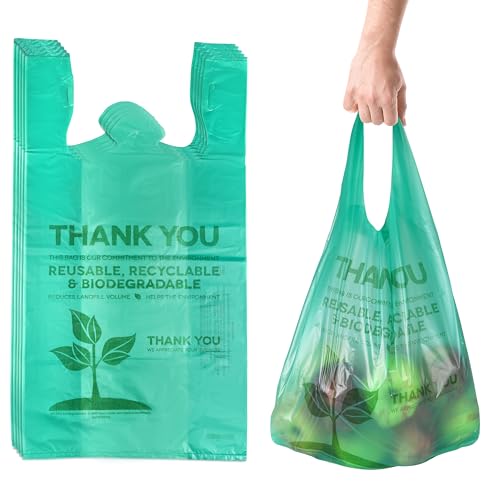
Best for hospitality businesses and households seeking American-made, lightweight carry-out bags with dual handles.
- Approximate 100-bag value pack with dual handles for easier transport.
- Green, recyclable, and biodegradable design mirroring traditional bag convenience with lower ecological footprint.
- Size and gusset dimensions support standard takeout orders and light grocery tasks.
Caution: Weight-bearing limits are best respected to prevent tearing on heavy items.
Stock Your Home Grocery Bags

Best for households and small businesses needing a versatile, durable bag suitable for grocery shopping and light trash can use.
- PLA-based material derived from cornstarch; BPA-free composition supports safer handling.
- Durable enough for everyday use; adaptable to multiple tasks beyond grocery shopping.
- Versatile and easy to store, with strong construction for frequent reuse scenarios.
Caution: PLA bags require careful disposal in line with local regulations; not all recycling streams accept PLA.
SUPERBIO 2.6 Gallon Compostable Bags

Best for facilities or households that generate larger amounts of organic waste and need sturdy, compostable liners.
- 2.6 gallon capacity with 0.67 mil thickness supports heavier organics and general waste alike.
- Certified by BPI and OK compost INDUSTRIAL, aligning with recognized composting standards.
- Reinforced bottom and handle tie aid secure transport of heavier loads.
Caution: These bags are designed for composting under appropriate industrial conditions; verify local composting capabilities and guidelines.
Buying Guide
Key considerations when choosing biodegradable bags:
- Intended use: Grocery, takeout, or trash liner? Choose bags with appropriate thickness and handle design for your primary tasks.
- Biodegradability vs. compostability: Some bags are oxo-biodegradable, others are compostable under specific standards (BPI, OK compost). Match to local disposal options.
- Size and strength: Check width, gusset, and thickness to prevent rips with common items you bag.
- Materials and safety: Look for BPA-free materials and clear labeling about disposal or recycling expectations.
- Made in USA or certifications: Certifications or domestic production can reflect regulatory alignment and supply chain considerations.
Frequently Asked Questions
- What does “oxo-biodegradable” mean?
Oxo-biodegradable bags break down faster in the open environment due to additives that accelerate degradation, but disposal guidelines vary by local facilities.
- Are PLA bags compostable at home?
Most PLA bags require industrial composting facilities; check local programs before disposing in home compost or trash.
- Can I reuse biodegradable bags?
Yes, many can be reused for light tasks, but reuse should consider bag integrity and contamination risks, especially with food waste.
- Which bags are best for restaurants?
Durable t-shirt bags with sturdy handles and adequate thickness are typically preferred for quick service and takeout.
- Do these bags reduce plastic waste?
Biodegradable and compostable options aim to reduce long-term persistence in the environment when disposed of properly, but effectiveness depends on disposal practices and local facilities.