Choosing biodegradable bin liners can help reduce plastic waste without sacrificing strength or convenience. This guide highlights five reliable options designed for different small to mid-size trash cans, emphasizing compostability, material sources, and practical features like leak resistance and easy tear designs. Read on to compare sizes, fit, and environmental benefits to find the right liner for home, office, or small business use.
| Product | Size Fit | Material | Key Benefit |
|---|---|---|---|
| Wifpme Small 1.2 Gal | 1.2 gallon | Plant starch material (PSM) | Eco-friendly, leak-resistant |
| AYOTEE 4 Gal | 4 gallon | Plastarch material (PSM) | Box dispenser, larger capacity |
| Aoriyar 1.2 Gal | Approx. 1.5 gal compatible | Plant-based materials | Muti-purpose, octagonal bottom for strength |
| Wifpme 2.6 Gal | 2.6 gal | Corn starch & plant fiber blend | Single-Touch tear design, durable |
| TERRACOR 1.3–1.6 Gal | 1.3–1.6 gal | Plant-based PLA & PBAT | BPI Certified compostable |
Wifpme 1.2 Gal Biodegradable Trash Bags

These 1.2-gallon trash bags use plant starch material (PSM) and are designed to decompose in soil within 12–24 months. The bags are unscented and non-toxic, helping to minimize odor while protecting against leaks. The bottom is angularly sealed for enhanced strength, reducing the risk of tearing when disposing of wet or fibrous waste. Dimensions roughly 35 cm by 40 cm provide a comfortable fit for most small trash cans, and the bags are suitable for bathroom, bedroom, office, kitchen, or general waste use.
AYOTEE 4–6 Gallon Compostable Trash Bags
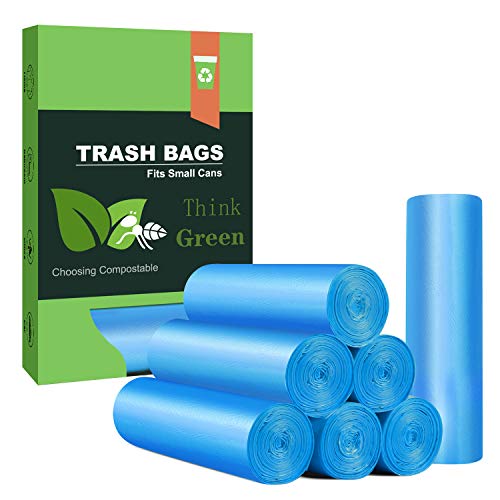
AYOTEE’s 4-gallon compostable bags are made from plastarch material (PSM) derived from renewable plant starch. They are designed to provide strong leakage resistance and durability while remaining unscented. A box-dispenser design makes grabbing an entire liner quick and simple. The liners are sized for small to mid-size cans (round or rectangular) with a bottom octagonal design to maximize capacity and reduce the chance of overflow. Suitable for offices, kitchens, bathrooms, and living spaces where compostable options are preferred.
Aoriyar Small Trash Bags 1.2 Gal, 120 Counts

The Aoriyar mini trash bags measure 15.7 by 13.8 inches with an octagonal bottom design to help prevent leaks. Packaged as 120 counts across 5 rolls, they are positioned for 4.5–6-liter bins and can be used in offices, kitchens, bathrooms, bedrooms, living rooms, and for tasks like diaper disposal or car trash. The design prioritizes convenient separation of bags and ease of use, reducing tearing and waste.
Wifpme 2.6 Gallon Compostable Bags

Designed for larger 2.6-gallon bins, these compostable bags use a blend of corn starch and plant fiber for a more robust liner. They offer a One-Touch Tear Design for quick, tool-free access and reinforced double-layer construction to handle liquids, pet waste, and fibrous materials. The odor-resistant and water-repellent design helps maintain a cleaner environment in kitchens, bathrooms, dorms, offices, and cars while supporting compostable disposal practices.
TERRACOR 1.3–1.6 Gal Compostable Bags

TERRACOR offers 1.3–1.6 gallon bags with packaging in rolls (35 bags per roll). These bags are made from plant-based PLA and PBAT, designed to meet ASTM D6400 compostability standards and are BPI certified. They are suitable for kitchen waste, small compost bins, and office use. The plant-based composition ensures compatibility with industrial composting conditions, where they break down into water, CO2, and organic matter, contributing to soil health when disposed of properly.
Buying Guide: Key Purchase Considerations
- Size compatibility: Match bag capacity to your trash can size. Common small cans use 1.2–4 gallons, while compact office or apartment bins may fit 2.6–4 gallons.
- Material and compostability: Look for plant-based materials like PLA, PBAT, PBAT blends, or plastarch material (PSM). Check for certifications such as ASTM D6400 or BPI to ensure industrial or home compostability.
- Leak resistance and strength: Features like octagonal bottoms and reinforced seams improve leak protection, especially for wet waste.
- Ease of use: Box or dispenser designs help with quick access and reduce tearing. One-Touch Tear designs are helpful for busy environments.
- Odor control: Unscented liners minimize interfering smells, which is especially important in bathrooms or kitchens.
- Environmental impact: Biodegradability and compostability are important, but verify whether disposal requires industrial composting or can be home-composted where applicable.
- Cost and quantity: Bulk packs (e.g., 600 bags) offer savings for large households or businesses; balance cost with the typical waste volume in your space.
- Compatibility with waste stream: If your area supports compostable bags, consider those labeled for food and organic waste; otherwise, choose general-purpose compostable liners.
Overall, the selection above provides varied capacities, from 1.2 to 4 gallons, with materials designed to reduce environmental impact while maintaining practical features for everyday use. When choosing, consider bin size, waste type, and local compostability guidelines to maximize environmental benefits.