Difficile spores require potent disinfectants and wipes designed for medical and high-traffic environments. This guide highlights five top options that combine fast contact times, broad-spectrum efficacy, and user-friendly formats. Each product below is evaluated for efficacy against Clostridium difficile spores, ease of use, and material compatibility to suit hospitals, clinics, and home care settings. Use this overview to compare disinfectant wipes that help reduce C. diff transmission while keeping surfaces clean and deodorized.
| Product | Brand | Format | Key Benefit |
|---|---|---|---|
| Diversey 100895790 Avert Sporicidal Disinfectant Cleaner | Diversey | 160 wipes / canister | Kills C. difficile spores in 4 minutes; bleach-based formula |
| Clorox Healthcare Hydrogen Peroxide Wipes | Clorox | 95 wipes / pack | Effective against C. auris, MRSA; one-step cleaner and disinfectant |
| PDI Sani-Cloth Bleach Disinfecting Wipes | PDI | 160 wipes / canister | Bleach-based; ideal for high-touch areas |
| Professional Disposables Super Sani-Cloth Wipes | PDI | 160 wipes / canister | High germicidal activity; fast 2-minute action |
| Micro-Scientific Opti-Cide Max Disinfecting Wipes | Micro-Scientific | 320 wipes / two-pack | Hospital-grade disinfectant cleaner; powerful scrubbing |
Summary: This article reviews five leading c. diff disinfectant wipes, focusing on spores efficacy, contact times, and practical use in healthcare and home settings. The products covered are Diversey Avert, Clorox Hydrogen Peroxide, PDI Sani-Cloth Bleach, PDI Super Sani-Cloth, and Micro-Scientific Opti-Cide Max.
Diversey Avert Sporicidal Disinfectant Cleaner

Diversey’s Avert system offers sporicidal action with a bleach-based formula designed for hard surfaces such as glass, glazed porcelain, and stainless steel. The wipes are formulated to deliver a 4-minute sporicidal efficacy against Clostridium difficile spores, while also cleaning, disinfecting, and deodorizing in a single step. The 1-minute contact time supports rapid turnaround in busy settings, and the bleach base minimizes quat-binding concerns, making it suitable for surfaces that may accumulate organic matter. This option aligns with environments needing robust sporicidal capabilities and straightforward use.
Clorox Healthcare Hydrogen Peroxide Wipes

Clorox Healthcare Hydrogen Peroxide Wipes pair hydrogen peroxide chemistry with a convenient wipe format to tackle a broad spectrum of pathogens, including resistant strains. They are EPA-registered to kill C. auris and MRSA, and they act as a one-step cleaner, disinfectant, and deodorizer, leaving minimal residue and no added fragrances. The wipes are designed for quick, efficient cleaning of hard, non-porous surfaces common in clinical and institutional environments, supporting rapid turnover while maintaining material compatibility across a range of surfaces.
PDI Sani-Cloth Bleach Disinfecting Wipes
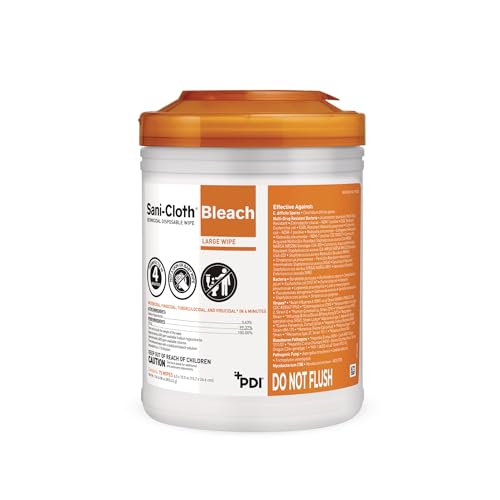
These PDI Sani-Cloth Bleach wipes provide a ready-to-use bleach solution that is ideal for high-touch surfaces and shared equipment. The 160-count canister format supports extended use in healthcare, veterinary, and home environments where sporicidal and broad-spectrum disinfection is required. The wipe design reduces splashing and oversaturation compared with liquid bleach, offering a controlled application that helps ensure consistent disinfection across surfaces such as countertops, exam tables, and patient rooms while maintaining material compatibility with common healthcare substrates.
Professional Disposables Super Sani-Cloth Wipes

The Super Sani-Cloth wipes from Professional Disposables combine a high concentration of germicidal agents with material-friendly chemistry. They deliver rapid action—typically within two minutes—against a broad spectrum of bacteria, including antibiotic-resistant strains, fungi, and viruses. The wipes are designed to be gentle on surfaces with a neutral pH, reducing the risk of corrosion or discoloration while maintaining strong disinfection capabilities, making them suitable for frequent use on equipment, countertops, and patient-care surfaces in healthcare settings.
Micro-Scientific Opti-Cide Max Disinfecting Wipes
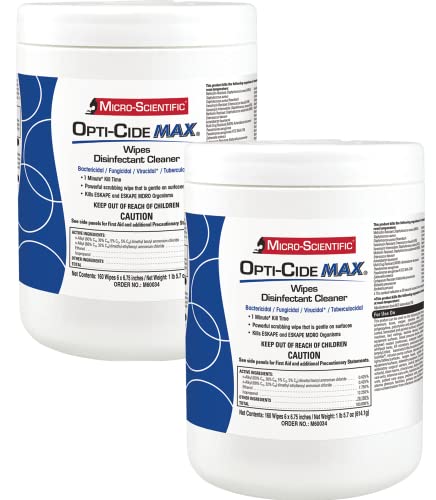
Opti-Cide Max from Micro-Scientific offers a hospital-grade disinfectant cleaner with strong scrubbing action. The 2-pack big-wipe format is designed for extensive use on hard, non-porous surfaces, including counters, tubs, tile, electronics, glass, stainless steel, sealed granite, and more. This product emphasizes rapid, thorough disinfection while preserving surface integrity, making it suitable for both clinical environments and home care where high levels of cleanliness are required and frequent wipe-downs are necessary.
Buying Guide: Key Considerations for C. Difficile Wipes
When choosing c. diff disinfectant wipes, consider the following dimensions to ensure you meet infection-control goals without compromising surface integrity or workflow efficiency.
- Efficacy Against Spores
- Contact Time and Speed
- Pathogen Coverage
- Surface Compatibility
- Format and Longevity
- Residue and Odor
- Regulatory Clearance
- Practicality and Waste
Look for explicit claims about sporicidal activity or proven efficacy against Clostridium difficile spores. Some products offer sporicidal claims within specific contact times (e.g., 4 minutes).
Short contact times (1–2 minutes) support faster room turnover, but ensure the product also achieves broad-spectrum disinfection and deodorization as needed for your setting.
Assess whether the wipes cover common concerns in your locale, such as MRSA, C. auris, viruses, and fungi, in addition to C. diff spores.
Evaluate material compatibility with stainless steel, glass, glazed porcelain, plastics, and electronics. Bleach-based products may be effective but can cause corrosion or whitening on certain materials; consider neutral pH or material-specific testing where applicable.
Size of wipes and canister capacity influence usage in high-traffic areas. Larger wipes may be advantageous for high-touch surfaces, while smaller wipes can handle precise cleaning tasks.
Bleach-based wipes can leave noticeable residues or odors; if fragrance or residue is a concern, review product notes about residue-free performance or reduced scent formulations.
Prefer items with EPA registration or recognized hospital-grade approvals to ensure compliance with infection-control standards in healthcare and public settings.
Consider disposal requirements and environmental impact. Some wipes are pre-moistened with stronger chemicals, so proper disposal and waste management are important in shared spaces.
Across these options, organizations should align wipe selection with their cleaning protocols, facility type, and the infection-control framework in place. For households dealing with C. diff concerns, selecting a product with proven sporicidal performance, safe surface compatibility, and straightforward use can help maintain clean environments while minimizing disruptions to daily routines.