Finding the right clean and rinse bucket system can reduce scrubbing time and improve sanitation. This guide covers top options that separate dirty and clean water, or simplify rinsing with built-in wringers. Each pick emphasizes durability, ease of use, and water control for effective floor cleaning in homes and small workplaces.
| Product | Brand | Capacity | Key Feature |
|---|---|---|---|
| O-Cedar RinseClean Spin Mop & Bucket System | O-Cedar | Spin mop bucket system | Removes 99% of bacteria with clean water |
| Rubbermaid Commercial Double Pail Bucket | Rubbermaid Commercial Products | 19 quarts | Two separate sides for solution and rinse |
| LIBMAN 4 gal. Bucket | LIBMAN COMMERCIAL | 4 gallons | Lightweight with side pour spouts |
| Libman 2112 Clean and Rinse Bucket with Wringer | LIBMAN COMMERCIAL | 4 gallons | Wringer included; dual water zones |
| San Jamar Kleen-Pail Pro Sanitizer Pail | San Jamar | 6 quarts | Color-coded design and precise dilution marks |
The selections below are organized to help you compare core attributes at a glance, followed by deeper details for each model. Readers will find options that suit compact spaces, professional settings, and multi-bucket workflows.
O-Cedar RinseClean Spin Mop And Bucket System

The O-Cedar RinseClean system is designed to maintain clean water throughout the cleaning process. A built-in foot pedal powers a spin mechanism to wring out the mop without you touching dirty water. This separation makes it easier to limit bacteria exposure and achieve consistently clean floors. The system claims to remove a high percentage of bacteria with just water, which reduces reliance on chemical cleaners and supports a more economical cleaning routine. Its compact footprint is suitable for small kitchens, apartments, and entryways where space matters. The design emphasizes durability and user comfort, enabling longer cleaning sessions with less strain.
Key features include a dedicated rinse action, a foot-pedal spin bucket, and a water-conserving approach. The system is marketed toward households prioritizing sanitation with a simple, water-based approach. Pros include practical water control and reduced chemical use; cons may include higher upfront cost versus basic buckets and the need for compatible mop refills.
Rubbermaid Commercial Double Pail Bucket
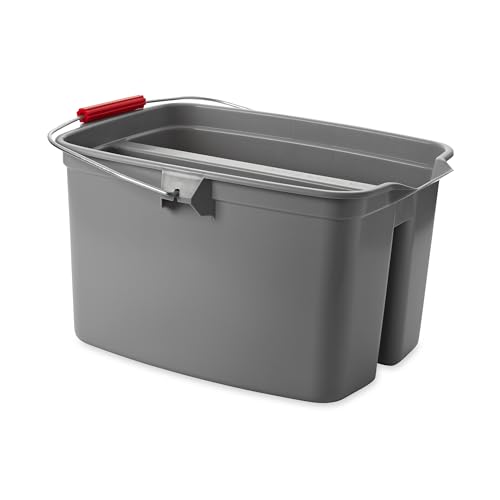
This two-compartment bucket system keeps dirty water separate from clean rinse water. The durable plastic construction and a sturdy carrying handle support frequent use in professional cleaning environments. The split design helps cleaners manage rinse cycles more efficiently, reducing cross-contamination and making it easier to maintain a steady workflow across floors and surfaces. It’s a solid choice for janitorial closets or home spaces where road-tested durability matters.
Considerations for this model include the need for adequate storage space and the importance of a secure lid if used in busy multi-room settings. The product emphasizes practicality and reliability over novelty, which is ideal for facilities seeking durable, straightforward equipment.
LIBMAN 4 Gal. Bucket

The Libman 4-gallon bucket is recognized for being fairly lightweight, which helps with portability in cleaning routines. Side pouring spouts ease the process of emptying the bucket, especially after scrubbing large areas. While its weight when filled can reach or exceed a typical household backpack, the bucket’s design focuses on everyday usability, enabling quick transfer of dirty water away from the work area. This model is well-suited for quick cleanups in kitchens, bathrooms, and small offices where a simple, single-bucket solution is preferred.
Pros include ease of handling and straightforward pour features. Potential drawbacks include a limited capacity per fill and the absence of integrated wringers or separate rinse sections. It’s best for lighter cleaning tasks or spaces where minimal gear is desired.
Matthew Cleaning 3-Quart Detergent Buckets (Set of 3)

This set includes three compact 3-quart buckets organized by color, with dedicated roles to optimize workflow: sanitizer, rinse, and detergent. The color-coding and built-in spouts promote quick identification and spill-reduced pouring. The compact design makes storage practical in tight spaces, such as apartment cleaning kits or small commercial areas where vertical storage matters. Each bucket ships with microfiber cloths, adding value for quick mop prep and immediate use after rinsing.
Key considerations are the scale of use and whether a full-sized bucket is needed for heavy-duty cleaning. The set offers a modular approach for teams or households that want to pre-assign tasks and keep clutter low in the cleaning closet.
Craftend Collapsible Bucket
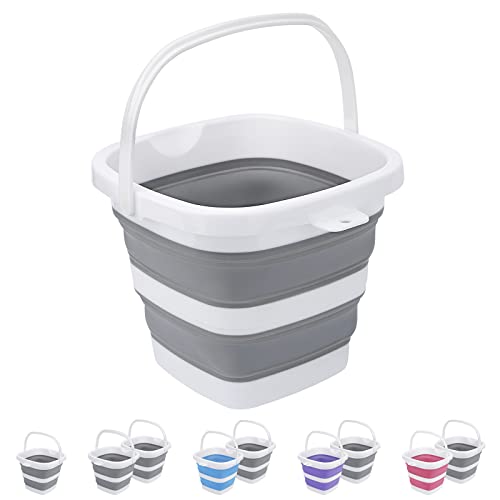
The Craftend collapsible bucket is designed for space-saving storage while remaining functional for household and outdoor tasks. Its 5-liter capacity balances portability with sufficient water for small cleaning projects. The foldable design is particularly attractive for travelers, campers, or compact living spaces where every inch matters. The bucket uses BPA-free materials and a sturdy handle for easy carrying, with a spout feature to guide water flow and reduce spills during emptying.
Pros include portability and storage efficiency; cons may involve a smaller capacity that necessitates more trips during larger cleaning tasks. This bucket is a solid pick for light-duty cleaning, car washing, beach outings, and temporary setups where portability is prioritized over high-volume soaking.
San Jamar Kleen-Pail Pro Sanitizer Pail

The San Jamar Kleen-Pail Pro focuses on color coding and precise dilution control. The 6-quart capacity makes it suitable for professional kitchens, janitorial services, and food-service environments where measured cleaning agents are essential. The graduated markings aid in achieving consistent cleaning results, while the curved shape helps reduce spills during pouring. This pail pairs well with other color-coded cleaning systems and supports documented sanitation practices in commercial settings.
Key benefits include predictable dilution, reduced waste, and straightforward pouring. Potential drawbacks are the smaller capacity compared to larger buckets and the need to coordinate with other pails for multi-step cleaning tasks.
Buying Guide: Key Purchase Considerations
- Water separation vs. single-bucket setups: If you want to maintain clean water for longer, consider two-bucket or multi-compartment designs. They reduce cross-contamination and keep mopping water cleaner for longer.
- Capacity and space: Larger buckets reduce trips to refill, but require more storage. For apartments or compact offices, smaller, collapsible, or multi-bucket systems may be ideal.
- Durability and materials: Look for impact-resistant plastics, reinforced handles, and rust-proof wringers if included. Heavily used environments value long-term reliability.
- Wringer inclusion: Integrated wringers speed up drying and reduce hand contact with dirty water. If a wringer is not included, consider separate scrubbing steps to prevent back-and-forth cleanup.
- Color-coding and dilution accuracy: In professional settings, color-coded pails with measurement marks support inventory control and consistent cleaning procedures.
- Portability: For multi-room or multi-task cleaning, lighter buckets with ergonomic grips help prevent strain. Collapsible designs save space for travel or storage in small closets.
- Maintenance: Choose buckets with smooth interiors and pour spouts to minimize residue buildup. Easy-to-clean surfaces reduce sanitation time between tasks.
When selecting a clean and rinse bucket system, align features with your cleaning workflow, space constraints, and sanitation standards. For homes prioritizing simplicity and water integrity, a two-bucket setup or a system like O-Cedar’s RinseClean can offer clear advantages. For professional environments, durability, color-coding, and accurate dilution marks become the deciding factors to maintain consistent results and compliance with hygiene protocols.