Maintaining clear septic leach lines is essential for a healthy home plumbing system. This guide reviews top products designed to stop root intrusion, dissolve organic buildup, and restore proper flow in drain fields. Learn how copper-based root killers, bio-enzymatic cleaners, and drain-field treatments work, along with practical considerations for choosing the right solution for your system.
| Product | Brand | Best For | Format |
|---|---|---|---|
| Roebic K-77 Granular | Roebic | Root prevention and clearance in septic pipes | 32 oz |
| Root Destroyer | Sanco Industries | Copper sulfate root control | 5 lbs |
| Septi-Flow Shock Drainfield | Septi-Flow | Drain field cleaning and soil breakdown | 1 gal |
| Eco Strong Bio-Enzyme Cleaner | Eco Strong | Biodegradable septic treatment | 64 oz |
| Zep Root Kill | Zep | Root control in septic lines | 2 Lbs per case |
Section by section, this article highlights how each product targets leach line issues, from stubborn roots to organic mat buildup. Each entry provides key features, application notes, and what you should consider when adding a treatment to your septic maintenance plan.
Roebic K-77 Granular Tree Root Killer

Roebic K-77 uses a copper-based formula to target existing roots and prevent new growth entering sewer and septic pipes. It clears obstructions and improves drainage by acting where roots penetrate the pipe. The product is non-corrosive, safe for all plumbing, and does not harm surrounding vegetation or natural bacteria in septic tanks and cesspools. For septic systems with visible root intrusion, K-77 can help restore flow without extensive excavations.
Application guidance emphasizes spreading the granules near pipe entry points and following label directions for dosage. Because it is designed to deter regrowth, regular reapplication may be recommended in mature systems with persistent root pressure. Safety information includes keeping away from children and pets and avoiding contact with non-target plants.
Root Destroyer – 5lbs

Root Destroyer consists of copper sulfate crystals designed to kill invasive roots in sewer, pipe, and drain lines. The crystals can stop new growth and help reduce blockages caused by roots. While effective for root control, it may temporarily reduce bacterial activity in the short term, with a typical rebound toward normal biological performance within about two weeks after treatment. It is important to avoid applying near sinks or tubs where copper may corrode metal components.
Considerations include ensuring even distribution along the affected line and monitoring for improvements in drainage. This product is suited for systems where root intrusion is a primary concern and where quick root suppression is needed to prevent recurring clogs.
Septi-Flow Shock Drainfield Cleaner
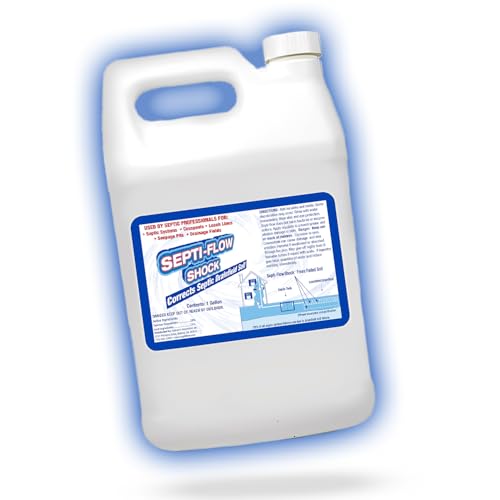
Septi-Flow Shock is a heavy-duty drain field cleaner designed to clear lines and dissolve buildup in leach fields. It addresses the accumulation of soaps, detergents, sodium, and sulfate, aiding in the removal of locked-in soils caused by modern wastewater. The formula is biodegradable and safe for all septic systems, pipes, and plumbing when used as directed. It is particularly useful for systems that exhibit sluggish draining or odors due to drain field contamination.
Users should follow recommended dosages and dilution guidelines to avoid excessive suds or unintended effects on system balance. Regular maintenance with Septi-Flow Shock can help prevent long-term soil compaction and restore better absorption within the drain field.
Eco Strong Bio-Enzyme Septic Cleaner (64 OZ)

Eco Strong’s bio-enzymatic cleaner is designed to break down organic buildup in septic tanks and leach fields. The enzymes help digest fats, oils, grease, hair, and other solids, aiming to improve flow and reduce odors. The product emphasizes a long-term maintenance approach, supporting the natural balance of septic systems and extending the life of the drain field by preventing mat buildup.
Key considerations include consistent dosing to maintain enzyme activity and avoiding overloading the system with organic matter that could disrupt microbial balance. This option is favorable for households seeking a non-chemical, enzyme-based solution with a focus on ongoing system health rather than immediate root control alone.
Zep Root Kill – 2 Lbs (Case of 4)

Zep Root Kill is another copper-based solution designed to control roots in septic tanks and leach lines. It typically shows results within a few weeks as copper sulfate accumulates and the roots die back, allowing improved water flow. Caution is advised to avoid applying the product in sinks or tubs where metal drains may corrode. As a multiple-case pack, it provides a steady supply for ongoing maintenance in larger homes or properties with robust root pressure.
When considering root-control products, it is important to balance root suppression with the overall health of the septic system community of microbes. Copper-based products are effective but should be used in moderation and in line with local environmental guidelines and system design.
Buying Guide: Key Purchase Considerations For Septic Leach Line Treatments
To choose the right approach for your septic leach lines, consider the following perspectives and factors:
- Root control vs. enzyme maintenance: Copper sulfate products target roots, while enzyme cleaners improve long-term microbial breakdown of organics. For severe root intrusion, a copper-based solution may be necessary; for ongoing health, enzymes help maintain flow.
- Drain field condition: If your drain field is compacted or damaged, cleaner formulations that break down soils and buildup can help, but you may need professional evaluation for structural issues.
- System compatibility: Ensure the product is labeled safe for your specific septic system type and any nearby plumbing materials. Some products may be unsuitable for metal components or certain pipe configurations.
- Frequency of treatment: Root-control products often require periodic reapplication, while enzyme-based treatments may be used more regularly as part of routine maintenance.
- Environmental impact: Biodegradable enzyme solutions tend to have a lower environmental footprint, while copper-based products require careful handling and adherence to label directions to minimize soil and waterway exposure.
- Odor management: If odors are a concern, enzyme cleaners and drain-field treatments that reduce organic buildup can help, in addition to addressing any root intrusion.
- Installation and access: Some products are easier to apply with large or hard-to-reach drain fields. Consider the accessibility of your septic system’s leach line entries when selecting a product.
- Professional assessment: Persistent drainage problems or recurring backups often benefit from a septic service evaluation to confirm root intrusion levels and drain-field health before selecting a treatment plan.
In practice, homeowners may combine a root-control product to limit intrusion with periodic enzyme-based maintenance to sustain a healthier microbial environment. Always follow product-specific directions, and space out applications to avoid overloading the system. A balanced approach helps keep septic leach lines clear while preserving long-term system integrity.