Choosing the right mold-killing primer can simplify remediation projects and improve surface longevity. This guide highlights five effective options, comparing coverage, odor control, dry times, and odor-block performance. Each product below is designed to seal in mold, mildew, and odor-causing bacteria while providing a solid base for paint. Use these primers on interior surfaces including drywall, plaster, wood, masonry, and non-porous substrates to inhibit fungal growth and improve paint adhesion.
| Product | Brand | Key Benefit | Coverage |
|---|---|---|---|
| Zinsser White Mold Killing Primer | Zinsser | Kills mold, mildew, and odor bacteria; EPA registered | Up to 100 sq ft per quart (typical) |
| Zinsser Odor Killing Primer Gallon | Zinsser | Eliminates odors on varied interior surfaces | Up to 400 sq ft per gallon |
| Mold Killing Primer QT (Rust-Oleum) | Rust-Oleum | Kill existing mold and odor-causing bacteria on non-porous surfaces | Up to 160 sq ft per quart |
| Zinsser Mold Blocking Spray Primer | Zinsser | Blocks existing mold and odor on small areas | 8–10 sq ft per spray area |
| Mold Armor Mold Kill & Control | Mold Armor | Fast-acting mold and mildew cleaner and killer | Various hard surfaces; fast results |
Zinsser White Mold Killing Primer
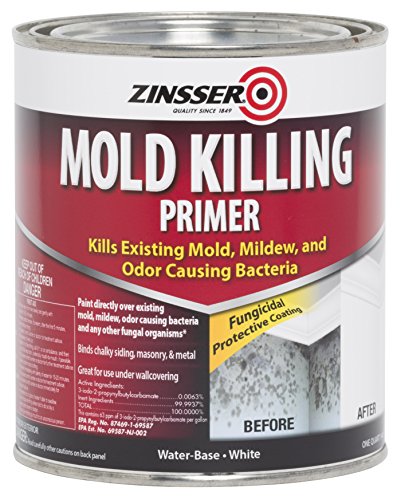
The Zinsser White Mold Killing Primer provides a water-based fungicidal coating that targets mold, mildew, and odor-causing bacteria. It is EPA registered (Reg. No. 87469-1-69587), offering added assurance of performance and quality. The primer works under other coatings and helps cover fungal stains while preparing surfaces for topcoats. It is particularly compatible with Zinsser Perma-White for long-term mold resistance on painted finishes. The product’s water-based formula minimizes odors and cleanup, making it suitable for interior renovations.
Zinsser Odor Killing Primer Gallon

Designed to neutralize and seal odors on both painted and unpainted interior surfaces, this primer targets sources such as urine, tobacco smoke, cooking odors, and fire-related smells. It is versatile enough for walls, subfloors, cabinets, plaster, drywall, metal, masonry, PVC, and more. The advanced formula reduces embedded odors at the source, not just masking them, making it a practical choice for renovation in homes with pets or smoke damage. Coverage is typically substantial, with quick-drying performance that supports faster project completion.
Rust-Oleum Mold Killing Primer QT
This mold-killing primer is specifically formulated to paint over and eliminate existing mold, mildew, moss, fungi, and odor-causing bacteria on non-porous interior and exterior surfaces. Its low-odor, water-based composition cleans up easily with soap and water. Coverage can reach up to 160 square feet, with a quick touch-dry time of about 30 minutes. Recoating is typically possible within an hour, allowing for rapid progress on projects that require multiple coats or quick turnaround times.
Zinsser Mold Blocking Spray Primer

The six-pack of Zinsser Mold Blocking Spray Primer offers convenient, fast-acting mold blocking for smaller projects or touch-ups. The spray format makes it ideal for hard-to-reach areas where traditional brushes may be less effective. It provides a low-odor, water-based coating that minimizes cleanup while delivering a quick shield against mold and mildew growth. Coverage per can is limited, but its spray efficiency supports rapid remediation in bathrooms, basements, or utility rooms where moisture is frequent.
Mold Armor Mold Kill & Control

Mold Armor Professional Brand Mold Kill & Control provides a fast-acting solution for visible mold and mildew on hard, non-porous surfaces. The product is designed to kill and clean mold on contact with minimal effort, reducing the need for aggressive scrubbing. It is suitable for broader applications in bathrooms, kitchens, basements, and other moisture-prone areas. The spray’s quick-results claim makes it appealing for quick remediation tasks, though users should ensure proper ventilation during and after application.
Buying Guide
Key considerations help determine the best mold-killing primer for a given space. First, assess the surface type: porous surfaces like drywall often require stain-blocking and mold-inhibiting primers with good adhesion, while non-porous surfaces may respond well to spray formats for fast coverage. Second, evaluate odor control: odor-killing primers can be essential in rooms with smoke, pets, or long-standing smells, and some formulas offer rapid dry times to minimize downtime. Third, check coverage and recoat times: larger rooms benefit from primers with higher square-foot yields and shorter wait times between coats. Fourth, consider EPA registration and safety data: products with EPA registration provide compliance assurances and safer profiles for indoor use. Fifth, plan for compatibility with topcoats: ensure the primer works under your chosen paint type and finish, including moisture-prone environments like bathrooms or basements. Sixth, consider application method: spray formats reduce labor in tight spaces, while traditional brushes and rollers may be preferable for larger flat areas.
From a performance perspective, mold-blocking primers offer a barrier against future growth, but proper source control remains important. Address excess moisture, fix leaks, and ensure adequate ventilation to complement primer performance. For odor issues, primers designed to neutralize smells at the source can reduce the need for aggressive deodorizing measures later. When choosing among the listed products, compare your project size, room usage, and the level of odor control required to select the most appropriate option. Always follow label directions, ventilation recommendations, and safety precautions when applying mold-killing primers.