Finding reliable compostable 13-gallon trash bags involves balancing strength, compostability certifications, and fit for common kitchen bins. This guide highlights five top options, all designed to handle everyday waste while reducing environmental impact. Each product features plant-based materials, certifications, and sizes that align with standard 13-gallon cans. Use the quick reference table below to compare key specs at a glance.
| Brand | Model | Size | Thickness | Approx. Bags |
|---|---|---|---|---|
| UNNI | Compostable Trash Bags | 13 gal / 49.2 L | 0.9 mil | 50 |
| AYOTEE | 13-15 Gallon Tall Kitchen Bags | 13-15 gal | 1.18 mil | 60 |
| FORID | 13 Gallon Tall Kitchen Garbage Bags | 13 gal | Unknown (thick) | 80 |
| SUPERBIO | 13 Gallon Compostable Kitchen Bags | 13 gal / 49.2 L | 0.87 mil | 30 |
| Simply Bio | 13 Gallon Compostable Trash Bags | 13 gal | 1.0 mil | 30 |
UNNI Compostable Trash Bags, 13 Gallon, 50 Count

UNNI’s 13-gallon bags are designed for tall kitchen cans and food scraps. The 0.9 mil thickness provides reinforcement for daily use, with rolls delivering 50 bags per unit. Certifications include BPI, CMA, and OK compost HOME, demonstrating compliance with ASTM D6400 and related standards. The tall-fit design helps keep liners in place and reduces bag slips, while the compostable claim supports environmentally conscious disposal in appropriate facilities.
AYOTEE 13-15 Gallon Tall Kitchen Trash Bags
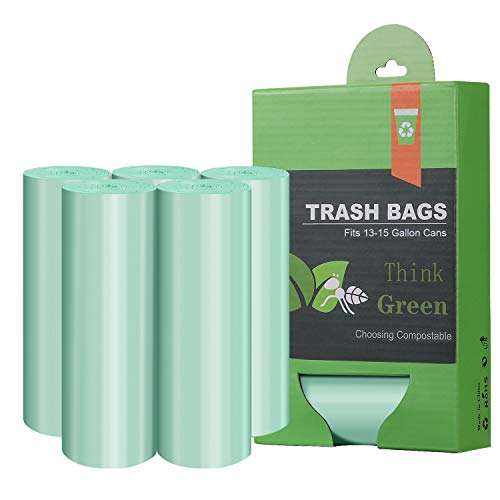
AYOTEE bags are plant-based and certified under ASTM D6866. They are designed for 13–15 gallon cans and measured at 23.6 inches by 31.5 inches, ensuring a snug fit without slipping. The 1.18 mil thickness adds strength, making them suitable for handling regular kitchen waste, including heavier items. While not backyard compostable, these bags degrade under industrial conditions, aligning with broader environmental goals without compromising home usability.
FORID 13 Gallon Tall Kitchen Garbage Bags

FORID offers 13-gallon bags sized at 24.8 by 31.4 inches, engineered to fit round bins with up to 15.7 inches in diameter. The bottom is reinforced with an octagonal seal to resist tearing and leakage under daily use. The bags claim ASTM D6400 and EN 13432 certification, enabling composting in home or industrial facilities with minimal environmental impact. With 80-count packaging, they are positioned for households with frequent trash cycles.
SUPERBIO 13 Gallon Compostable Kitchen Bags with Handles

SUPERBIO bags are certified by BPI and OK compost INDUSTRIAL, with EN 13432 and ASTM D6400 alignment. At 0.87 mil thickness, they offer a balance between puncture resistance and compostable performance. The 13-gallon size (49.2 L) and 30 bags per roll support typical kitchen waste workflows. The product’s shelf life guidance suggests storing in a cool, dry place, and using promptly for organic waste disposal to maintain performance.
Simply Bio 13 Gallon Compostable Trash Bags

Simply Bio bags are 1 mil thick, designed for 13-gallon bins with drawstrings for easy closure. The 23.7-inch by 29.4-inch dimensions accommodate common kitchen cans while providing a leak-resistant barrier for wet waste. The bags meet ASTM D6400 and carry BPI and OK Compost Home certifications, indicating compatibility with home composting environments and industrial facilities. Each roll contains 30 bags, making them a practical choice for steady waste output.
Buying Guide: Key Purchase Considerations
- Certification and claim accuracy: Look for recognized certifications such as BPI, OK compost HOME, and ASTM D6400 to verify compostability claims. Certifications indicate compliance with defined standards and reduce guesswork about disposal options.
- Fit and size: Ensure the bag’s dimensions align with your 13-gallon can. Tall, wider bags help prevent leakage and reduce bag slippage. Consider whether you need a bag with a drawstring, handles, or tie closures for convenience.
- Material and thickness: Plant-based materials (PSM or corn starch blends) balance compostability with puncture resistance. Thicker bags (around 0.9–1.18 mil) offer better strength for wet waste but may come at a higher cost. Choose based on typical waste and bin conditions.
- Industrial vs. home composting: Some bags are certified for industrial composting but may not perform as intended in home compost setups. If you primarily compost at home, verify OK compost HOME or similar certifications.
- Storage and shelf life: Store in a cool, dry place away from heat to maintain strength and avoid premature tearing. Shelf life guidance from manufacturers can help planning for long-term use.
- Packaging and value: Packaging counts per roll and total bag counts influence long-term cost and waste. Consider bags that offer the best balance of price, ease of use, and reliability for your household routines.
- Environmental impact: Plant-based bags reduce reliance on fossil fuels but assess the full lifecycle, including disposal facilities and local composting infrastructure, to measure true environmental benefits.
When choosing among these options, weigh fit, certification, and the practical realities of your waste stream. For households with high daily waste, a slightly thicker, certified compostable bag with a tall can fit may reduce spills and odor. For occasional use or smaller bins, a lighter option with robust seals can still meet compostable goals without unnecessary cost.