Direct answer: Choose compostable wheelie bin liners that fit your bin size, offer reliable tear-resistance, and are certified compostable for home or industrial environments. This guide highlights five top options each suited to different needs—compact home use, commercial sites, or heavy-duty outdoor bins. The list includes liners designed for 120–140 liter bins, 55–60 gallon cans, and larger formats, with notes on material, certification, and best-suited buyers. A quick summary table follows to help you compare core specs at a glance.
| Product | Bin Size Fit | Certifications | Best For |
|---|---|---|---|
| All-Green 140 Litre | 140 L | Compostable | Small to mid-size household bins |
| TERRACOR 55–60 Gallon | 55–60 gal | BPI + ASTM D6400 | Commercial or outdoor heavy loads |
| Eco Green Living 140L | 140 L | Certified Compostable | Garden or outdoor use with plant-based materials |
| D.RECT 120L Corn Starch | 120 L | Compostable | Mid-sized home wheels with corn-starch liners |
| ECOLipak 33 Gallon 25 Count | 33 gal | Certified Compostable | Outdoor bins and yard cleanup |
All-Green 140 Litre Compostable Wheelie Bin Liners

Best for small to mid-size households that need dependable, compostable liners for 140 L bins. Contents: 10 bags designed to fit 120L and 140L wheelie bins. The liner size and rim length suggest easy placement and secure fitting for everyday kitchen to outdoor use. Best for users who want straightforward, compostable options without extra bulk.
Why selected: These liners are a straightforward, factory-packaged solution for standard 140L bins, offering predictable fit and compostable materials. Limitations: No explicit thickness or tear-resistance details are listed beyond the intended bin sizes.
TERRACOR 55–60 Gallon Compostable Bags

Best for large bins and commercial settings that require heavy-duty performance. These 55 gallon bags measure around 42 x 48 inches and use a 1.57 mil thickness designed to resist tears and leaks. They are recommended for use in commercial sites, events, and yard cleanups. Certified compostable to ASTM D6400 and BPI standards.
Why selected: Superior durability for heavy loads and outdoor deployments. Caution: The data focuses on commercial use; home-only environments may still be suitable but consider bin size and bag capacity carefully.
Eco Green Living 140L Compostable Liners

Best for households seeking plant-based, BPA-free liners with strong leak resistance for 140L bins. The roll contains 5 heavy-duty, leakproof liners. These are certified compostable for home or industrial composting, aligning with eco-friendly disposal goals.
Why selected: Plant-based composition and compact roll size make storage and usage easy. Caution: Quantity is lower (5 bags) per roll, so plan for regular restocking in households with frequent waste.
D.RECT Pack of 10 Corn Starch 120L Liners

Best for 120L wheelie bins, combining compostable convenience with corn starch materials. Each pack includes 10 liners. The corn starch composition supports home composting goals and provides a familiar, sturdy alternative to conventional plastics.
Why selected: Corn starch liners are a good fit for users prioritizing renewable, plant-based materials. Caution: Available capacity is limited to 120L bin sizes; verify bin compatibility before purchase.
ECOLipak 33 Gallon Large Compostable Bags (25 Count)
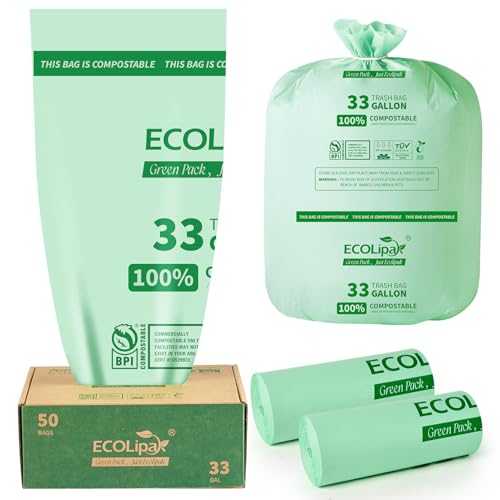
Best for outdoor bins and yard cleanup that require larger 33-gallon bags with robust compostable certification. Each roll contains 25 bags in a 1 mil thickness, meeting both home and industrial composting standards. Certifications include BPI and OK COMPOST INDUSTRIAL, ensuring reliable compostability.
Why selected: A strong choice for outdoor use and seasonal yard waste, with clear certifications. Caution: Slightly lighter in thickness than some heavy-duty bags, which may impact extremely heavy loads.
Buying Guide: Key Considerations For Compostable Wheelie Bin Liners
- Bin compatibility: Confirm capacity (liters or gallons) and bag dimensions to ensure a proper fit and avoid tearing or leakage.
- Material and certification: Look for plant-based or compostable materials and certifications such as ASTM D6400, BPI, or EN 13432 to ensure appropriate disposal pathways.
- Durability vs. thickness: Thicker bags (e.g., 1.57 mil) offer tear resistance; thinner options save material but may be less robust for heavy loads.
- Intended environment: Home composting vs. industrial composting affects how and where you can dispose of liners and contents.
- Storage and quantity: Consider roll or pack sizes for your household or business usage frequency and storage space.
- Environmental impact: Prefer bags free from plasticizers, BPA, and fossil-fuel-based materials when possible; opt for paper or compostable plastics where appropriate.
Frequently Asked Questions
- What does “compostable” mean for wheelie bin liners?
Compostable liners are designed to break down in composting environments, leaving no toxic residues. They may be suitable for home or industrial composting depending on certification.
- Will compostable liners fit standard 120L or 140L bins?
Yes, many liners are sized specifically for common 120L to 140L bins. Always check the exact rim length and bag dimensions before buying.
- Are all compostable liners curbside acceptable?
Certification varies by region. Some are accepted in home composting systems, while others require industrial facilities. Verify local composting guidelines.
- What is the advantage of a thicker bag?
Thicker bags resist tearing and leaks under heavier loads, which is helpful for yard waste or multi-material trash.
- Should I choose paper or plastic-based liners?
Paper liners are compostable in some systems and offer a plastic-free option. Plastic-based compostable liners provide stronger barrier properties but require appropriate composting facilities.
- How do I store these liners to maximize shelf life?
Keep them in a cool, dry place away from moisture to prevent premature degradation and maintain bag integrity.