Answering the need for efficient concrete dust removal, this guide highlights five reliable options suited to different trade needs. Whether you’re finishing floors, grinding surfaces, or sanding drywall near concrete, these machines help maintain clean air and a safer work environment. This comparison targets builders, contractors, and DIY enthusiasts seeking durable dust-control solutions that integrate with common concrete tools.
| Product | Best For | Key Benefit |
|---|---|---|
| Makita GA9060RX3 9″ Planer with Dust Shroud | Concrete surface finishing | Integrated dust extraction shroud for direct capture |
| HEPA Concrete Grinder Dust Slurry Extractor Collector | Heavy dust loads | Five-stage filter system with triple motors |
| Husqvarna DE 120 HEPA Dust Extractor | Long-duration grinding | Automatic flow adjustment and HEPA filtration |
| VEVOR Drywall Sander with Vacuum | Ceiling and wall sanding | Internal vacuum system and flexible operation |
| 550H Dust Extractor with Auto Filter Cleaning | General dust collection | Pulsed filter cleaning and HEPA capable |
Below you’ll find five product sections with clear guidance on who should choose each option, along with practical cautions and comparisons to help you decide quickly.
Makita GA9060RX3 9″ Concrete Planer With Dust Shroud
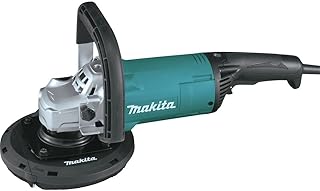
Best for: professionals performing concrete surface planing who require integrated dust control. The 15.0 AMP motor delivers 6,600 RPM for strong material removal, and the built-in dust extraction shroud captures debris during operation. This setup minimizes airborne dust at the source, supporting safer indoor work. Caution: Shroud effectiveness depends on proper fit with the grinder and regular maintenance of the dust path to prevent clogs.
HEPA Concrete Grinder Dust Slurry Extractor Collector

Best for: jobs with heavy dust loads and slurry that require robust filtration. This unit features a five-stage filter system and three vacuum motors to maximize dust capture, even in challenging conditions. Caution: Higher power and multiple motors may require more space and a stable electrical supply on-site.
Husqvarna DE 120 HEPA Dust Extractor

Best for: long-duration grinding projects where filtration reliability is critical. Its e-flow system automatically modulates airflow, reducing filter cleanings, and it includes a certified HEPA filter with clear maintenance indicators. Caution: It may be more expensive upfront versus basic dust extractors, but offers extended runtime and safety compliance.
VEVOR Drywall Sander With Vacuum Dust Collection

Best for: ceilings and walls where sanding generates fine dust. The internal dust collection system, variable speeds up to 1700 RPM, and 360° disc rotation help reach tight corners and edges. Caution: Dust capture is dependent on proper seal around the sanding head and regular disc replacement for consistent performance.
550H Dust Extractor – HEPA Certified

Best for: general-purpose dust control with reliable auto-clean filtration. The Pulse-Bac automatic filter cleaning supports sustained performance, and its 150 CFM capacity makes it suitable for smaller to medium jobs. Caution: For very fine or hazardous dusts, ensure compatibility with your filtration needs and space constraints.
Buying Guide
What should you consider when choosing a concrete dust removal machine?
- Filtration Type and Rating: HEPA filtration is preferred for fine silica dust. Confirm EN1822 or equivalent certification where applicable.
- Airflow and Capacity: Higher CFM improves dust capture across larger areas, but requires appropriate power and space.
- Motor Configuration: Multiple motors can boost suction and redundancy but increase weight and noise. Match to job scale.
- Portability vs. Power: Standalone extractors offer mobility, while integrated shrouds on grinders reduce practical dust creation at the source.
- Maintenance and Cleaning: Look for auto-clean or easy-clean filters to minimize downtime on long projects.
- Compatibility: Ensure the unit’s hose size and fittings align with your existing tools and dust shrouds.
What questions should you ask before buying?
- Will the machine handle the typical dust levels on my sites?
- Is there a need for portable use or fixed installation?
- Do I require a HEPA-certified system for health and safety compliance?
- Are maintenance tasks manageable within my workflow?
- What is the expected noise level for indoor work?
Quick tips for best results
- Seal hoses and connections to minimize leaks that reduce suction.
- Regularly inspect filters and replace when clogged or after heavy use.
- Use the dust control shroud directly with grinders to capture debris at the source.
This selection provides options for different job types, from concrete surface finishing to wall and ceiling sanding. Use the Buying Guide and product notes to align your choice with project scope, safety requirements, and workspace constraints.
FAQs
- Q: Which dust extractor is best for heavy-duty concrete grinding?
- A: A unit with multiple motors and a robust filtration system, like the triple-motor model, is generally better for heavy dust loads.
- Q: Do I need HEPA filtration for concrete work?
- A: HEPA filtration is recommended for fine respirable dust and environments needing strict air quality control.
- Q: Can a dust extractor be used with handheld grinders?
- A: Yes, many units feature hoses and ports compatible with common handheld grinders and shrouds.
- Q: How important is auto filter cleaning?
- A: Auto cleaning reduces downtime and helps maintain consistent suction during long sessions.
- Q: What should I consider about maintenance?
- A: Look for filter accessibility, replaceable parts, and clear maintenance indicators.