Answering the need for cleaner drywall sanding and drilling, these attachments and tools help minimize dust at the source. They are best for professional contractors, DIY remodelers, and workshop teams that want to protect furniture, floors, electronics, and lungs from drywall dust while keeping cleanup quick and easy. This guide highlights five top picks that work with standard wet/dry vacuums and suit different spaces and tasks.
| Product | Best For | Key Benefit |
|---|---|---|
| Hyde 09165 Dust-Free Drywall Vacuum Hand Sander | Small- to mid-area sanding | attaches to vacuums for dust-free sanding |
| Shop-Vac Dust Collection Attachment | Versatile drilling and cutting | fits four hose sizes for broad compatibility |
| Goldblatt Dust Free Hand Sander | Dust control during drywall sanding | 6.5 ft hose and pivoting elbow |
| 11 PCS Universal Vacuum Attachments Kit | Tight spaces and varied hoses | multiple adapters for broad compatibility |
| Hyde 09170 Dust-Free Vacuum Sander | Pole-sander setups | easy-clamp sanding screens and dust control |
Hyde Tools 09165 Dust-Free Drywall Vacuum Hand Sander

The Hyde 09165 hand sander attaches to any wet/dry vacuum to sand with dust containment across the worksite. It protects furniture, floors, electronics, and lungs by capturing drywall dust at the source. The EasyClamp system allows quick replacement of sanding screens, keeping projects moving. Best for small to mid-sized sanding jobs where portable, vacuum-assisted dust control is a priority.
- Best for: portable sanding on walls or ceilings with immediate dust capture
- Why selected: simple integration with most vacuums and rapid screen changes
- Caution: ensure compatible with your vacuum’s hose diameter for a tight seal
Shop-Vac Dust Collection Attachment

This 2-in-1 attachment suits drilling and cutting tasks by capturing dust through four hose sizes: 1-1/4″, 1-1/2″, 1-7/8″, and 2-1/2″. It offers hands-free operation by mounting on a wall and using suction from a shop vacuum. When drilling, attach the funnel-shaped accessory to collect debris; for cutting, switch to the lid and brush ring. A tight rubber seal helps prevent leaks, though it must sit on a flat surface with the lid securely closed to maintain suction.
- Best for: sites with mixed drilling and cutting tasks requiring versatile hose compatibility
- Why selected: broad hose compatibility reduces need for multiple adapters
- Caution: proper surface placement and closed lid are essential to maintain suction
Goldblatt Dust Free Hand Sander
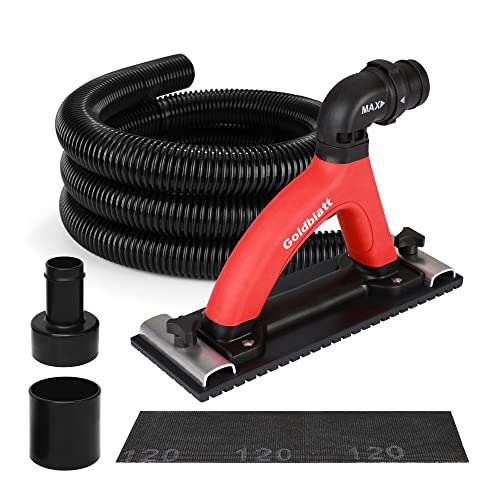
The Goldblatt Dust Free Hand Sander reduces up to 90% of drywall dust when used with a vacuum. It features an ergonomic grip and a 6.5-foot hose for extended reach, plus a 360° pivoting elbow to facilitate use on vertical surfaces. An integrated adapter works with Φ1-1/4″ hoses for most vacuums. This option is best for contractors seeking maximum dust capture with comfortable handling.
- Best for: lengthy sanding sessions where dust suppression is crucial
- Why selected: high dust reduction and extended hose reach
- Limitation: depends on a compatible vacuum and proper hose sealing
11 PCS Universal Vacuum Attachments Kit

This kit provides universal compatibility with several hose diameters, along with three adapters to fit 2-1/2″ to 1-1/4″ and 1-7/8″ to 1″ hoses. It helps reach tight corners like under appliances and within vents. Suitable for both wet and dry cleanups, it can adapt to many shop vacs without tools. Best for users needing flexibility across multiple projects.
- Best for: owners with multiple vacuum models or frequent hose changes
- Why selected: broad compatibility and adaptable adapters
- Caution: not all vacuum models will be compatible; verify inner diameters
Hyde 09170 Dust-Free Vacuum Sander

The Hyde 09170 is a pole sander that attaches to a wet/dry vacuum to minimize dust across the job site. It protects surfaces and lungs, with an Easy Clamp system for quick sanding screen changes. This configuration is ideal for larger wall projects and ceilings where reach is important and dust control is essential.
- Best for: long runs on walls or ceilings using a pole sander
- Why selected: extended reach with reliable dust containment
- Caution: ensure your vacuum hose and pole setup are compatible to avoid instability
Buying Guide
What should I look for in a drywall dust vacuum attachment?
Compatibility with your vacuum, including hose diameter and suction power, is crucial. Look for attachments rated to fit common hose sizes and quick-change features for screens or sanding pads. Consider hose length and elbow design for reach and maneuverability on vertical surfaces.
Which attachment is best for drilling versus sanding?
Drilling and cutting tasks benefit from funnel-shaped or lid-attached dust collectors that seal tightly to capture debris. Sanding-specific tools should emphasize a strong vacuum seal, a comfortable grip, and an adjustable or pivoting elbow to follow wall contours with minimal effort.
How important is dust containment for health and cleanup?
High dust containment reduces inhalation risk and speeds cleanup. Attachments with integrated adapters and multiple hose sizes help maintain continuous suction, minimizing dust leakage into the work environment.
Are there limitations to universal attachment kits?
Universal kits are flexible but may not fit every vacuum model. Always verify inner diameters of your hoses and ensure the adapters provided cover the sizes you use most often.
What scenarios justify paying for a dedicated vacuum sander?
Dedicated dust-free sanders with integrated vacuum connections can offer smoother operation, better ergonomics, and consistent dust control for frequent drywall projects, especially on ceilings or large walls where dust management is critical.
How do I maintain optimal suction with these attachments?
Keep hoses clear of blockages, seal all lids tightly, and clean filters or replace bags as recommended. A tight seal and clean vacuum will maximize dust capture and prolong tool life.
Key takeaways for buyers
- Choose attachments with wide hose compatibility to minimize adapters.
- Prioritize dust containment features like lids, seals, and pivoting elbows.
- Match tools to your project scale: small rooms vs. large surfaces.
FAQ
- Q: Do these attachments require a specific vacuum brand? A: Most are compatible with common wet/dry vacuums, but always verify hose size compatibility.
- Q: Can I use these while drilling or cutting with a corded drill? A: Yes, several attachments are designed to attach to drill dust collection systems.
- Q: Is a longer hose better for vacuums? A: Longer hoses improve reach but may reduce suction slightly; balance with hose quality and suction power.
- Q: Are there any safety considerations with these tools? A: Ensure electrical cords stay organized, ventilation is adequate, and masks are worn when using dusty materials.
- Q: What is the main advantage of a dust-free sander? A: Reduced mess, quicker cleanup, and better surface finish due to consistent dust removal during sanding.