When shopping for a dust collector solution for a lathe, the goal is to capture dust at or near the source to keep your shop air clean and your turning projects precise. This guide highlights five practical options chosen for different lathe setups and user needs, from portable hood stands to integrated systems. Whether you’re a hobbyist pen turner or a professional woodworker, these selections help you target dust at the source and improve visibility during turning tasks.
| Product | Best For | Key Benefit |
|---|---|---|
| Dust Hood With Adjustable Floor Stand (ZICT) | Small shops and flexible setups | Adjustable height and hood angle for targeted extraction |
| ZICT Dust Hood Stand with Folding Extension Arm | Workbench-mounted tasks | Folding arm and clamp-friendly design for edge mounting |
| Dust Right Lathe Dust Collection System | Full lathe workflow | Proprietary dust scoop and adjustable boom arm |
| BMWOOD Universal Dust Hood for Woodlathe Extraction | Versatile positioning | Fully adjustable with wide mounting range |
| POWERTEC 70169 Mini Gulp Dust Hood | Behind or near dust source | Deep, wide-mouth design with mounting holes |
Dust Hood With Adjustable Floor Stand, ZICT

This dust hood is designed for direct connection to a dust collector to capture wood chips produced during turning. The height can be adjusted, and the hood angle is adjustable, allowing you to position the hood close to the turning area. Best for small shops or setups where mobility and quick placement are needed. The primary limitation is that it relies on an external dust collector and may require compatible hoses and fittings.
ZICT Dust Hood Stand with Folding Extension Arm

This option adds a 9×5 inch dust hood with a 4-inch hose connection and a clamp-ready edge clamp for bench mounting. It is particularly suitable for woodturners who want a hood that can move along the bench and be mounted to lathes. Choose this if you need a compact, clampable hood for intermittent turning tasks. Limitation: the product hood does not include the hose itself, so you’ll need a compatible hose separately.
Dust Right Lathe Dust Collection System
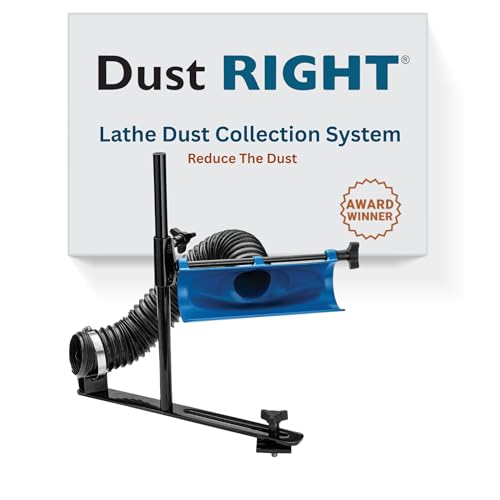
This system centers on a C-shaped dust scoop that wraps around spindle turnings, capturing dust at the source. It includes an adjustable steel boom arm and a flex-form hose for compatibility with typical dust collection setups. It’s best for pen turners and spindle turners who want substantial dust control right at the workpiece. Limitation: the kit may require a compatible dust collection setup and hose arrangements.
BMWOOD Woodturning Universal Dust Hood

This hood measures 230 x 130 mm with a 100 mm spigot and offers wide adjustability on horizontal and vertical axes. It is designed for close-to-source extraction, which helps improve airflow around the turning zone. Best for turning small items or sanding where precise hood positioning matters. Caution: ensure your lathe’s enclosure or bench space can accommodate the hood’s depth and mounting range.
POWERTEC Mini Gulp Dust Hood
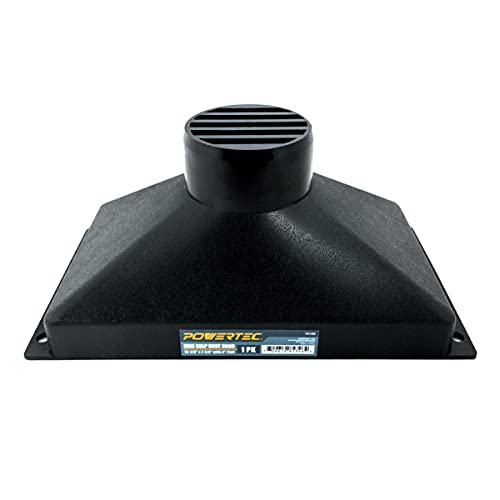
Equipped with a 4-inch dust port, this mini hood is designed to capture debris behind, underneath, or near the turning point. It features a deep, wide-mouth design and pre-drilled mounting holes with a built-in grate to protect your dust collector from larger debris. Best for compact spaces and close-to-source extraction. A limitation is that it is sized for smaller projects and may not cover larger turning operations in one shot.
Buying Guide: Dust Collection For Lathes
What should you consider when choosing a lathe dust hood?
- Dust source proximity: Hoods that sit near the turning point capture more dust at the source, reducing airborne particles.
- Compatibility: Check hose diameter (commonly 4″ or 2″), mounting options, and whether you need clamps or brackets for your bench or lathe.
- Adjustability: Look for adjustable height, angle, and extension arms to fit different lathe sizes and turning orientations.
- Mobility vs. permanence: Portable hoods are versatile; mounted or clamp-on hoods stay in place for ongoing workflows.
- Hose and debris handling: Some hoods include integrated grates or mounting holes; others require separate hoses. Consider debris size and how often you’ll need to empty the dust collector.
What is the right setup for different shops?
- Small hobby shop: A compact hood with adjustable arm and a flexible hose works best. Look for foldable or clamp-on designs to save space.
- Professional shop: A robust dust collection system with a wide hood and a stationary or articulated boom reduces dust across multiple turning tasks.
- Pen turning or miniature projects: A small, precise hood mounted near the tip of the lathe can significantly improve visibility and capture small-dust efficiently.
Common trade-offs to know
- Size vs. reach: Larger hoods capture more dust but take more space. Choose a hood that reaches the turning area without obstructing the operation.
- Cost vs. coverage: Higher-end systems provide comprehensive coverage but come with a bigger price tag. Balance budget with expected dust output.
- Airflow vs. noise: Stronger suction improves dust capture but can increase noise. Consider quieter options with adequate suction for safe operation.
Quick setup checklist
- Verify hose size compatibility with your dust collector.
- Position hood as close to the dust source as possible without hindering turning motion.
- Secure mounting or clamps to prevent movement during turning.
- Test airflow and adjust hood angle and height for optimal capture.
- Regularly inspect and replace worn hoses or gaskets to maintain suction.
FAQ
- Q: Do I need a dedicated dust collector for lathe work?
- A: Not always, but a dedicated system improves suction and keeps your workshop cleaner, especially with frequent turning.
- Q: What size hood is best for a small wood lathe?
- A: A compact hood around 6×9 inches or similar with adjustable arms is typically sufficient for small projects.
- Q: Can I use any 4-inch hose with these hoods?
- A: Most hoods use common dust-collection fittings; verify the hose diameter and mounting compatibility before purchase.
- Q: Are adjustable hoods worth the extra cost?
- A: Yes, if you work with various turning projects, the added adjustability improves dust capture and workflow precision.
- Q: What material is best for hood construction?
- A: Durable plastics or metal hoods with rigid mounting tend to perform well and withstand shop use.
- Q: How often should I clean the dust hood and filter?
- A: Regular maintenance prevents clogging and maintains efficient airflow; follow your dust collector’s maintenance schedule.