Answering the question, the best dust extractor for sander work depends on your budget, tool compatibility, and portability needs. This guide highlights five reliable options that pair well with sanding tasks, from compact handheld sanders to larger stationary setups. Ideal buyers include hobbyists seeking mobile dust control, pros needing HEPA filtration, and workshop owners prioritizing stable, easy-to-move units. Below is a quick, at-a-glance summary of the selected products to compare at a glance.
| Product | Best For | Key Benefit |
|---|---|---|
| Festool CT 15 Dust Extractor | Professional shops, small footprint | HEPA filtration and auto-clean system with high-power suction |
| Festool CT MIDI I | Compact, mobile setups | Lightweight with Bluetooth controls for remote start |
| DEWALT Dust Separator DXVCS002 | Budget-conscious, large-volume debris separation | High-efficiency cyclone separation to reduce suction loss |
| DEWALT DWV010 HEPA | General-purpose with automatic filter cleaning | Automatic filter pulsing for continuous operation |
| DEWALT 20V MAX DWH161B | Cordless flexibility for mobile sanding tasks | Compact, lightweight with integrated filter and ergonomic features |
DEWALT Dust Separator With 6 Gallon Poly Tank

The DEWALT DXVCS002 is designed to capture wood chips and debris before they reach your vacuum, reducing filter clogs. Best for workshop setups where a user runs multiple sanders or needs to extend vacuum life. This cyclone separator works with 1-7/8″ or 2-1/2″ ports and supports easy mobility with a four-caster base. The 6-gallon tank is easy to empty, making it suitable for mid-sized projects. Caution: verify compatibility with your existing vacuum for correct port sizing and airflow balance.
Festool CT 15 Dust Extractor

Best for professionals needing HEPA filtration and uninterrupted workflow. The CT 15 offers HEPA-certified filtration and a high-performance turbine with a generous 3.96-gallon container capacity, minimizing downtime between dumps. Included cleaning accessories help keep work areas tidy, and the robust chassis ensures long service life. Best for shops requiring consistent dust control with minimal maintenance. Limitation: heavier and pricier than entry-level models.
Festool CT MIDI I Dust Extractor

Best for compact, mobile setups requiring strong filtration and easy control. The CT MIDI I focuses on a lightweight footprint and is easy to move around the workshop, with a compact design that still delivers solid suction. It is ideal for smaller shops or contractors who need to tote equipment between jobs. Caution: somewhat limited capacity may require more frequent emptying on larger sanding sessions.
DEWALT 20V MAX Dust Extractor

Best for cordless versatility in sanding projects away from power outlets. The DWH161B is a compact, tool-only model that integrates with 20V Max batteries, offering mobility and ergonomic handling. The included HEPA filter improves dust capture in portable setups, and multiple strap points aid in ergonomic carrying. Limitation: battery dependence may affect runtime on long sessions.
DWV9000 Universal Quick Multi-Function Connector
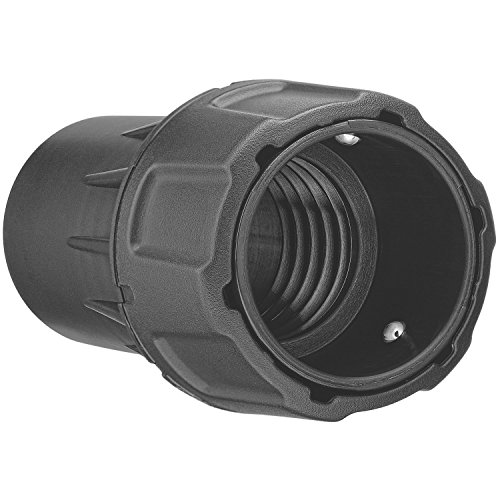
Best for compatibility across a range of tools and dust collectors. This universal connector simplifies linking dust extractors, hoses, and DW tools, offering a secure locking connection. It’s a practical add-on when building a flexible dust collection system in mixed-tool environments. Caution: verify model compatibility with your current dust collection setup.
Festool 578512 CT MIDI I Dust Extractor
Note: If you’re comparing to the CT MIDI I listed above, this entry reinforces the model’s emphasis on mobility and integrated Bluetooth control options. It is particularly suited for users who want remote start and quick setup in dynamic workshop environments. Caution: Bluetooth features may require compatible devices and updates for full functionality.
Buying Guide
- Filtration quality: HEPA filtration offers the strongest dust capture for fine sanding particles. If you work with drywall and fine particulates, prioritize HEPA or equivalent filtration.
- Portability vs. capacity: Lighter units are easy to move but may require more frequent emptying. Larger tanks reduce downtime but can be heavier to transport.
- Compatibility: Check hose and port sizes (1-1/4″, 2-1/2″, etc.) and ensure compatibility with your existing sanders and vacuum systems.
- Automatic cleaning: Systems with auto-clean or pulsing filters reduce maintenance interruptions during long sanding sessions.
- Noise and build quality: Robust housings and efficient motors help reduce noise and improve longevity in busy workshops.
Frequently Asked Questions
- What is the difference between a dust extractor and a vacuum? A dust extractor is designed to move air with high suction over longer runs to collect dust at the source, while a vacuum is often used for general cleanup and may have less specialized filtration.
- Do I need a HEPA filter for sanding? For fine sanding dust, HEPA filtration helps capture tiny particles and protect air quality in enclosed workspaces.
- Can I use a regular shop vac with a sander? Yes, but a dedicated dust extractor or cyclone separator can improve suction at the tool and reduce filter clogging.
- Is cordless dust extraction possible? Cordless units offer mobility but may have limited runtime depending on battery life; consider a model that fits your typical project duration.
- How important is a cyclone separator? Cyclone separators reduce pre-filter debris, extending filter life and maintaining suction, especially in wood shop environments.
- What size is best for a home workshop? A 3–6 gallon system with compatible hoses fits most small to medium projects and keeps the workspace manageable.