Answer: If you’re looking to keep your analog setup playing smoothly, these electronic VHS tape cleaners are the right choice. They use either dry or wet cleaning methods to remove dust, dirt, and magnetic residue from heads, pinch rollers, and capstans. The best options suit different user needs—from quick, rinse-free dry cleaning to more thorough wet cleaning. This guide highlights five top picks, ideal for restoring playback quality and reducing head-related issues.
| Product | |||
|---|---|---|---|
| Arsvita VHS/VCR Head Cleaner (Dry) | Dry | Casual viewers, older tapes | Non-abrasive, quick reuse up to 30 times |
| YHDD VCR Head Cleaner Tape (Dry) | Dry | Users needing fast, simple cleaning | No liquid, easy operation |
| Mwin VHS Head Cleaner (Dry) | Dry | Users with dry-clean preference | Safe for most VHS players, reusable |
| Nicer VCR Head Cleaner (Dry) | Dry | Frequent cleanings, quick results | Full-path cleaning of head, pinch wheel, and winch |
| Zoravell VHS Head Cleaner (Dry) | Dry | All-around maintenance | Simple steps; comprehensive head and mechanism wipe |
Product Sections
Arsvita VHS/VCR Head Cleaner, Dry Type

Type: Dry cleaning. This non-abrasive tape clears dust and dirt from VHS heads without liquids. The simple operation requires inserting the cleaner, pressing PLAY, and letting it run until it stops, enabling up to 30 uses. Best for viewers who want a fast, repeatable dry clean to improve playback stability and sound quality. Caution: effectiveness depends on head wear; severely worn heads may not benefit.
YHDD VCR Head Cleaner Tape (Dry)

Type: Dry cleaning. This reusable, dry cleaner is designed to remove dirt and reduce jitter, noise, and slow loading in VHS/VCR devices. It’s straightforward to use: insert, press PLAY, and run until it stops. Best for users seeking a quick, no-fluid cleanup that improves loading speed and sound reliability. Limitation: may not address underlying mechanical issues or heavily degraded heads.
Arsvita VHS/VCR Head Cleaner Tape, Wet Type ARVC-3

Type: Wet cleaning. This kit uses a cleaning solution in a non-abrasive tape format for VHS/VCRs. Steps involve applying 3-5 drops of cleaning liquid, inserting the tape, and letting it play to clean. Best for users confronting persistent playback issues and inked residue on heads. Better for deeper cleaning than dry methods, but requires handling cleaning liquid and additional steps.
Mwin VHS Head Cleaner (Dry)
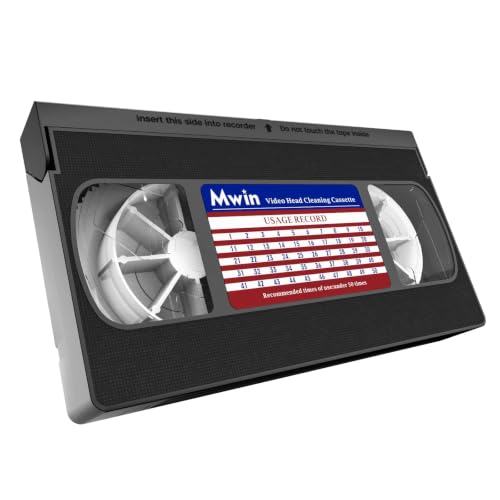
Type: Dry cleaning. This cleaner removes dirt and debris from magnetic heads to restore clearer playback and faster loading. It’s reusable and dry-cleaning focused. Best for users who want a safe, fluid-free option. Note: May not work on severely worn or heavily damaged heads; not guaranteed to fix mechanical problems.
Nicer VCR Head Cleaner (Dry Type)

Type: Dry cleaning. Insert and run to wipe the head, pinch wheel, and winch, removing magnetic dust and stains without head damage. Best for routine maintenance where a quick, dry pass is preferred. Limitation: does not fix mechanical faults or address severely worn components.
Zoravell VHS Head Cleaner (Dry)

Type: Dry cleaning. This dry system provides a simple method to clean heads, pinch wheels, and capstan by inserting the cleaner, running PLAY, and allowing it to eject. Best for all-around maintenance with straightforward operation. Caution: not designed to repair mechanical issues; effectiveness depends on overall head condition.
Buying Guide
What cleaning method should you choose? Dry cleaners are faster, require no liquids, and are best for routine maintenance and light dirt. Wet cleaners offer deeper cleaning but involve liquids and more steps, suitable for stubborn buildup or after extended use. Consider head condition and device compatibility when selecting a product.
Who is the best fit for each option?
- Dry cleaners: Everyday users, casual viewers, and those cleaning older tapes with light residue.
- Wet cleaners: Users facing persistent playback issues, screen staining, or noisy sound from heavy deposits.
Usage tips to maximize results:
- Follow manufacturer steps precisely for each product type.
- Avoid excessive use on heavily worn heads; fragile heads require cautious cleaning.
- Do not mix fluids with dry cleaners unless explicitly permitted by the product.
Practical considerations
- Reusability: Some dry cleaners are reusable up to 30 times or more; check for longevity.
- Compatibility: Ensure the cleaner is designed for your specific VHS/VCR model; certain combos may not respond to some cleaners.
- Safety: Use cleaning solutions as directed and avoid liquids on sensitive electronics beyond the kit’s scope.
FAQ
Q: Are VHS head cleaners safe for all VCRs?
A: Dry cleaners are generally safe for most VHS/VCR heads, but effectiveness depends on head wear and device type. Wet cleaners should be used as directed and avoided on non-compatible models.
Q: Can cleaning tapes fix a skipping or picture issue?
A: Cleaning can reduce skipping caused by dust and residue, but persistent mechanical problems or severely worn heads may require professional service or component replacement.
Q: How often should I clean my VHS heads?
A: Regular maintenance helps preserve playback quality. Dry cleaners can be used more frequently; wets are typically used when issues persist after dry cleaning.
Q: Do these cleaners fix audio problems?
A: Cleaning can improve audio quality by reducing head roughness; however, audio faults due to hardware or tape quality may persist after cleaning.