Answer: Enzymatic cleaners are an effective, versatile choice for removing organic soils across medical instruments, carpets, and household surfaces. This guide highlights top enzymatic options for instrument pre-cleaning, professional cleaning, and pet messes. Best fits: medical facilities or labs seeking pre-cleaning power, professional cleaners needing safe, non-abrasive formulas, and pet households tackling odors and stains. The table below summarizes five strong choices and their ideal use cases.
| Product | Best For | Main Benefit |
|---|---|---|
| CSI Central Solutions Multi Enzymatic Cleanser | Medical facilities, busy offices | Multi-enzyme mix with protease, amylase, lipase for proteins, starches, fats |
| NORTHWEST ENTERPRISES Ultrasonic Cleaner Solution | Ultrasonic instrument reprocessing | Triple-action enzymes, fragrance-free, compatible with metals and plastics |
| EmPower Dual-Enzymatic Detergent – Metrex | Instrument pre-cleaning | Neutral pH, safe on metal, plastic, glass; strong pre-clean |
| Simple Solution Extreme Pet Stain and Odor Remover | Pet stain removal | Three-times stronger enzymatic formula for tough pet messes |
| Sheiner’s Pet Urine Enzyme Cleaner | Pets and households | Powerful bio-enzymatic formula, safe for pets and kids |
CSI Central Solutions Multi Enzymatic Cleanser
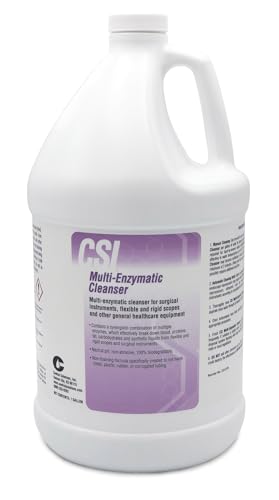
The CSI Multi Enzymatic Cleanser uses a multi-enzyme formula to tackle protein, blood, starch, and fat residues. It is designed for busy research offices and medical facilities, delivering thorough cleaning while maintaining a neutral pH at use-dilution. Best for instrument pre-cleaning and general pre-soak workflows in clinical environments, where gentle handling of metal and plastic components matters. Caution: Follow dilution instructions to prevent over-foaming and ensure compatible contact times with delicate instruments.
NORTHWEST ENTERPRISES Ultrasonic Cleaner Solution

This ultrasonic cleaner solution is engineered to work with ultrasonic cleaning systems, releasing energy from billions of tiny vacuum bubbles to remove contaminants from instruments like scissors, tweezers, and scopes. It is fragrance-free and non-abrasive, with a neutral pH to prevent damage to sensitive instrument materials. Best for facilities performing ultrasonic reprocessing; avoid if your workflow relies on aggressive scrubbing or if your instruments require a scented environment. Caution: Ensure compatibility with specific plastics and tubing used in your equipment.
EmPower Dual-Enzymatic Detergent – Metrex

EmPower provides a dual-enzyme cleaning liquid formulated for pre-cleaning medical instruments and semi-critical devices. The blend includes protease, amylase, and lipase to break down protein, starch, and fat-based debris. Neutral pH makes it gentle on metal, plastic, rubber, and glass, supporting safe cleaning for a range of instruments. Best for professional pre-cleaning workflows where stable enzyme activity and material compatibility are priorities. Limitation: requires proper dilution and contact time to maximize enzyme effectiveness in complex instrument geometries.
Simple Solution Extreme Pet Stain and Odor Remover

This spray offers a three-times stronger enzymatic formula designed to tackle tough pet stains and odors, including urine, feces, and vomit. It is particularly suitable for homes with dogs and cats where fast-acting odor neutralization is desired. Best for spot cleaning on carpets, upholstery, and fabric surfaces. Caution: Test on delicate fabrics first to ensure colorfastness and avoid over-wetting sensitive materials.
Sheiner’s Pet Urine Enzyme Cleaner
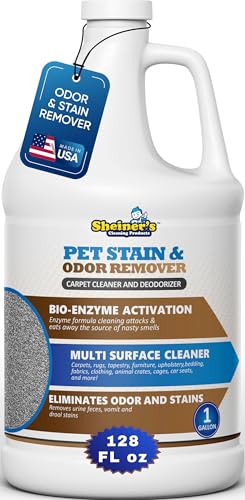
Sheiner’s uses a powerful bio-enzymatic formula to break down pet stains and odors within fibers, delivering results in carpets, rugs, upholstered furniture, and multi-surfaces. It is designed to be safe for households with pets and children, offering a non-toxic cleaning approach compared to harsher chemical solutions. Best for ongoing pet-related messes and for homes requiring a pet-safe enzymatic solution. Limitation: performance can vary with older odors that have become deeply embedded in dense fabrics.
Buying Guide
What type of enzymatic cleaner should I choose?
Choose enzymatic cleaners with multiple enzymes (protease, amylase, lipase) for broad soil targets. For instrument care, neutral pH and material compatibility are important to prevent corrosion or damage.
Is a ready-to-use formula better than a concentrate?
Ready-to-use formulas are convenient for spot cleaning and quick jobs. Concentrates offer cost savings for large volumes or ongoing workflows but require precise dilution and mixing steps.
How does pH affect cleaning and safety?
Neutral or near-neutral pH cleaners are gentler on metals, plastics, and coatings used in medical instruments. Alkaline formulas can be more aggressive on tough soils but may risk material damage if misused.
Are enzymatic cleaners safe for pets and kids?
Most household enzymatic cleaners are formulated to be non-toxic and safe when used as directed. Always check the product label for safety guidelines and avoid mixing with other cleaners that could cause reactions.
What about fragrance and residue?
Fragrance-free or mild-fragrance formulas are preferable in sterile workspaces and homes sensitive to scents. Ensure any residual scent does not interfere with subsequent sterilization processes or fabric materials.
How should I store enzymatic cleaners?
Store in a cool, dry place away from direct sunlight. Keep containers closed when not in use to preserve enzyme activity and prevent contamination of soil foods or surfaces that might come into contact with cleaners.
FAQ
- What makes enzymatic cleaners better for pet stains than traditional cleaners? They enzymatically degrade organic soils like urine and feces, helping to neutralize odors at the source rather than masking them.
- Can enzymatic cleaners damage medical instruments? When used as directed and with neutral pH formulations, they are generally safe for a wide range of instrument materials.
- Should I use enzymatic cleaners before or after disinfection? Enzymatic cleaners are typically used in pre-cleaning steps to remove organic soils before disinfection or sterilization.
- Are enzymatic cleaners effective on old odors? They are most effective on recent, organic soils; older odors may require longer exposure or supplemental cleaning methods.
- Can I use enzymatic cleaners on carpets and upholstery? Yes, several enzymatic formulas are designed for household surfaces like carpets, rugs, and fabrics.
- Do enzymatic cleaners require special disposal? Follow local regulations for cleaning chemical disposal; most are biodegradable but still require proper handling.