When searching for epoxy glue for plastics, you want a reliable bond that dries clear, set fast, and works across a range of plastics and substrates. This guide highlights five top options that are well-suited for DIY repairs, automotive fixes, and household projects. Each pick is evaluated for bond strength, set time, and versatility, so you can choose what fits your project best. The buyer notes indicate who each product is best for and common caveats to consider.
| Product | Best For | Key Feature |
|---|---|---|
| J-B Weld 50139 Plastic Bonder | Thermoplastics and coated metals | 1:1 mix, 15 min set, 3770 psi |
| Gorilla 2 Part Epoxy (Clear) | Visible repairs, quick fixes | 5 min set, dries clear |
| Gorilla 2 Part Epoxy (2-Pack) | Versatile, bulk needs | 5 min set, gap filling |
| J-B Weld PlasticWeld Quick-Setting Epoxy | Plastic surfaces and PVC | 5 min set, 3900 psi |
| J-B Weld Plastic Bonder (Tan) | Dents and bumper repairs | 15 min set, 3770 psi |
Note: The following product selections emphasize different plastics, bond requirements, and set speeds. If you need a clear finish, consider fast-setting epoxies with good gap filling. For structural repairs on tougher plastics, look for high tensile strength values and 1:1 mixing in syringes for neat application.
J-B Weld Plastic Bonder Body Panel Adhesive
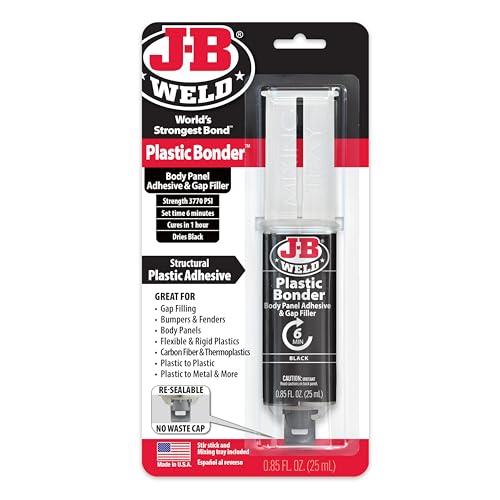
- Type: Urethane adhesive and gap filler, 1:1 mix
- Set time: 15 minutes; cure to full strength in about 24 hours
- Tensile strength: 3770 psi; suitable for thermosets, carbon fiber, thermoplastics, coated metals, concrete
Best for: DIY plastic repairs on panels, dent repairs, and areas needing a strong, durable bond. This kit is ideal for users who want a straightforward 1:1 mix and a relatively quick initial set. Limitation: Requires full curing for maximum strength and may be less suitable for vertical applications during initial handling.
Gorilla 2 Part Epoxy, Clear (5 Minute Set)

- Dries clear; 5-minute set; versatile gap filling
- Excellent for household and automotive repairs
- Durable bond with good flexibility
Best for: Quick, clear repairs on visible surfaces or where a fast, clean finish matters. Better for small-to-medium gaps and projects that benefit from rapid handling. Caution: Not a long cure for heavy loads; ensure appropriate surface prep.
Gorilla 2 Part Epoxy (2-Pack), Clear
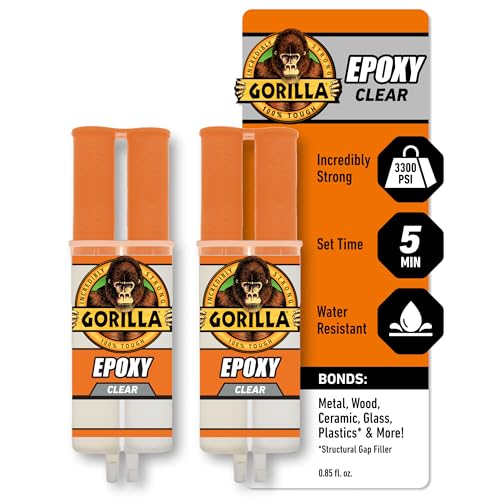
- Set time: 5 minutes; cure time varies by thickness
- Dries clear; gap filling properties
- Two-pack kit offers flexibility for larger projects
Best for: Projects requiring multiple syringes or repeated repairs, with a clear finish and reliable gap filling. Choose this if you need an extra working window and consistent performance across multiple parts.
J-B Weld PlasticWeld Quick-Setting Epoxy
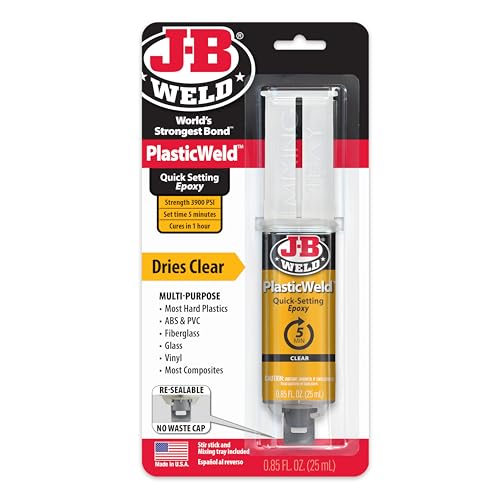
- Type: Quick-setting two-part epoxy; 1:1 mix
- Set time: 5 minutes; cure in about 1 hour
- Tensile strength: 3900 psi
Best for: Bonding plastic surfaces such as ABS, PVC, fiberglass, and composites where a fast initial hold is valuable. Better for smaller repairs requiring rapid handling. Limitation: May not fill deep gaps as effectively as stronger, longer-cure epoxies.
J-B Weld Plastic Bonder (Tan)
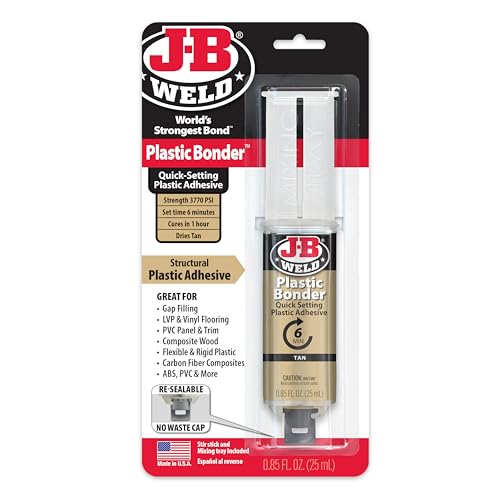
- Type: Urethane adhesive and gap filler, 1:1 mix
- Set time: 15 minutes; cure time up to 30 hours
- Tensile strength: 3770 psi
Best for: Bumper repairs, dent filling, and DIY plastic fixes where a tan-colored seal helps blend with automotive components. Caution: Longer cure time required for full strength; plan work to avoid disturbance during cure.
Buying Guide: Choosing The Right Epoxy Glue For Plastics
What plastic types does the adhesive bond well with?
Look for products described as suitable for thermoplastics, ABS, PVC, fiberglass, and coated metals. If you work with carbon fiber or composites, select a formula with high tensile strength and good adhesion to tough plastics.
What cure and handling times are acceptable?
Consider quick-set options (5–15 minutes) for projects needing rapid handling, versus longer cure times for stronger final bonds. Syringe-based 1:1 mixes often offer tidier application and better consistency.
Is a clear or color-matched finish important?
Choose clear epoxies for visible repairs or tan/colored formulations to blend with automotive parts or furniture. Clear options help when aesthetics matter.
Do you need gap-filling capability?
Gaps and irregular surfaces benefit from epoxy with gap-filling properties. Some formulations are specifically designed to fill voids while bonding.
Durability and temperature tolerance?
High tensile strength (over 3,000 psi) and resistance to temperature changes support long-lasting repairs in automotive or outdoor environments.
FAQ
- Q: Can epoxy glue for plastics bond to metal or wood as well? A: Many formulas bond plastics and metals, and some also bond wood; check the product features for cross-material adhesion.
- Q: Do epoxies require clamping during curing? A: Some bonds benefit from light clamping to reduce movement, while others set firmly without clamps.
- Q: How long before you can sand or paint over the epoxy? A: Sanding typically begins around 30 minutes to 1 hour for quick-set types, with full cure after several hours to days depending on the product.
- Q: Are clear epoxies better for automotive repairs? A: Clear epoxies are advantageous for visible areas, providing a cleaner finish that blends with the surrounding surface.
- Q: Do syringe-based epoxies reduce mess? A: Yes, syringes provide more precise mixing and lower waste, especially for small repairs.
- Q: Is surface prep important for bond strength? A: Yes; clean, dry, and roughened surfaces generally yield better adhesion.