If you’re sourcing a feminine hygiene waste receptacle, the top picks below suit different bathroom environments and needs. This guide highlights products best for high-traffic public restrooms, office settings, and private homes. You’ll find options focused on odor control, easy maintenance, and durable construction. The table summarizes five strong choices to compare at a glance.
| Product | Best For | Key Benefit |
|---|---|---|
| Hospeco Feminine Hygiene Receptacle White ABS Plastic 250-201W | General restrooms, offices | Top-opening design for quick disposal |
| Alpine Sanitary Napkin Receptacle – Wall Mounted Stainless Steel | High-traffic commercial/restrooms | Durable stainless steel with odor-sealing lid |
| EnBath Sanitary Napkin Disposal Receptacle | Public and shared spaces | Removable bin and odor-sealing lid |
| Bobrick Sanitary Napkin Disposal Wall Mounted Stainless Steel Flip Top | Public restrooms | 1-gallon capacity with full-length hinge |
| Tioncy 4 Pcs Sanitary Napkin Disposal Receptacle | Multi-stall facilities | Four-pack with mounting fittings |
Hospeco Feminine Hygiene Receptacle White ABS Plastic 250-201W

This top-opening receptacle is ideal for busy restrooms where quick disposal matters. It is made from durable ABS plastic, offering a lightweight yet sturdy option for everyday use. Best for offices or small clinics seeking low-maintenance containment.
Who it’s best for: facilities needing a simple, affordable mount that accepts regular waste with minimal risk of odors escaping during disposal. Why selected: reliable basic design with straightforward top access. Limitation: fewer odor-control features compared with sealed-lid models.
Alpine Sanitary Napkin Receptacle – Wall Mounted Stainless Steel

Stainless steel construction offers long-term durability for high-traffic locations. It includes a tight-sealing lid to help control odors and a compact footprint that fits most commercial restrooms. Best for facilities prioritizing durability and odor containment.
Who it’s best for: office buildings, restaurants, healthcare facilities with regular turnover. Why selected: corrosion-resistant material and odor sealing. Caution: stainless steel surfaces may show fingerprints; regular cleaning helps maintain appearance.
Sanitary Napkin Disposal Receptacle, EnBath

Designed with a removable trash bin and odor-sealing lid, this model emphasizes ease of maintenance and hygiene. It blends practical features with a clean aesthetic that fits most bathrooms. Best for: facilities that value quick waste removal and odor reduction.
Who it’s best for: busy restrooms in schools, offices, and clinics. Why selected: easy bag management and a discreet appearance. Caution: ensure proper wall mounting to prevent tipping in high-traffic areas.
Bobrick Sanitary Napkin Disposal Wall Mounted
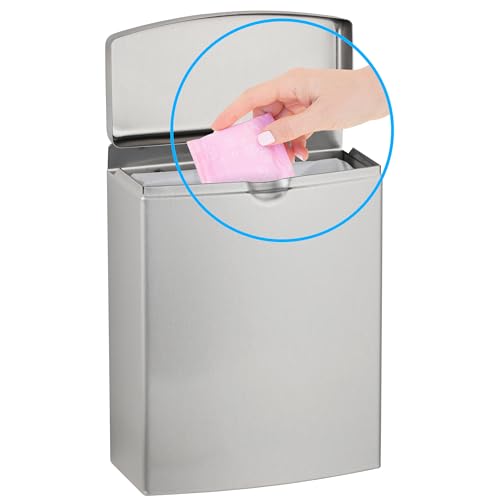
Bobrick’s 1-gallon capacity and full-length hinge design support easy installation and sanitation. The flip-top mechanism helps control odors in public restrooms while keeping waste out of sight. Best for: large facilities seeking a proven, easy-to-clean option.
Who it’s best for: facilities that require a dependable, off-the-shelf solution with simple maintenance. Why selected: robust design and reliable odor control. Caution: capacity may require more frequent emptying in very busy stalls.
Tioncy 4 Pcs Sanitary Napkin Disposal Receptacle

This four-pack provides a comprehensive solution for multiple stalls or restrooms. Made from stainless steel, the set emphasizes durability and sanitary efficiency with included mounting fittings. Best for: multi-stall facilities seeking uniform, mess-free disposal across rooms.
Who it’s best for: large offices, schools, or clinics needing consistent waste management. Why selected: value of multiple units in one package. Caution: larger total footprint means you’ll plan layout and mounting more carefully.
Buying Guide: Key Purchase Considerations
What mounting option fits your space best? Wall-mounted models save floor space and are easier to clean, while floor receptacles can be preferable in stalls with limited wall space. Consider the mounting hardware included and whether a no-drill installation is offered for retrofit projects.
How important is odor control? Receptacles with tight-sealing lids or odor-control features help maintain a fresh restroom. In busy environments, sealed lids and durable materials reduce maintenance needs over time.
What material best suits your environment? Stainless steel offers durability and a professional look for high-traffic public areas. ABS plastic is lighter and often enough for smaller offices or home restrooms but may be less resistant to heavy wear.
What capacity do you actually need? Typical public restrooms benefit from larger capacity or easier service access to minimize maintenance frequency. For single-stall settings, compact options can be sufficient and cost-effective.
Is ease of cleaning a priority? Removable bins, smooth surfaces, and minimal seams simplify daily cleaning and sanitation routines. Choose models with removable inner bins for quick waste removal.
Frequently Asked Questions
- What features improve hygiene in feminine disposal receptacles?
Answer: Tight-sealing lids, removable inner bins, and smooth surfaces reduce odor and make cleaning easier. - Which material lasts longer in busy public restrooms?
Answer: Stainless steel resists corrosion and frequent use better than many plastics, though high-quality ABS can be sufficient in lighter-duty settings. - Do I need multiple receptacles for multi-stall restrooms?
Answer: Yes, distributing units across stalls improves hygiene and reduces maintenance time. - How do I choose between wall-mounted and floor-standing models?
Answer: Wall-mounted units save floor space and are easier to clean; floor models can be more accessible in certain stall configurations. - What maintenance practices keep disposal bins sanitary?
Answer: Regular emptying, wipe-down cleaning with approved cleaners, and ensuring lids seal properly after each use. - Are odor-control features essential for small offices?
Answer: Optional but beneficial; sealed lids still reduce odor, while smaller spaces may tolerate basic models if cleaned routinely.