Foam sponge block filters are a versatile option for mechanical and biological filtration in freshwater and saltwater setups. They’re ideal as pre-filters, in sump systems, canister and power filters, or DIY HMF projects. This guide highlights five top foam sponge block products that balance filtration efficiency with durability, size, and compatibility. Explore how each option supports clearer water, better oxygen diffusion, and healthier aquatic environments for fish, plants, and invertebrates.
| Product | Brand | Size | PPI | |
|---|---|---|---|---|
| AQUANEAT 2 Pack Aquarium Bio Sponge Filter Media Pad | AQUANEAT | 9″ x 9″ x 0.5″ | 40 | Pre-filter, larger surface area |
| Aquarium Bio Sponge Filter Media (2 PCS) | KEYDINHT | Fit AC 110 / 500 | 30 | Biological and mechanical filtration |
| AQUANEAT 11″ L x 10.25″ W x 2″ H | AQUANEAT | 11″ x 10.25″ x 2″ | 40 | Sump divider and primary filtration |
| ALEGI Aquarium Sponge Filter Pad | ALEGI | 20″ x 20″ x 1″ | 50 | Customizable filtration for large tanks |
| Pawfly 4 Pack Bio Sponge Filter Pads | Pawfly | 6.3″ x 5.5″ x 0.78″ | 30 | Pre-filter and DIY projects |
These options cover a range of sizes and pore densities, allowing tailoring to tank dimensions, filter types, and maintenance preferences. Below, each product is examined for fit, filtration performance, and practical considerations.
AQUANEAT Bio Sponge Pad (9×9)

The AQUANEAT 9″ x 9″ x 0.5″ open-cell sponge pad offers a solid balance of mechanical filtration and a large internal surface area for beneficial bacterial colonization. At 40 PPI, it provides relatively fine filtration, capturing debris while allowing adequate water flow. This pad is easily cut to fit various filters or pre-filter positions in sump or canister systems, enabling flexible customization for HMF or DIY projects. Two pieces per package increase cost-efficiency for larger setups or spare parts.
KEYDINHT Replacement Foam (AC 110 / 500)

The KEYDINHT bio sponge media pad is designed to fit AC 110 and AC 500 filters, making it a straightforward upgrade for common hobby setups. Its 30 PPI structure strikes a balance between debris capture and water diffusion, supporting both mechanical filtration and bio-filtration. The open-cell design expands the contact area for bacteria while preserving adequate flow. The product is suitable for freshwater and saltwater tanks, ponds, and related filtration applications, with easy trimming as needed for precise fit.
AQUANEAT 11″ Open Cell Sponge Pad
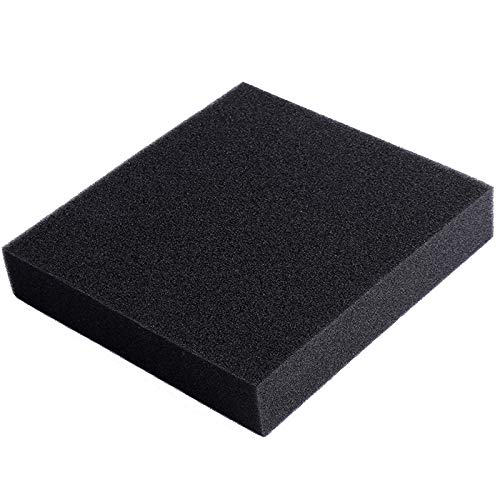
With dimensions of 11″ L x 10.25″ W x 2″ H and a 40 PPI density, this AQUANEAT sponge block delivers substantial filtration capacity suitable for larger aquariums and sump setups. The open-cell structure provides a large surface area for bacterial biofilms, aiding in ammonia and nitrite processing. It can be cut to fit diverse filtration configurations and used as a pre-filter for varied systems, including wet/dry and canister filters. The thicker profile increases resistance to clogging while maintaining water flow when paired with a compatible pump.
ALEGI 20x20x1 Foam Sponge Pad

The ALEGI 20″ x 20″ x 1″ sponge pad uses a higher PPI (50) to offer refined mechanical filtration while maintaining robust biology-friendly diffusion. Its oversized footprint makes it suitable for larger sumps or DIY HMF configurations where a single pad handles a broad cross-section of the filtration load. The material is designed for durability and resistance to deformation, supporting repeated cleaning and re-use without significant loss of porosity. It can be trimmed neatly to fit standard filtration chambers or custom DIY builds.
Pawfly Bio Sponge Filter Pad, 6.3″ x 5.5″

The Pawfly 4-pack offers a compact, versatile option for pre-filters and smaller filters, including sumps and HMF DIY projects. With a 30 PPI density, these sponges provide solid mechanical filtration while supporting beneficial bacteria growth. The medium-small size makes them ideal for modular setups or replacing worn pads individually. These pads can be trimmed to fit non-standard filter housings, enabling flexible installation across various aquarium systems.
Buying Guide: Key Purchase Considerations
When selecting foam sponge blocks for aquariums, consider these factors to optimize filtration and maintenance:
- Size and fit: Measure your filter sump or canister chamber and choose pads that can be trimmed to fit precisely without excessive cutting.
- PPI density: Higher PPI provides finer mechanical filtration but may reduce water flow unless paired with an appropriately sized pump. Lower PPI offers better flow but coarser filtration; mid-range (30–40) often balances both needs.
- Filtration type: Foam sponges support both mechanical and biological filtration. For robust bio-filtration, larger pads with greater surface area are beneficial, especially in larger systems.
- Durability and reusability: Look for closed-cell or high-quality open-cell foams that resist breakdown and deformation after cleaning. Reusable foams save ongoing costs.
- Compatibility: Ensure the pad is compatible with your filter model (e.g., AC110/AC500), sump design, or DIY project (HMF, wet/dry, canister, or power filters).
- Maintenance: Regular cleaning conserves filtration efficiency. Gently rinse with dechlorinated water to avoid harming beneficial bacteria. Avoid harsh cleaners that can harm aquatic life.
- Multi-pack value: If you manage multiple tanks or scalable systems, consider multi-pack options to simplify replacements and ongoing maintenance.
- Color and material: Most sponges are black or dark gray for UV resistance and aesthetic integration; ensure material won’t shed fibers into the display tank.
In sum, foam sponge blocks deliver reliable, adaptable filtration for diverse aquariums and ponds. By matching size, density, and compatibility to your filtration setup, you can maintain clear water, stable chemistry, and healthy aquatic communities with minimal disruption.