Answer: For perfect binding, use a combination of heat-activated spine glues (like EVA hot melts) or flexible PVA glues depending on stock and finish. The best picks here target coated covers, archival repairs, and professional-grade binding. This guide helps buyers choose the right glue for end sheets, spines, and durable book repairs. Each product is suited to different binding challenges—from difficult covers to archival restorations—so you can match your project to the right adhesive type.
| Product | Best For | Key Benefit | Limitations |
|---|---|---|---|
| ASA High Performance Book Binding EVA Hot Melt | Coated stocks, glossy covers | Strong spine bond with flexible hold | Requires precise heat control |
| DRLPSN PVA Glue Book Binding | Archival repair, photo-safe projects | Acid-free, pH-neutral, dries clear | Slower dry time than hot melts |
| ASA Spine Glue — Low Temp Hot Glue | Long runs on coated stock | Low-temperature application, spray-friendly | Less suitable for very thin papers without coating |
| TEAWOO Book Repair & Binding Glue Kit | Professional repairs, DIY restoration | All-in-one kit with precision tools | Multiple components; may require practice |
| LINECO Neutral pH Adhesive | General bookbinding and repairs | Dries clear, flexible | Not as strong as hot melts on heavy coatings |
The table above highlights five top options for different binding tasks. Use this as a quick reference to pair your project with the most suitable adhesive family, whether you’re binding a new run, repairing vintage volumes, or restoring prints with fragile pages.
ASA High Performance Book Binding EVA Hot Melt

Best for difficult covers and coated stocks, this milky-white spine glue is designed for problematic bindings like glossy magazine covers or coated stock brochures. It offers a tough, flexible bond and requires heating to 338-365°F (170-185°C) for optimal results. It is a strong option when you need a durable spine seal on challenging materials. Caution: maintains best performance within the specified temperature range; overheating or underheating can compromise adhesion.
DRLPSN PVA Glue Book Binding

Best for archival projects and delicate book repairs, this PVA glue is acid-free and pH-neutral. It dries crystal-clear and remains flexible, making it ideal for photos, prints, and heirloom materials. It accepts thinning with water for slower drying on fine details. Choose this if archival quality and long-term stability are priorities, especially for collections that require light handling over time. Limitation: slightly longer drying times compared with hot melts.
ASA Spine Glue — Low Temp Hot Glue

Best for spray application on spine work, this low-velocity, low-temperature hot glue is aggressive enough for durable spine bonds on coated stock, pamphlets, guides, and comic books. It provides a quick set and a secure seal once cooled. Choose this if you need fast processing and spray-friendly application. Caution: low-temperature glues may not be ideal for very heavy stock or long-term archival needs.
TEAWOO Book Repair & Binding Glue Kit
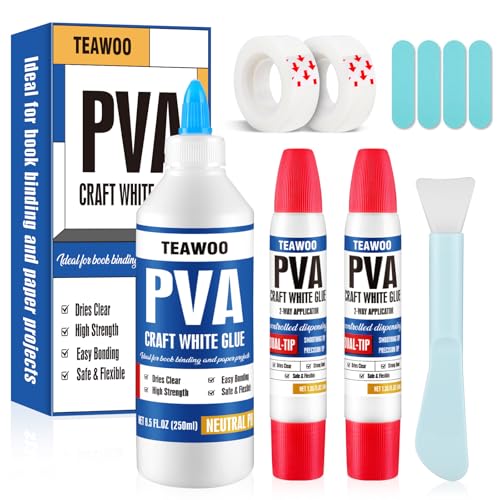
Best for complete repair projects, this all-in-one kit includes 8.5 oz PVA glue, precision bottles, a silicone brush, tape, and emery boards. It’s archival-grade, acid-free, and dries clear while remaining flexible. It suits beginners and professionals alike for book restoration, spine repairs, and crafting. Limitation: kit contents may require some practice to use effectively for delicate bindings.
LINECO Neutral pH Adhesive

Best for general bookbinding and repairs, this acid-free, neutral pH adhesive dries clear and remains flexible. It’s easy to use and can be remoistened with water for slow setting when necessary. Choose LINECO for routine repairs, framing, and crafts where a dependable, non-yellowing bond is desired. Caution: may not be the strongest option for high-stress book spines compared to hot melts.
Buying Guide
What glue is best for coated stock and glossy covers?
For coated stocks, hot melt glues (EVA) provide strong, durable spines that resist delamination. Look for low- to mid-velocity hot melts that flow well on coatings and set quickly. If you need flexibility without a strong odor, sprayable, low-temperature formulations work well.
Should I choose PVA or hot melt for archival projects?
For archival projects, PVA glues with acid-free, pH-neutral formulas are preferred. They dry clear and remain flexible, reducing yellowing and brittleness over time. Hot melts are excellent for speed and strong bonds but can be less forgiving on delicate historical paper.
How important is temperature control with hot melts?
Temperature ranges directly influence bond strength. Following the recommended range (for example, 338-365°F) ensures proper adhesion and avoids paper scorching or weak joints. Invest in a stable heating setup to maintain consistent results.
What should I consider when buying a binding kit?
Binding kits combine multiple tools and adhesives for convenient restoration work. Look for an all-in-one package that includes precision applicators, anti-clog caps, and compatibility with the paper stock you work with. Kits are ideal for beginners and field repair tasks.
How do I avoid common binding mistakes?
Avoid applying too much glue, which can cause oozing and page warp. Always test on a scrap piece to dial in the right amount and drying time. Respect stock limitations, especially with very thin or glossy paper, to prevent buckling or bleed-through.
FAQ
- What glue is best for book spines? A flexible hot-melt spine glue provides a strong, durable bond with quick setting. For archival needs, consider a neutral PVA designed for longevity.
- Can PVA glue be thinned? Yes, PVA can be thinned with water to slow drying and improve spread on intricate bindings.
- Is heat required for EVA hot melts? Yes, EVA hot melts require controlled heating to activate and cure for a proper bond.
- Are there adhesives safe for photographs? Yes, acid-free PVA adhesives are designed to be photo-safe and non-yellowing, suitable for photos and archival work.
- Can I use glue for framing or paper crafts? Many of these adhesives are versatile and can be used for framing and paper crafts, but ensure compatibility with your materials to prevent warping.