Answering the need for easy, effective gravel cleaning in compact aquariums, these gravel vacuums are designed for small tanks and nano reef setups. The right choice helps maintain clear water, minimizes stress to fish, and supports healthy substrates. This guide highlights five products well-suited for small tanks, explaining who each is best for and why. A quick comparison table is provided to help decide at a glance.
| Product | Best For | Key Benefit |
|---|---|---|
| Hygger Small Gravel Vacuum | Low-water-change regimes | Low-water level operation with adjustable flow |
| Laifoo 5ft Siphon | Budget-friendly, simple siphon | Long hose, anti-kink design, easy to use |
| UPETTOOLS 110V/28W | Comprehensive cleaning | 6-in-1 multi-function with strong flow |
| Aqueon Mini Siphon | Small tanks, quick routine changes | Simple push-to-start siphon |
| SEAOURA Siphon Pump | 3-in-1 with safety features | Safety filter basket and manual design |
Hygger Small Gravel Vacuum for Aquarium
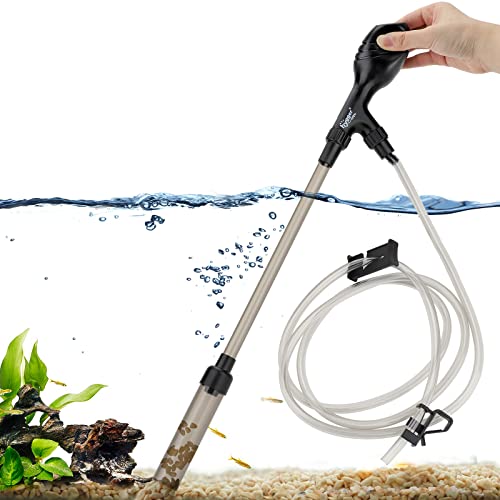
Best for: small tanks needing gentle, controllable gravel cleaning. The Hygger vacuum operates at about 80 GPH and includes a flow-regulating clamp and a built-in filter baffle to protect small fish. It uses a 79-inch PVC hose to support water changes with a 0.8-inch minimum water level. The unit is manually operated, avoiding electricity use, which reduces risk in compact setups.
Why chosen: Its compact design and adjustable flow make it ideal for nano tanks where precision matters. The duckbill inlet helps remove feces without pulling sand, while the long hose supports flexible placement. A potential limitation is the manual operation requiring a few squeezes to start siphoning, which may be slower than electric models.
Laifoo 5ft-S Aquarium Siphon Vacuum Cleaner

Best for: hobbyists seeking a longer, straightforward siphon for small aquariums. Laifoo provides a 5-foot hose made from clear, elastic plastic to resist kinking. It is designed to siphon out fish waste and turbid water with minimal disturbance to gravel and décor. The included gravel tube is sinkable and features a detachable filter screen for protection.
Why chosen: It emphasizes simplicity and reliability for routine maintenance in small tanks. The longer hose length makes it easier to reach corners without moving the tank. A caveat is that it relies on manual start-up, which can be less convenient for some users compared to electric models.
UPETTOOLS Aquarium Gravel Cleaner

Best for: cleaners seeking a multi-function tool with adjustable flow for varied tank depths. The UPETTOOLS model combines six functions: water changing, sand washing, debris removal, filtration, showering, and flow control. It features a 28W pump with up to 1700 L/H, capable of draining a large small-tank setup quickly when conditions are favorable.
Why chosen: The all-in-one design reduces clutter and streamlines maintenance in busy nano and small community tanks. A potential limitation is the higher power draw and complexity compared to simple siphons, which may require a steadier operation to balance flow and avoid over-suction in very small tanks.
Aqueon Aquarium Siphon Vacuum Gravel Cleaner Mini
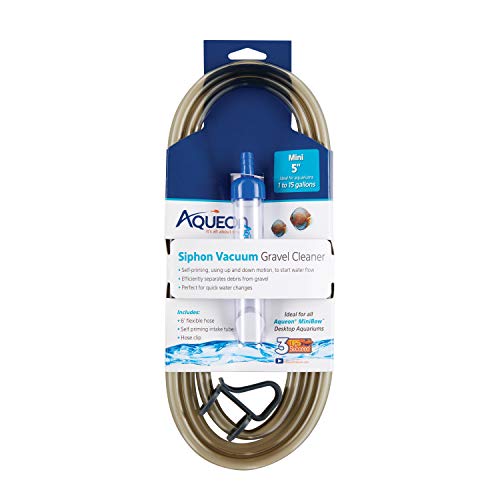
Best for: small tanks that need routine, uncomplicated water changes. The Aqueon Mini uses an up-and-down pumping method to start water flow and removes dirty water and debris from the gravel. It’s simple to operate and compact enough for nano aquariums.
Why chosen: Its compact design makes it a solid choice for minibox setups. The straightforward operation minimizes maintenance time. The simplicity might be a limitation for larger debris or stubborn algae compared to more powerful electric models.
SEAOURA Aquarium Siphon Pump Gravel Cleaner

Best for: nano tanks requiring a 3-in-1 gravel wash, stain scraping, and manure suction with a safety basket. SEAOURA emphasizes a manual press design, dual airbags, and a filter basket to prevent small fish or gravel from being sucked in. It is suitable for small saltwater or freshwater setups.
Why chosen: The built-in filter basket and safety features help protect aquatic life during cleaning. A limitation is the manual operation, which may be slower for bigger cleanouts or very dense waste loads.
Buying Guide
What size tank should guide your choice? Nano and small tanks typically benefit from compact, low-flow devices that minimize substrate disturbance. Consider whether you prefer manual siphon action or an electric-powered cleaner for faster results.
How important is flow control? Look for products with adjustable valves or won’t disturb beneficial bacteria. Fine debris and algae require gentler suction in delicate substrates.
What about safety features? A filter basket or guard reduces the risk of injuring fish or sucking in substrate. For community tanks with small inhabitants, safety becomes a primary criterion.
Are hoses length and flexibility relevant? Longer, kink-resistant hoses help reach corners and avoid moving the tank. Clear hoses make it easier to monitor waste flow during cleaning.
Durability and compatibility: In small tanks, reliability matters more than power. Select models with durable materials and hoses designed for repeated use in freshwater or saltwater as needed.
FAQ
- What is a gravel vacuum and when should I use it? A gravel vacuum is a tool that siphons water and debris from the substrate during water changes, helping remove waste while keeping the substrate relatively undisturbed.
- Do I need electricity for a gravel cleaner? Some models are manual and require no electricity; others use a built-in pump. Choose based on your preference for simplicity versus speed.
- Can I use a gravel vacuum in a 5-gallon tank? Yes, but use gentle suction and a shorter hose or lower-flow setting to avoid disturbing the substrate.
- How often should I clean the gravel in a small tank? For regular maintenance, a quick weekly cleaning plus water changes is common, with deeper cleanings as needed based on water clarity and waste buildup.
- Will these cleaners remove algae as well? Many models help remove debris and some algae, especially when paired with manual scrubbing or scraping tools mentioned in multifunction kits.
- Is a filter necessary when using a gravel vacuum? A filter basket or guard is recommended to protect small fish and invertebrates during cleaning.