If you need a compact tool to clean windows, shower doors, and mirrors without leaving streaks, a hand held window cleaner is the right choice. These cordless cleaners offer strong suction, quick drying, and easy handling for tight spaces. They’re best for: homeowners tackling multiple windows, apartment dwellers with limited storage, and anyone who wants a hassle-free cleaning routine. Below are five top picks with practical pros, ideal use cases, and clear trade-offs to help you choose smartly.
| Product | Best For | Key Benefit |
|---|---|---|
| QIDUHUQI Electric Window Vacuum Squeegee | Homes with showers and multiple windows | Streak-free suction in one pass |
| ZRHI Window Vacuum Squeegee | Large glass surfaces | Detachable 150 mL tank, long runtime |
| XINDELL Windshield Cleaner Tool | Car interiors and home windows | Extendable handle, swiveling head |
| DSV Standard 10″ Heavy Duty Squeegee | Budget-friendly basic cleaning | Streak-free rubber blade |
| JQCSR Window Vacuum Squeegee | Versatile, multi-surface cleanup | 4-in-1 style with spray bottle included |
QIDUHUQI Electric Window Vacuum Squeegee

Features: 2000Pa suction for fast, streak-free cleaning; 150 ml dirty water tank; 2200mAh rechargeable battery for longer runtimes; cordless operation for easy handling.
Best for: This model is suitable for small to medium windows, glass doors, and bathroom mirrors. It’s a strong all-around option when you want reliable, streak-free results without re-wiping.
Why selected: It combines high suction, decent capacity, and a compact profile, making it a balanced choice for daily home cleaning. A potential limitation is the 150 ml tank, which may require more frequent emptying on large jobs.
ZRHI Window Vacuum Squeegee

Features: 2000Pa suction; 2200mAh battery; detachable 150 mL water tank; cordless design for easy multi-room use.
Best for: Large glass surfaces, such as expansive windows or shower enclosures, where you want quick drying with minimal interruption. It’s ideal for users who value a clear water tank and straightforward emptying.
Why selected: The detachable tank reduces downtime between sections of a clean. A caution: tank size isn’t enormous, so you may need to stop for dumping on very large projects.
XINDELL Windshield Cleaner Tool

Features: Extendable handle (13″–19″), 180° swivel head, 5.7″ x 6.1″ coverage head; includes nano-fiber and standard microfiber pads for dry and wet cleaning.
Best for: Car interiors and home windows alike, especially where you need reach and corner access—great for drivers who want car and house cleaning in one kit.
Why selected: The extendable reach and swivel action offer versatility. Caution: pads and fluids are not included; you’ll need separate cleaners for best results.
Libman 3-in-1 Window Squeegee Tool

Features: Combines a refillable spray bottle, microfiber scrubber, and rubber squeegee in one handheld unit; 10″ squeegee and 10″ microfiber scrubber; rotating head for tight spaces.
Best for: Those who want an all-in-one solution for quick spray, scrub, and wipe without switching tools. Suitable for indoor and outdoor glass surfaces.
Why selected: The all-in-one design minimizes tool switching. Limitation: may be heavier than single-function models, which can affect ease of use for extended cleaning sessions.
DSV Standard 10″ Heavy Duty Window Squeegee

Features: All-purpose squeegee with durable rubber blade; suitable for glass doors, windows, tiles, and more; high-quality plastic handle.
Best for: Users who want a straightforward, durable tool for various surfaces beyond glass windows, including mirrors and tiles.
Why selected: Simple, reliable performance with a strong blade. Caution: lacks integrated cleaning bottle or tank, so you’ll need separate cleaning solutions for best results.
JQCSR Window Vacuum Squeegee
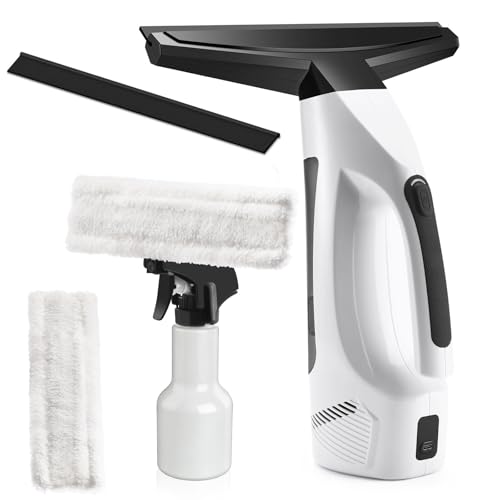
Features: Multi-surface cleaning with a spray bottle and microfiber cloth; cordless with 2000Pa suction; 2200mAh battery; 11″ nozzle and 6.7″ secondary blade.
Best for: Homeowners seeking a versatile tool that handles windows, mirrors, countertops, and showers with one device. Useful for multi-room or apartment cleaning routines.
Why selected: Combines vacuum power with spray-and-w wipe functionality. Limitation: battery life is good but not endless; plan your route to avoid mid-clean recharges.
Buying Guide
What to consider when choosing a hand held window cleaner:
- Suction power and drying speed: Higher suction (like 2000Pa) dries surfaces faster and reduces wipestreaks. Consider your typical cleaning area to pick the right balance of power and tank size.
- Tank capacity and maintenance: Larger tanks mean fewer interruptions during big jobs but heavier tools. Detachability can simplify emptying and reduce downtime.
- Battery life and cordless convenience: Look for 2000–2200mAh batteries for 30–40+ minutes of continuous use. Check if battery charging is fast enough for your cleaning length.
- Head design and reach: An extendable handle, swiveling head, or extra-wide nozzles improve access to corners and high surfaces. Choose based on target surfaces (home windows, car glass, or showers).
- Versatility and accessories: Some models include spray bottles, microfiber pads, or multiple blade sizes. Assess what’s included to avoid buying unnecessary extras.
- Size and weight: Lighter devices reduce fatigue for long cleaning sessions, especially on multiple windows. Heavier options may feel sturdier but less manageable.
- Surface compatibility: Most devices work best on smooth, clean glass; some can handle tiles, mirrors, and shower doors, but performance varies with surface texture.
FAQ
- Do hand held window cleaners require a power outlet? Most listed models are cordless with built-in rechargeable batteries, offering wireless operation.
- What surfaces can these cleaners handle? Primarily glass surfaces like windows, shower doors, and mirrors; some models work on tiles and car glass as well.
- How often should I empty the tank? Depending on surface size, larger tanks reduce interruptions, but some models need more frequent dumping for very dirty areas.
- Is there a risk of streaks with these tools? When used with proper technique and a suitable blade/tad, they minimize streaks; ensure surfaces are pre-cleaned if needed and wipe in straight, overlapping strokes.
- What maintenance is needed after use? Rinse the tank if applicable, clean microfiber pads, and dry the nozzle to prevent mold or residue buildup.
- Do these devices replace traditional cleaning? They are designed to speed up the process and improve consistency but can be used alongside traditional sprays for tough grime.