Finding dependable, eco-friendly trash bags that handle daily waste without sacrificing the environment can be challenging. The featured options below are heavy-duty, biodegradable, and certified for composting in many settings. This guide highlights five strong choices, ranging from 13-gallon to 13-17 gallon capacities, designed to resist leaks, accommodate heavier loads, and break down more efficiently than standard plastics. Each product includes practical features like drawstrings, puncture resistance, and clear certifications to help you pick the right bag for home, office, or commercial use.
| Product | Brand | Capacity | Key Certifications |
|---|---|---|---|
| Simply Bio 13 Gallon Compostable Trash Bags | Simply Bio Store | 13 gallon / 49.2 L | ASTM D6400; US BPI; OK Compost Home |
| Biodegradable Trash Bag Code Q | Emily’s Choice Store | 50 count / 13-17 gallons | D2W; Code Q compatible |
| AYOTEE 13-15 Gallon Trash Bags | AYOTEE Store | 13-15 gallon / ~55 L | PSM-based, ASTM D6866 |
| 8-10 Gallon Flap Tie Compostable Bags | — | 8-10 gallon | ASTM D6400; US BPI Certified |
| HoldOn 4 Gallon Small Trash Bags | — | 4 gallon | Plant-based, compostable options |
Simply Bio 13 Gallon Compostable Trash Bags

These 13-gallon compostable bags are 1 mil thick, providing a reliable barrier against leaks and punctures for everyday kitchen and office waste. The roll contains 30 bags with a drawstring for quick closure, and the size measures approximately 23.7 inches wide by 29.4 inches tall, enabling a snug fit in standard can liners. Certified under ASTM D6400 and backed by BPI and OK Compost Home recognition, they balance durability with compostability for homes that want greener waste management without sacrificing performance.
Biodegradable Trash Bag Code Q
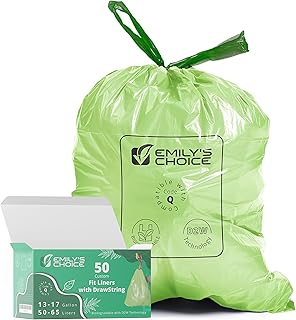
Engineered for heavy-duty use, these Code Q compatible bags come in a 50-count pack and offer 1.2 mil (30 micron) thickness. They’re designed to resist tearing when fully loaded and can handle bones, tin, and other sharp items when needed. The bags feature easy-to-tie design and fast biodegradation using D2W technology so plastics break down more rapidly, reducing long-term environmental impact. This makes them suitable for kitchens, offices, and commercial spaces that require reliable performance and responsible disposal.
AYOTEE 13-15 Gallon Heavy Duty Trash Bags

AYOTEE offers tall kitchen bags with a generous 1.18 mil thickness (about 30 microns), designed to fit 13-15 gallon cans securely and prevent liners from sliding down. Made primarily from Plastarch Material (PSM), these bags carry U.S. ASTM D6866 certification for biodegradability. They come in a four-roll, 60-count package and are marketed for broad utility—from kitchens to offices—and are especially effective for heavier waste like food scraps and diaper waste. They balance strength, fit, and compostability for everyday use.
8-10 Gallon Flap Tie Compostable Bags

These 8-10 gallon bags are designed for flap tie use, with a certification to meet compostable standards. The packaging emphasizes durable construction for sturdy bags that glide out smoothly and tie securely, helping avoid leaks during disposal. They are suitable for kitchens and small offices that require reliable bag performance with compostability credentials, providing a balanced option when you need a compact, heavy-duty solution.
HoldOn Small Trash Bags, 4 Gallon

HoldOn’s small, plant-based trash bags provide a compact option for smaller waste bins while maintaining eco-friendly credentials. These 4-gallon bags are sold in 2-pack with 100 bags, featuring a plant-based formulation that aligns with greener disposal goals. They emphasize ease of use for everyday kitchen trash and similar bins, making them suitable for households seeking an accessible, biodegradable solution for smaller can sizes.
Buying Guide: Key Considerations For Heavy-Duty Biodegradable Trash Bags
When choosing heavy-duty biodegradable trash bags, several factors influence long-term satisfaction and environmental impact. Consider material type, thickness, certification, capacity fit, and use-case scenario. Weigh the trade-offs between home-compostable and industrial-only options, especially if your local facilities support certified composting. Drawstrings, puncture resistance, and leak protection should align with how you actually use trash bags in kitchens, offices, or commercial spaces. Finally, balance price, packaging size, and brand reliability to sustain a steady supply of bags that meet your waste needs without compromising sustainability.
Material and degradation pathway influence performance and disposal choices. Bags made from plant-based polymers (such as PLA- or PSM-derived materials) can offer compostability certifications, but some may require industrial composting conditions to fully break down. Others labeled as home-compostable meet domestic composting criteria but may behave differently in different environments. Look for certifications like ASTM D6400 (compostable in industrial or home facilities) and ASTM D6866 (bio-based content) to verify claims. D2W or similar technologies are also noted for faster breakdown in certain products, but check local facilities for compatibility.
Thickness and capacity directly affect durability. Heavier loads and rough contents benefit from thicker bags (for example, around 1.2 mil or more), which reduce tears and leaks. The right thickness often depends on what you routinely throw away—kitchen scraps, soft waste, or mixed office waste. Drawstrings improve closure and reduce spillage, especially in busy environments. For higher-volume settings, a roll count and bag length that fit your cans will save time and prevent bag slippage.
Certifications and compatibility provide confidence in environmental performance. Codes like Code Q, BPI certification, or OK Compost Home signal third-party validation. In some regions, industrial composting facilities dominate, so ensure the product’s certification matches your local disposal options. If a bag is marketed as home-compostable or industrially compostable, verify the facility types supported where you live or work.
Fit and practicality should reflect your bin sizes and usage habits. Bags that slide down or slip out of cans create frustration and mess. Tall kitchen bags that extend above the rim tend to offer cleaner handling, particularly with reusable bins. For small spaces, consider 4-gallon bags that still meet your environmental standards but align with compact bins. Finally, assess whether the bags are truly suitable for heavy waste or if you prefer distributing heavy items across higher-durability bags for particular tasks.
In summary, select biodegradable trash bags that strike a balance between durability, fit, and compostability. Cross-check product features with your user scenario—home, office, or business—and ensure certifications align with your local disposal infrastructure. This approach helps optimize waste management while staying aligned with sustainability goals.