Looking for a high efficiency dust separator to improve suction, reduce filter clogging, and keep your shop vacs running longer? This guide highlights five top options designed for woodworking, DIY, and small to medium workshops. Each product is evaluated for best use cases, from compact, space-saving designs to high-separation systems that maximize dust capture. The table below summarizes who each model is best for, so you can pick the right fit quickly.
| Product | Best For | Why It Stands Out |
|---|---|---|
| Dustopper PRO Dust Collector | Professionals needing high separation and low-profile design | Third-party tested efficiency; optimized for separation; money-saving on filters |
| Dust Separator for 5 Gallon Buckets | Compact setups; easy to install | Leak-resistant, minimal setup, extend filter life |
| DEWALT 6 Gallon Dust Separator | General workshop use; versatile materials | High efficiency, wide compatibility, mobile base |
| Dust Separator with 10 Gal. Stainless Tank | Durable storage solutions; larger debris capacity | Stainless tank ensures longevity; straightforward design |
| Cyclone Dust Separator with Low Profile | Low profile, tight spaces; reliable seal | Four-clip seal; efficient cyclone separation; space-saving |
Dustopper PRO Dust Collector

The Dustopper PRO is designed for maximum separation rather than sheer airflow. It uses an optimized cyclone to capture dust before it reaches your vacuum, reducing filter and bag replacements. Third-party testing by Aerodyne Environmental shows higher efficiency with fine and coarse dust compared with other low-profile separators. This model is best for professionals who need dependable separation in tight spaces and want to minimize ongoing maintenance costs. It suits workshop setups where a low-profile footprint is important and where 5HP+ shop vacs are used for powerful suction. A potential limitation is that performance depends on proper sizing and ducting; incorrect setup may reduce efficiency.
Key Features
- Independent performance testing confirms high dust separation efficiency
- Engineered to maximize separation, not just CFM
- Designed to reduce filter/bag costs by capturing dust upstream
Who It’s Best For
Best for professionals and serious hobbyists who work with fine sawdust, drywall dust, or similar debris and want to reduce filter changes and bag replacements while maintaining strong suction.
Limitations
Requires correct installation and ducting to achieve optimal separation; performance may vary with incorrect setup.
Dust Separator for Standard 5 Gallon Buckets

This compact dust separator emphasizes strong airflow and a tight seal with standard 5-gallon buckets. It’s designed to be leak-resistant with a simple, minimal-assembly approach. By directing dust and debris into the bucket before reaching the vacuum, it helps maintain suction and reduces clogging over longer sessions. It’s a practical choice for hobbyists or small shops needing a quick setup and predictable maintenance costs. A potential limitation is that capacity is tied to the bucket size, so very large debris loads may require bucket changes.
Key Features
- Advanced cyclone design for maximum efficiency
- Pre-installed gasket ensures a leak-resistant seal
- Low-maintenance setup designed for ongoing use
Who It’s Best For
Best for DIY enthusiasts and small shops seeking a practical, space-saving separator that’s easy to install and maintain.
Limitations
Bucket capacity can limit debris storage between changes; plan for bucket swaps in busy workflows.
DEWALT 6 Gallon Dust Separator
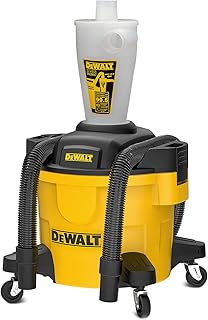
The DEWALT dust separator combines high efficiency with wide compatibility across various vacuums and hoses. It helps capture debris before it reaches the vacuum, reducing suction loss and extending filter life. The four-caster base adds mobility in a workshop, making it easy to move between stations. It supports a range of materials, from wood chips to drywall dust and even finer particulates. A consideration is ensuring compatibility with your current vacuum and hose sizes to avoid a mismatch in connection diameters.
Key Features
- High efficiency for pre-vacuum dust separation
- Wide application across common workshop materials
- Mobile base and compatible port sizing
Who It’s Best For
Choose this if you want a versatile separator that works with many vacuums and needs to be moved around a modular workshop.
Limitations
Compatibility depends on your existing vacuum hoses and fittings; check port sizes before purchasing.
Dust Separator with 10 Gal. Stainless Tank

This model features a stainless steel 10-gallon tank for higher durability and larger debris capacity. It’s suited for longer sessions without frequent bucket changes and can withstand demanding workshop environments. The design emphasizes straightforward use and robust construction, making it a solid choice for semi-professional shops. A limitation to note is the added weight of a stainless tank, which can affect portability in very small spaces.
Key Features
- 10-gallon stainless steel tank for durability
- Simple, user-friendly setup
- Compatible with standard hoses and buckets
Who It’s Best For
Best for workshops needing higher debris capacity and longer run times between emptying, without frequent replacements.
Cyclone Dust Separator with Low Profile

This circular cyclone separator emphasizes a low-profile, space-saving design with a four-clip leak-resistant seal. It directs dust and debris into the bucket before they reach the vacuum, supporting steady suction and reducing maintenance. The low-profile form suits tight work areas under benches or inside cabinets. It’s a solid pick for small shops needing reliable separation without a tall footprint. A caution is to ensure the four-clip mechanism remains securely fastened during heavy use to maintain the seal.
Key Features
- Upgraded four-clip leak-resistant seal
- Efficient cyclone dust separation
- Low-profile, space-saving design
Who It’s Best For
Choose this if you need a compact separator that fits under benches or in crowded storage spaces while maintaining strong dust separation.
Buying Guide
What to consider when choosing a high efficiency dust separator
- Separation efficiency vs. airflow: Some designs prioritize extracting dust before the vacuum intake; others maximize airflow. Your choice depends on dust type and the size of debris you collect.
- Container size and durability: Larger tanks reduce emptying frequency but add weight and bulk. Stainless or robust materials improve longevity in busy shops.
- Compatibility with your vacuum and hoses: Check port sizes, hose diameters, and bucket compatibility to avoid adapter costs.
- Space and mobility: Low-profile units fit under workbenches; mobile bases help move units between stations.
- Maintenance and seal integrity: Leak-resistant designs prevent air leaks that reduce suction. Regularly inspect seals and gaskets.
How to set up for best results
- Position the separator between the tool and the vacuum to capture dust efficiently.
- Ensure tight connections with gaskets and clamps to minimize leaks.
- Keep filters and bags clean; even the best separator benefits from unobstructed airflow.
Which features provide the best value
- Third-party testing and documented efficiency
- Leak-resistant seals and easy-to-assemble designs
- Durable tank materials for longer service life
Quick FAQ
- What is a high efficiency dust separator? A device that captures dust and debris before it reaches the vacuum, improving suction and reducing need for frequent filter changes.
- Do these work with standard shop vacs? Most models are designed to connect to common 2-1/2 inch or similar hoses and standard buckets; check port size.
- Is a low-profile model better for small shops? Yes, if you need to fit under benches or within tight spaces, a low-profile unit often offers the best fit.
- Can a stainless tank be worth it? Yes, for durability and larger debris capacity, though it adds weight and may reduce portability.
- How important is third-party testing? It helps verify claimed efficiency and provides independent comparisons across products.
- What maintenance is required? Regularly inspect seals, replace worn gaskets, and empty collected dust to prevent clogging and suction loss.