Choosing a high pressure pump for cleaning requires balancing compatibility, durability, efficiency, and ease of maintenance. This guide highlights five noteworthy pumps that fit common gas and electric power washers, with practical considerations to help you select the right unit for driveway, deck, or equipment cleaning tasks. Each section below profiles a pump, its key strengths, and how it can fit your specific cleaning needs.
Summary of chosen products:
| Product | Brand | Recommended PSI | GPM | Notes |
|---|---|---|---|---|
| VEVOR Pressure Washer Pump | VEVOR | 4400 | 4.0 | Wide compatibility; forged brass head; sight-glass oil inspection. |
| TOOLCY 3/4″ Shaft Pump | TOOLCY | 2600-3300 | 2.5 | Die-cast aluminum; maintenance-free; includes nozzle tips. |
| 2026 Upgrade Pressure Power Washer | LANCHEZ | 4800 | 3.2 | 4 quick-connect nozzles; safe auto-stop system. |
| IvyBess Gas Powered Pressure Washer | IvyBess | 4200 | 4.0 | Copper pump; versatile nozzles; strong cleaning power. |
| AAA 3700 PSI Replacement Pump | AAA | 3700 | 2.5 | Triplex replacement; PowerBoost adjustable pressure. |
VEVOR Pressure Washer Pump: 4400 PSI, 4.0 GPM

The VEVOR pump is designed to fit a variety of gas-powered washers with horizontal engines, offering a robust 4400 PSI and 4.0 GPM. It features a one-piece forged brass pump head to improve sealing, strength, and durability, helping seals resist wear and extend service life. A sight glass allows quick visual oil level checks, eliminating the need for dipsticks. Compatibility notes emphasize matching engine orientation, PSI, GPM, shaft diameter, and inlet/outlet connections to ensure a proper fit with models like Simpson MorFlex.
Practical applications include heavy-duty deck, driveway, and siding cleaning where high pressure and reliable sealing are essential. The unit’s design aims to balance power with durability, making it a strong option for homeowners who regularly tackle tough grime with gas-powered washers.
TOOLCY 3/4″ Shaft Horizontal Pump

The TOOLCY pump targets mid-range cleaning tasks with a maximum 3300 PSI and 2.5 GPM, designed for compatibility with popular brands including Honda, Simpson, and Ryobi. It is constructed from die-cast aluminum to resist rust and requires no ongoing oil changes; the design emphasizes low maintenance and longer life. The pump ships with test-matched nozzle tips (0°, 25°, and soap), enabling efficient cleaning across different scenarios—from patios to vehicles. It should be checked for shaft compatibility (3/4″ shaft) and engine sizing to ensure a proper match.
Ideal for homeowners who want a balance between cost, performance, and ease-of-use. The included nozzle tips expand cleaning versatility, while the maintenance-friendly design reduces downtime and part replacements.
2026 Upgrade Pressure Power Washer: 4800 PSI

Offering a high cleaning punch, the LANCHEZ 2026 model delivers up to 4800 PSI at 3.2 GPM. Its 4 quick-connect spray tips (including 0°, 15°, 25°, 40°) plus a detergent tank provide flexibility for tackling diverse tasks—from stubborn stains on siding to dirtier outdoor surfaces. An Automatic Total Stop System (TSS) helps conserve energy and prolong pump life by turning the pump off when the trigger is released. This model suits heavy-duty residential cleaning and prep work for paint or coatings, delivering strong performance with efficiency.
IvyBess Gas Powered Pressure Washer

The IvyBess unit provides strong cleaning with up to 4200 PSI at 4.0 GPM, powered by a rugged gasoline engine and a durable axial cam pump. With five quick-connect nozzles (0°, 15°, 25°, 40°, and a soap nozzle) plus a 1L soap tank, the pump is well-suited for grime on driveways, houses, decks, and vehicles. The copper pump construction adds durability and consistent pressure during extended use. Its design targets homeowners who need reliable, high-pressure output for diverse outdoor cleaning tasks while maintaining flexibility with multiple spray options.
AAA 3700 PSI Replacement Triplex Pump
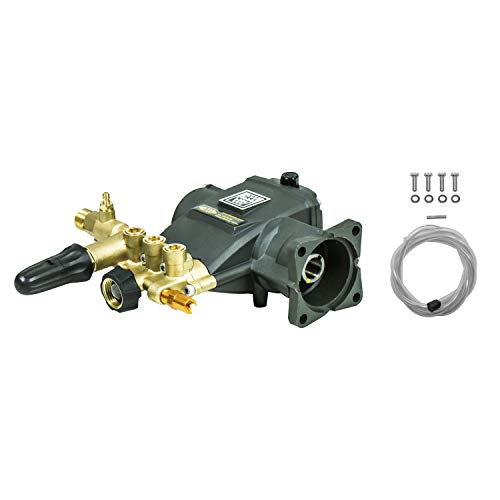
The AAA replacement pump targets Simpson gas-powered washers with a 3/4″ shaft and horizontal engine configuration, delivering up to 3700 PSI at 2.5 GPM. It features PowerBoost technology to tune nozzle pressure for different tasks and a stainless steel unloader to support an easy-start system. This pump is positioned for users looking to refresh an older unit or upgrade performance on a Simpson-based system. Compatibility checks should include engine orientation and existing inlet/outlet connections to ensure a smooth installation.
Buying Guide: Key Purchase Considerations
- Compatibility: Verify shaft size (commonly 3/4″ or 1″), engine orientation, inlet/outlet connections, and PSI/GPM ratings to match your washer model.
- Durability: Look for forged brass or copper pump heads and corrosion-resistant housings. Die-cast aluminum bodies can balance weight and longevity.
- Oil and maintenance: Pumps with sight glasses simplify oil level checks. Some units require no routine oil changes, while others rely on standard maintenance schedules.
- Safety and efficiency: Features like Automatic Total Stop System (TSS) save energy and extend pump life. PowerBoost or adjustable nozzles help tailor performance to each task.
- Accessories: Consider included nozzle tips, soap tanks, and wands. A comprehensive nozzle set often improves cleaning versatility without extra purchases.
- Use-case alignment: Heavy-duty, high-PSI units excel on hard surfaces and coatings; mid-range pumps suit general outdoor cleaning; electric diaphragm pumps can be more suitable for quiet, low-maintenance home use.
- Cost of ownership: Account for potential maintenance, replacement seals, and availability of compatible parts when budgeting for a pump.
- Warranty and support: Check manufacturer warranties and access to spare parts to minimize downtime after installation.
When evaluating options, map your typical cleaning tasks to the pump’s PSI, GPM, and nozzle configuration. For heavy driveway or siding cleaning, a higher PSI with versatile nozzles can reduce brushing time. For routine lawn sprinkler maintenance or garden tasks, a lower PSI with efficient efficiency modes might be ideal. By aligning pump features with your cleaning portfolio, you’ll select a unit that delivers consistent results and long service life.